


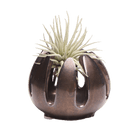
Gideon Ceramic Air Plant Container - Grassy Dark Chrome
Build the Arrangement That Looks Harder Than It Was
Pick a vase to anchor the shelf, then add the rest until it reads as curated instead of collected.
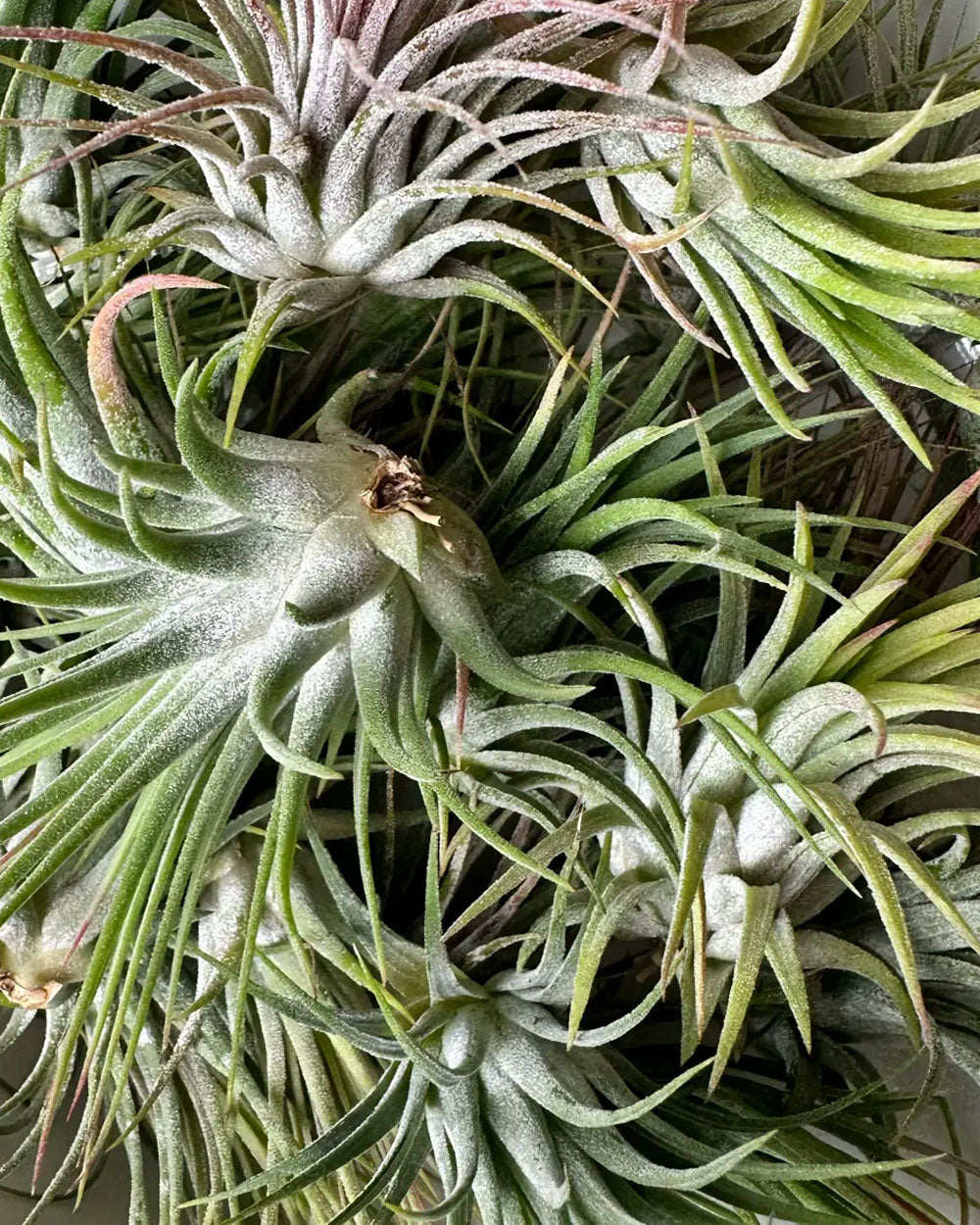
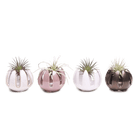
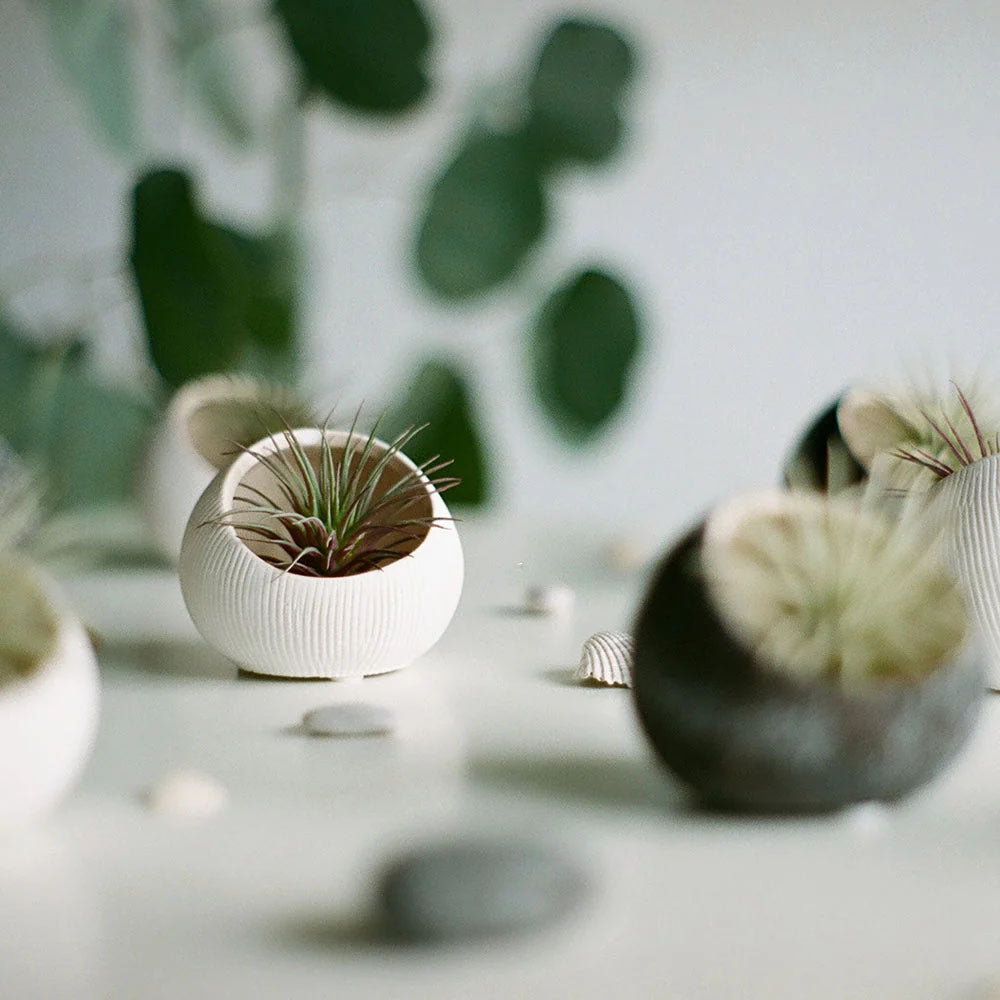
Dark Chrome is the moodiest finish on Gideon's punched ceramic shape, a metallic glaze that catches light differently depending on the angle rather than sitting flat the way most solid colors do. The holes running through the surface stay purely functional regardless of finish, letting air pass through so a real air plant's roots never sit trapped against moisture the way a sealed pot would force them to. Dark tones also happen to disguise water spots and mineral buildup better than a pale glaze ever could, since misting inevitably leaves faint traces behind over time. It suits a room already leaning dark or industrial better than a bright, airy one, reading as a deliberate accent rather than something out of place. No soil, no drainage, no watering can required — just an occasional mist and a spot with decent light. The shape stays identical across every color option; only the surface changes.
- Material: Ceramic
- Glaze finish: Glazed
- Year Designed: 2010
Quick Guide to Building a Ikebana Floral Arrangement
- Choose a low, open vessel
- Set the frog before anything else
- Place the main line first
- Add the second and third lines
- Fill in sparingly
- Step back before deciding it's finished
- Reset the frog between arrangements
The Story Behind This Piece

Building an Ikebana Arrangement
A floral frog, called a kenzan in ikebana, is a small weighted disc studded with metal pins. Stems get pushed onto the pins and hold whatever angle they were given, no tape or spare hand required.
Choose a low, open vessel. Ikebana favors shallow bowls over tall vases, since a kenzan needs a flat base to sit on. A tall bud vase will not do.
Set the frog before anything else. Place the kenzan first, then add water. Water over pins is slippery, and a shifting kenzan takes the arrangement with it.
Place the main line first. Ikebana builds around three stems at different heights: tall (shin), mid (soe), short (hikae). Start with the tallest, cut with intention, since it sets the scale.
Add the second and third lines. Lean the mid stem outward, then the short stem the opposite way, low and close to the rim. Together they form an uneven triangle. Symmetry is what a kenzan avoids.
Fill in sparingly. Empty space is a design element, not a gap to fix. A few stems angled to hide the pins is enough. Past that, it looks like a grocery store bouquet.
Step back before calling it finished. Walk across the room and look again. There is almost always one stem to remove.
Reset the frog between arrangements. Trimmings settle in the pins and give the next stems less to hold onto. Rinse it clear before the next round.
Pro Tip: The light does half the work.
Glass catches and bends light in a way ceramic can't. Set the arrangement somewhere it'll get some late afternoon sun, even for an hour, and the water and stems start doing something a solid vase never will.
Perfect Pairs for Any Shelf
A Plant That Still Wants Feeding