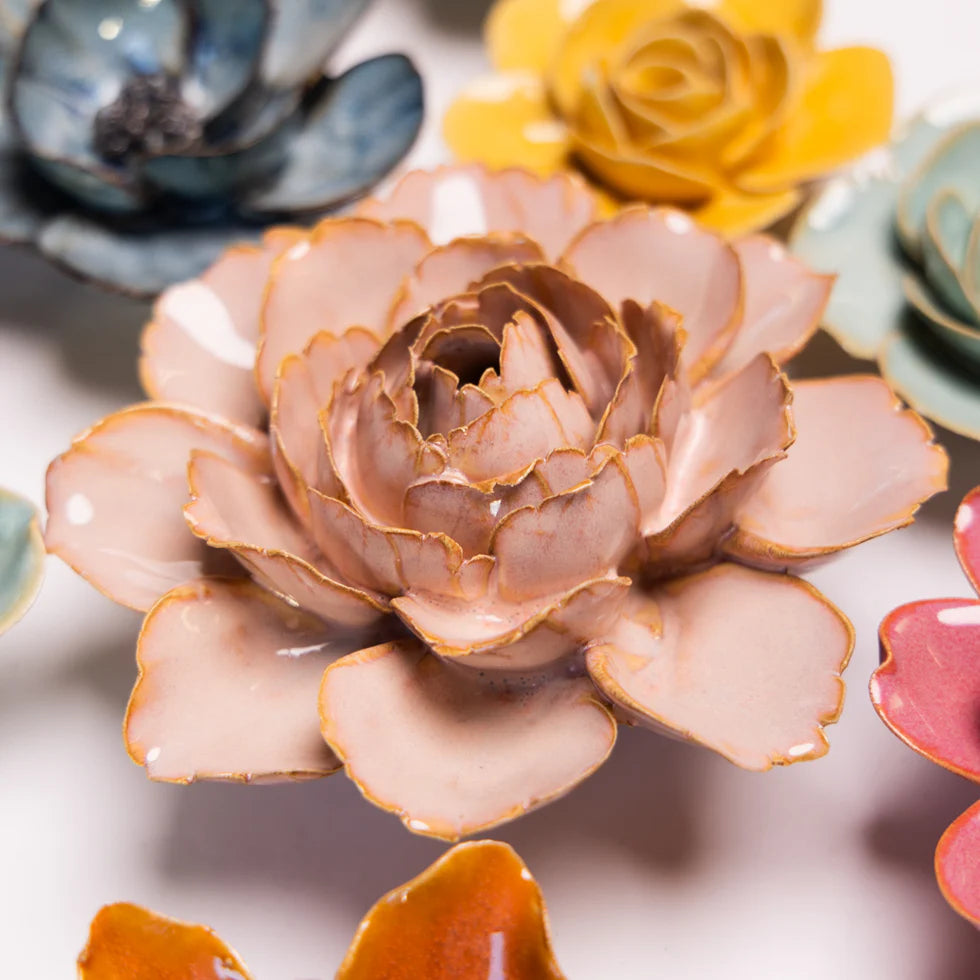
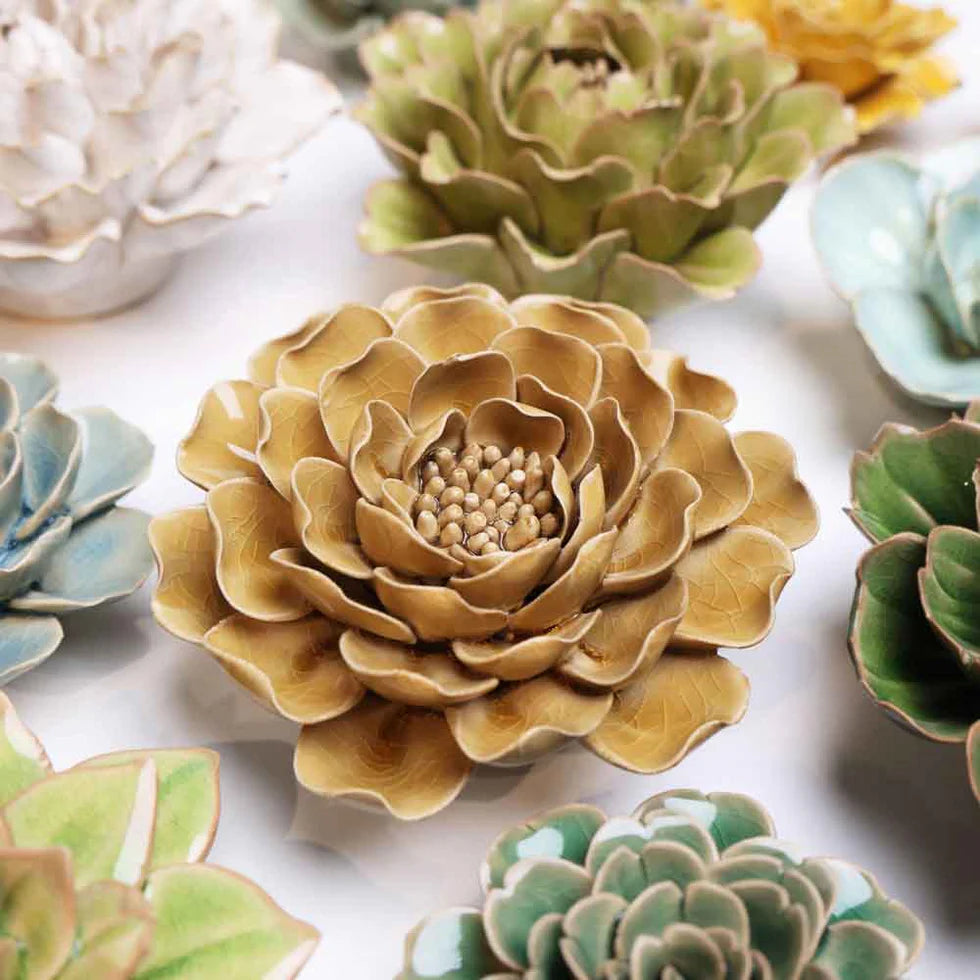
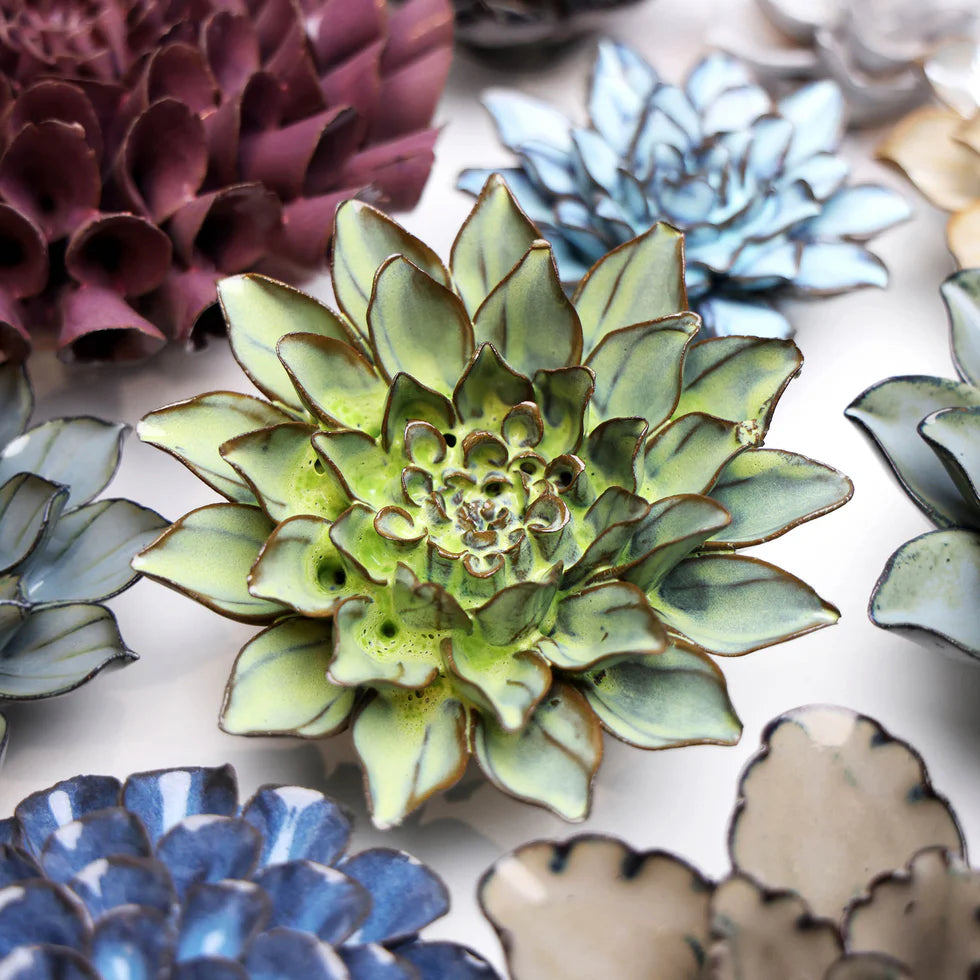
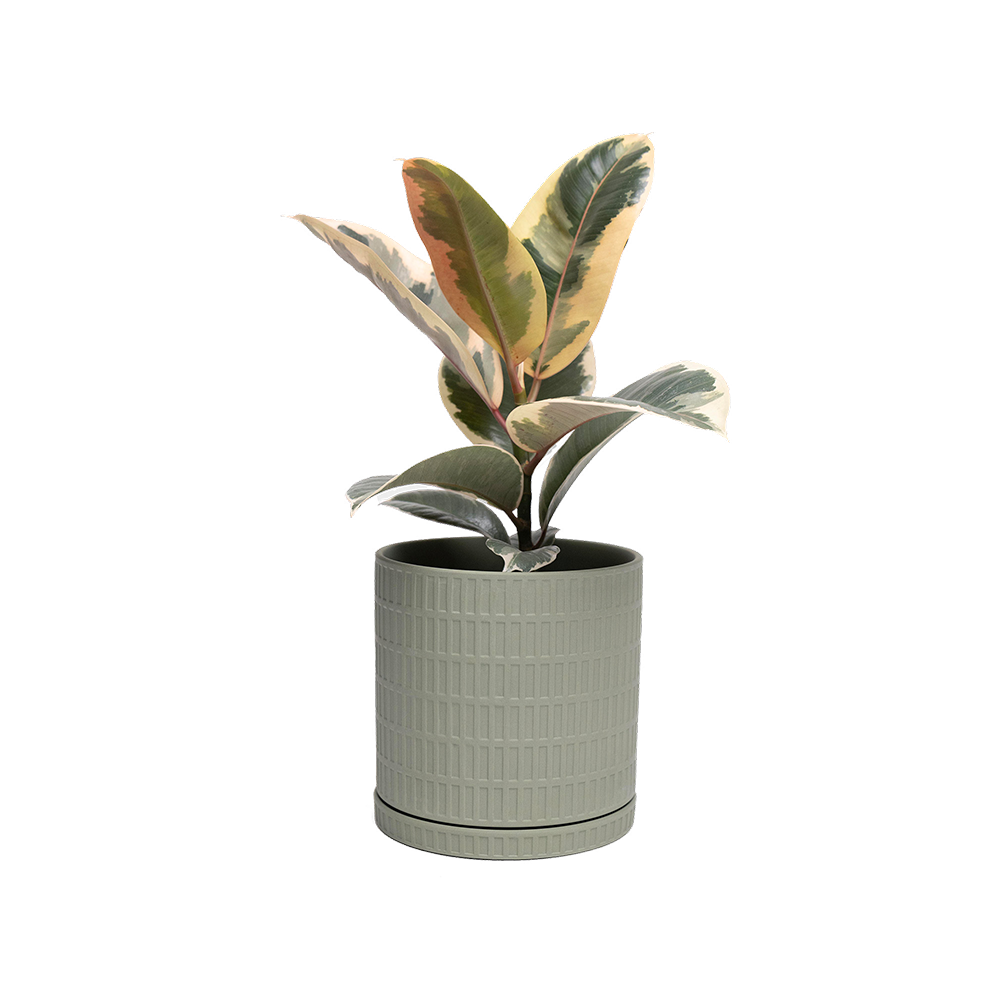
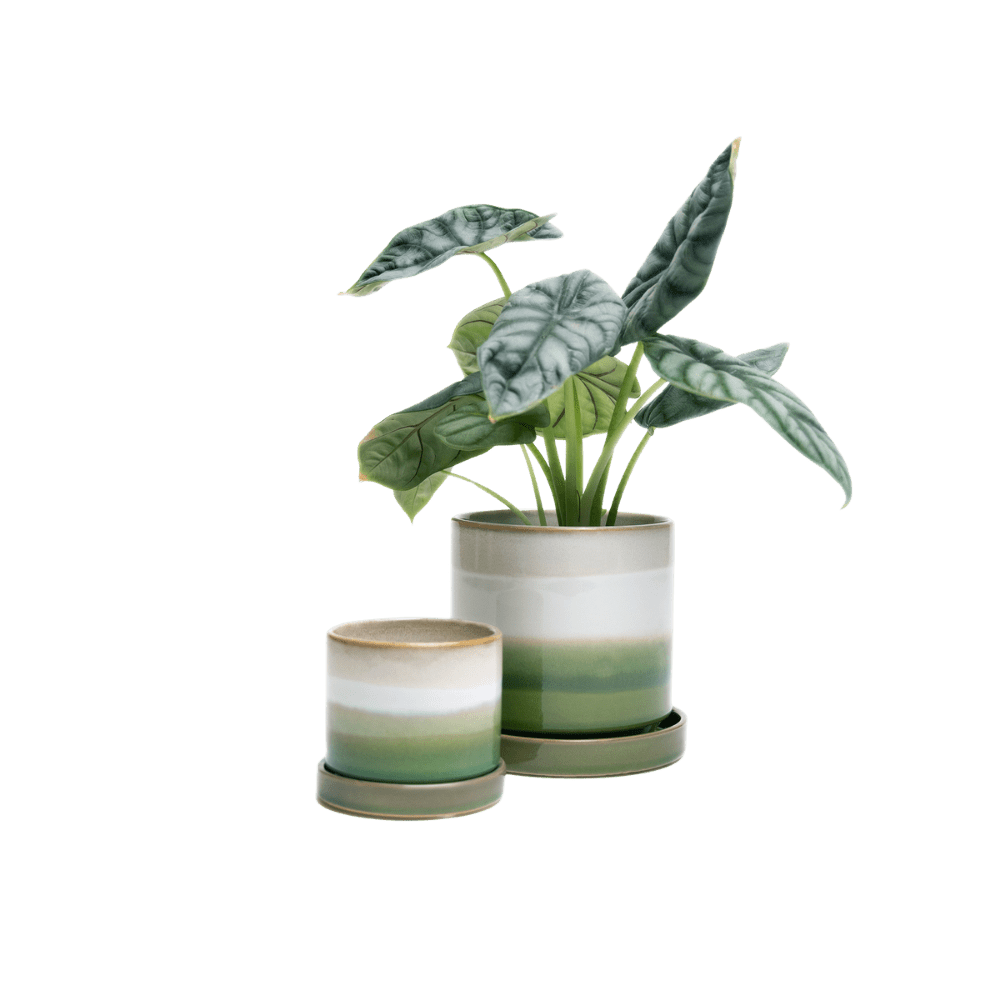
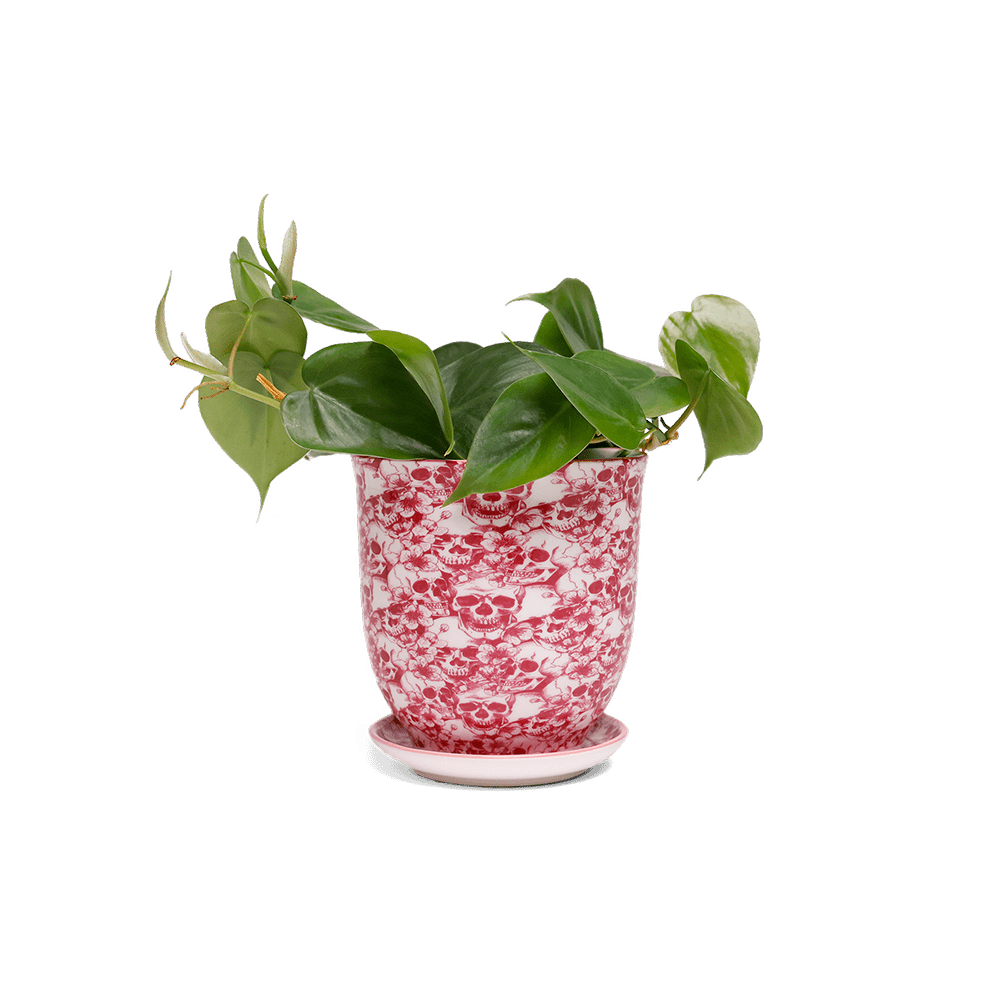
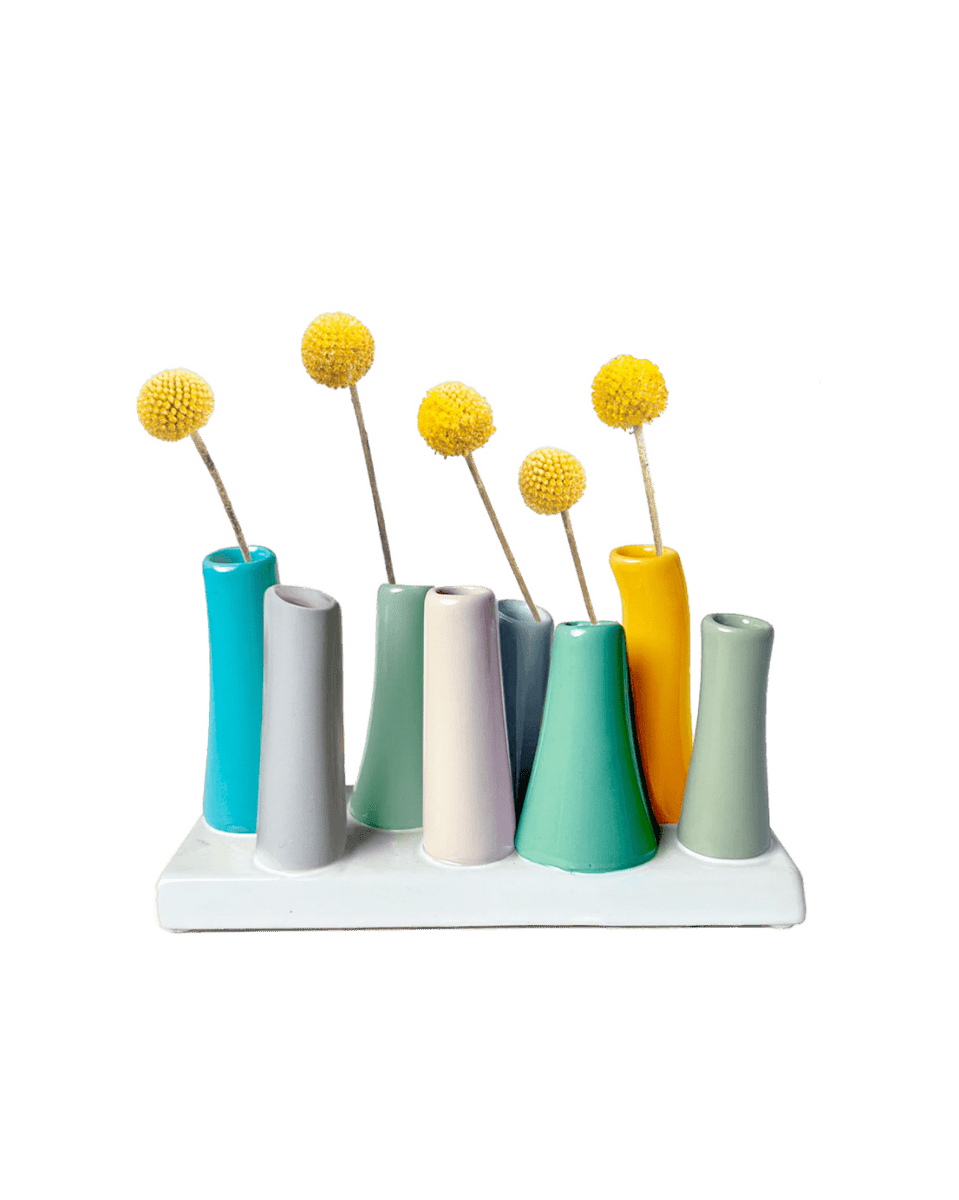
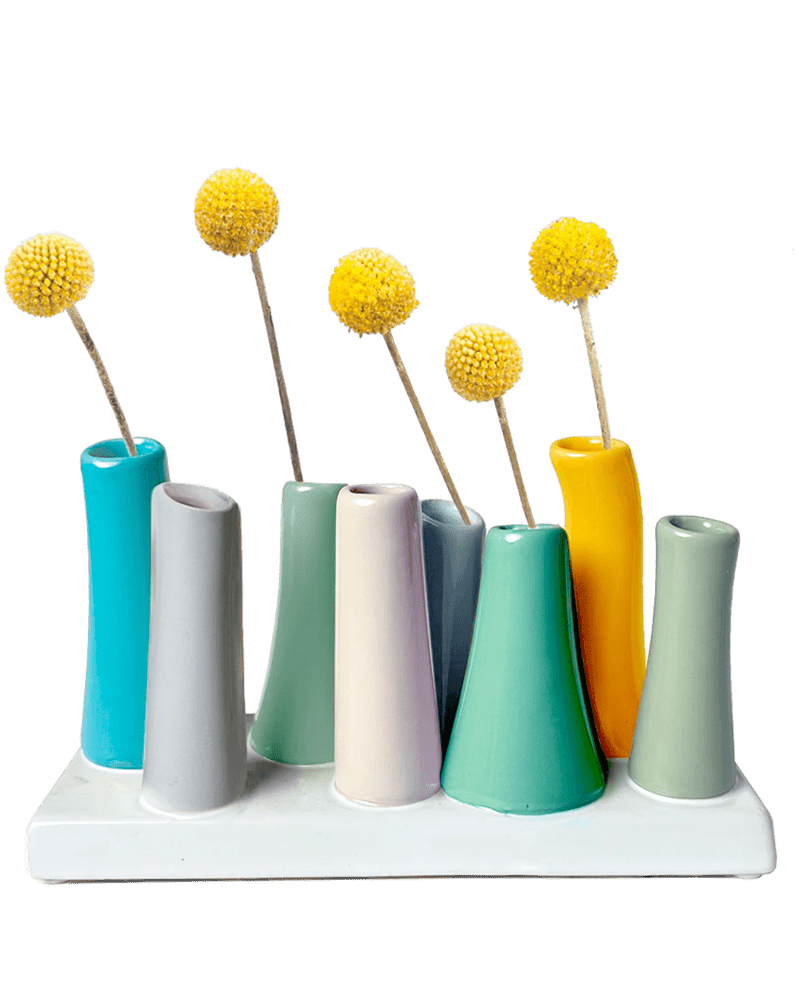
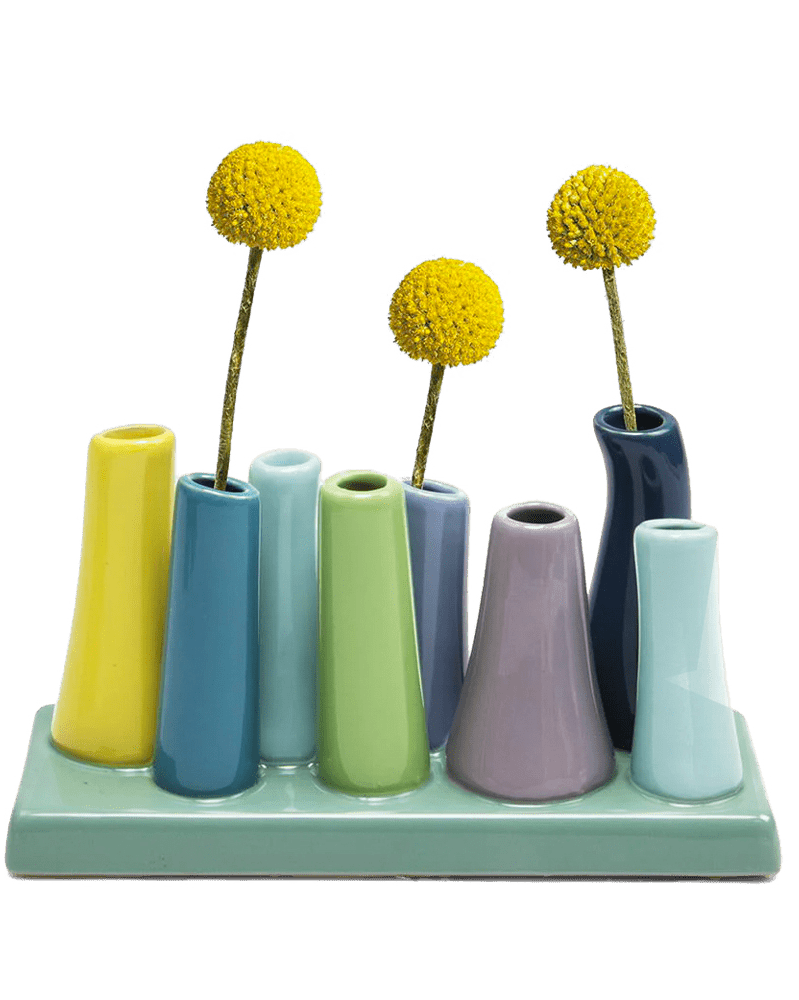
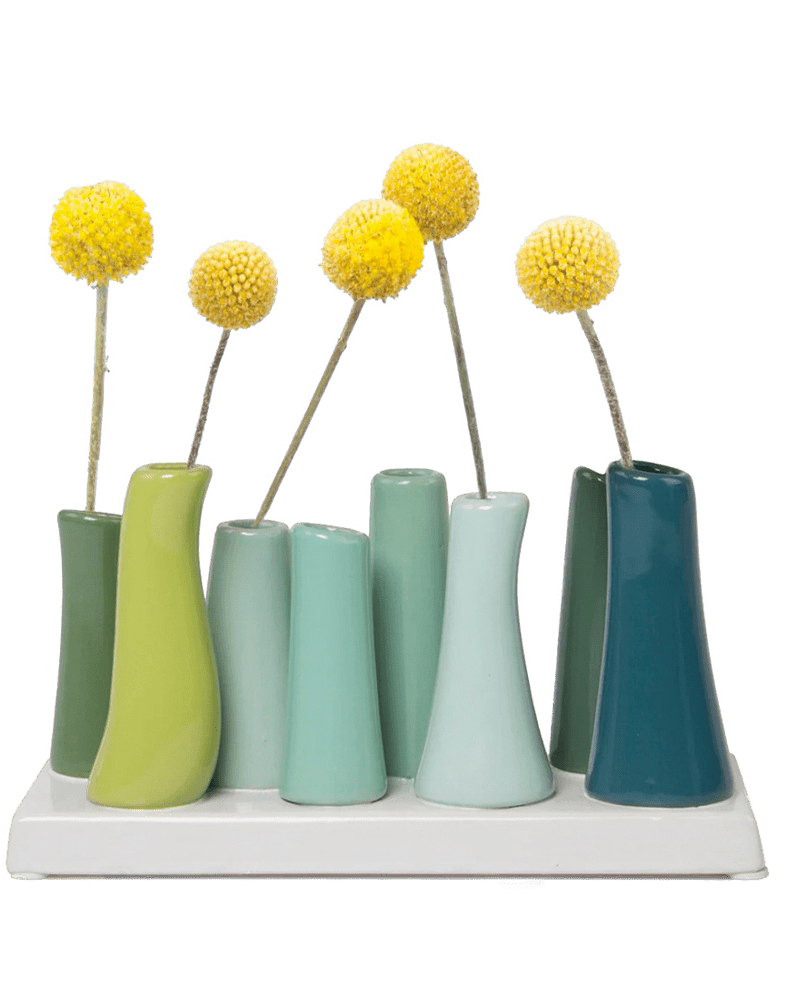
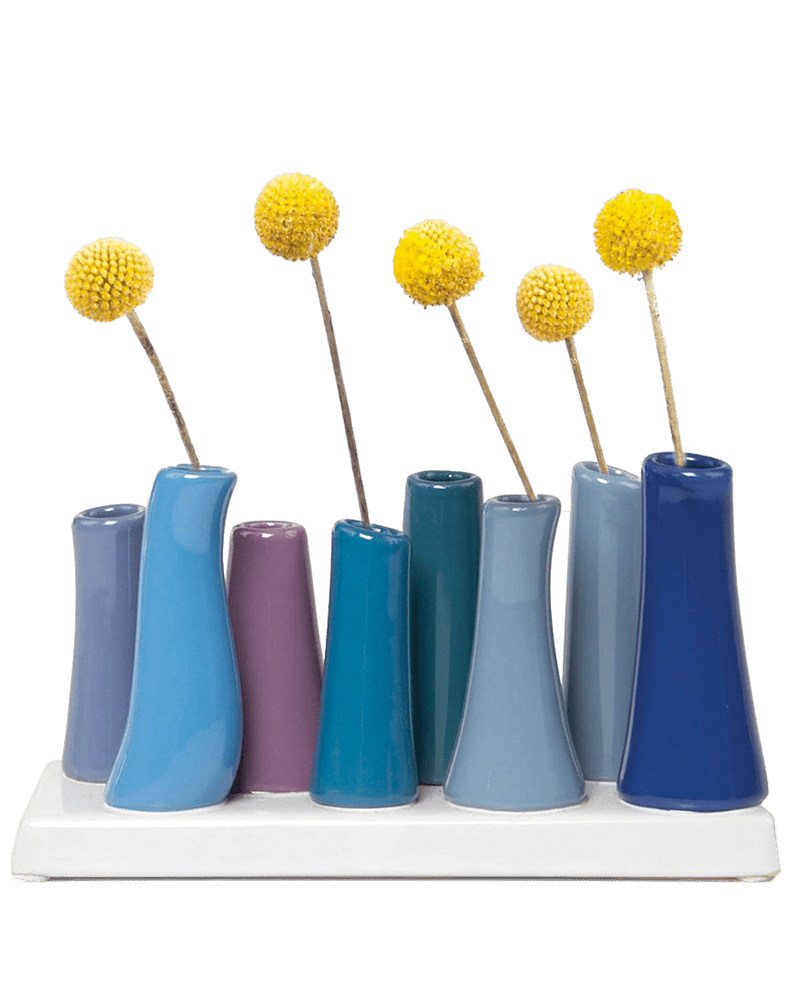
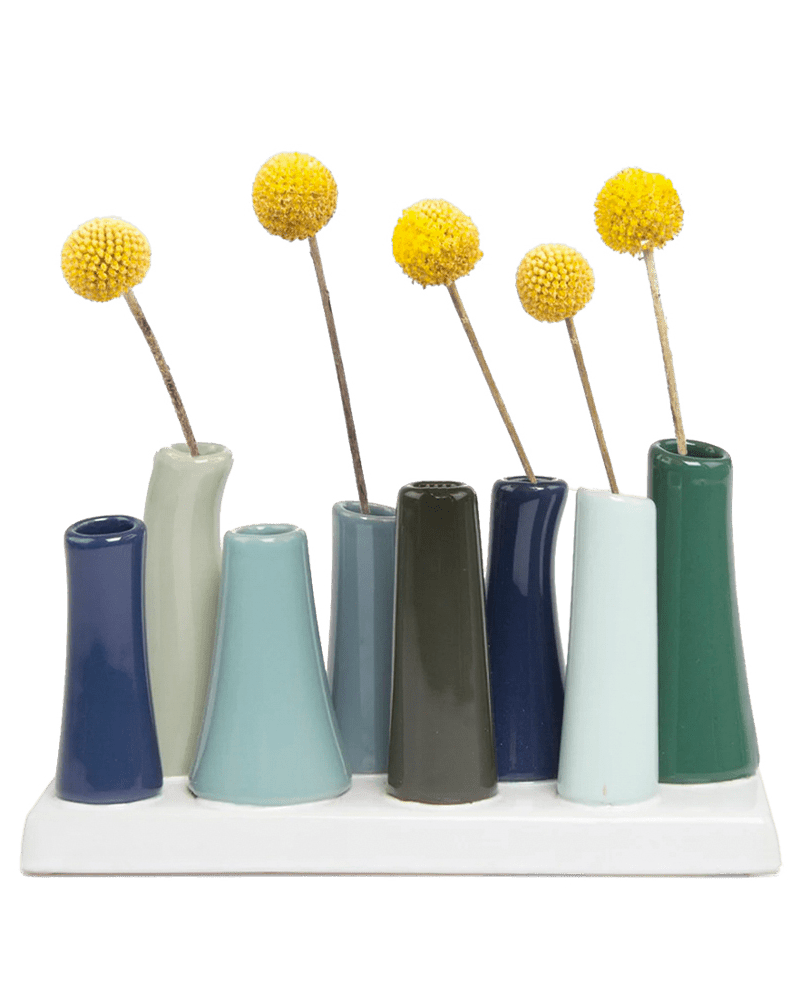
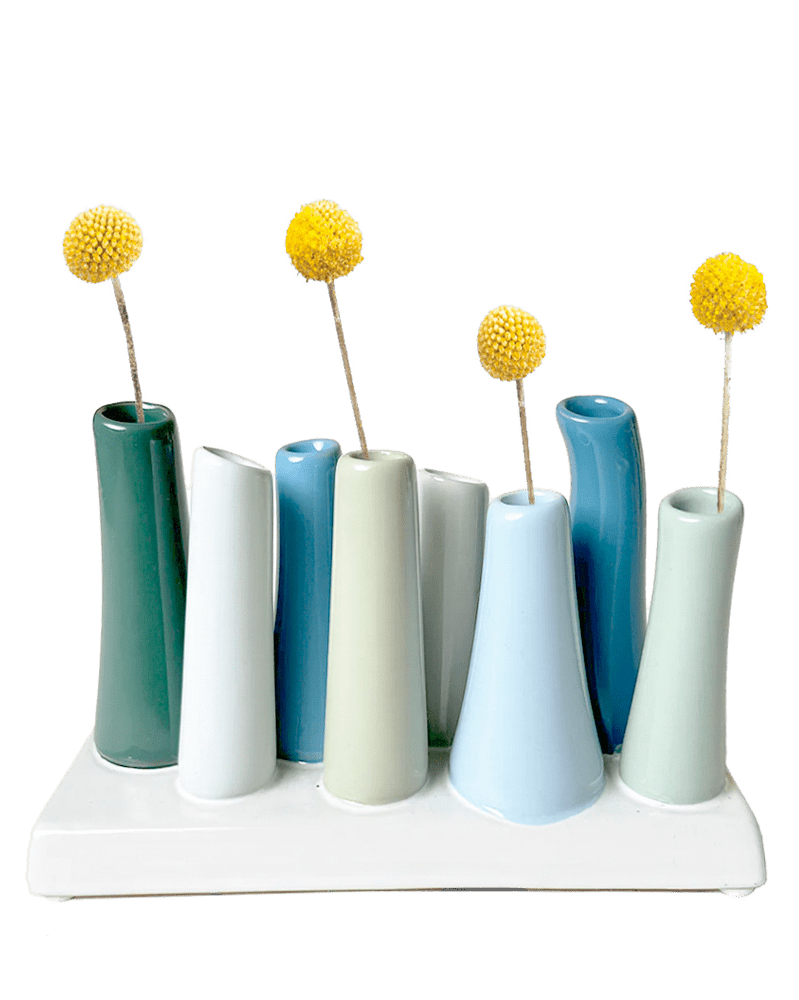
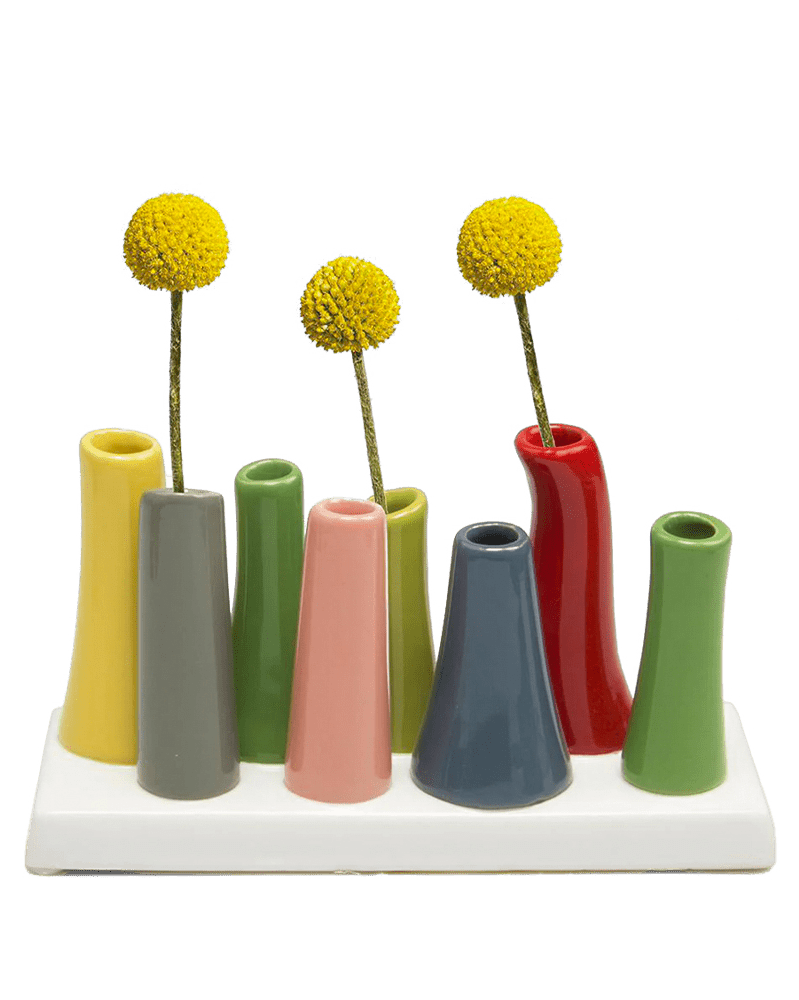
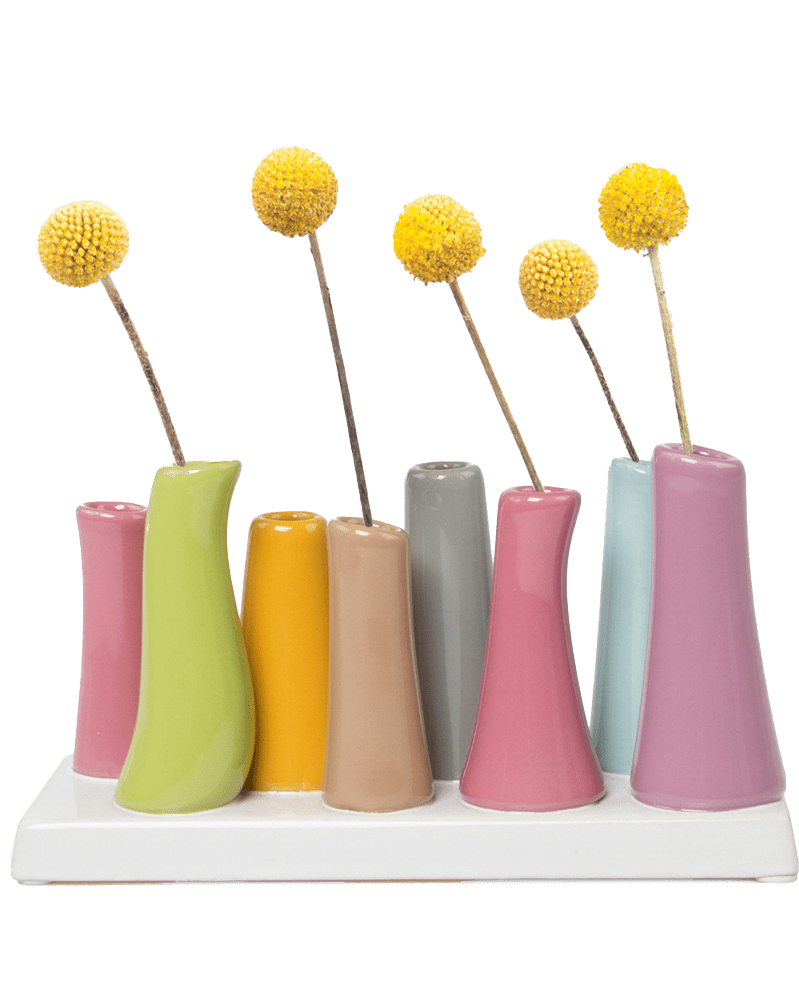
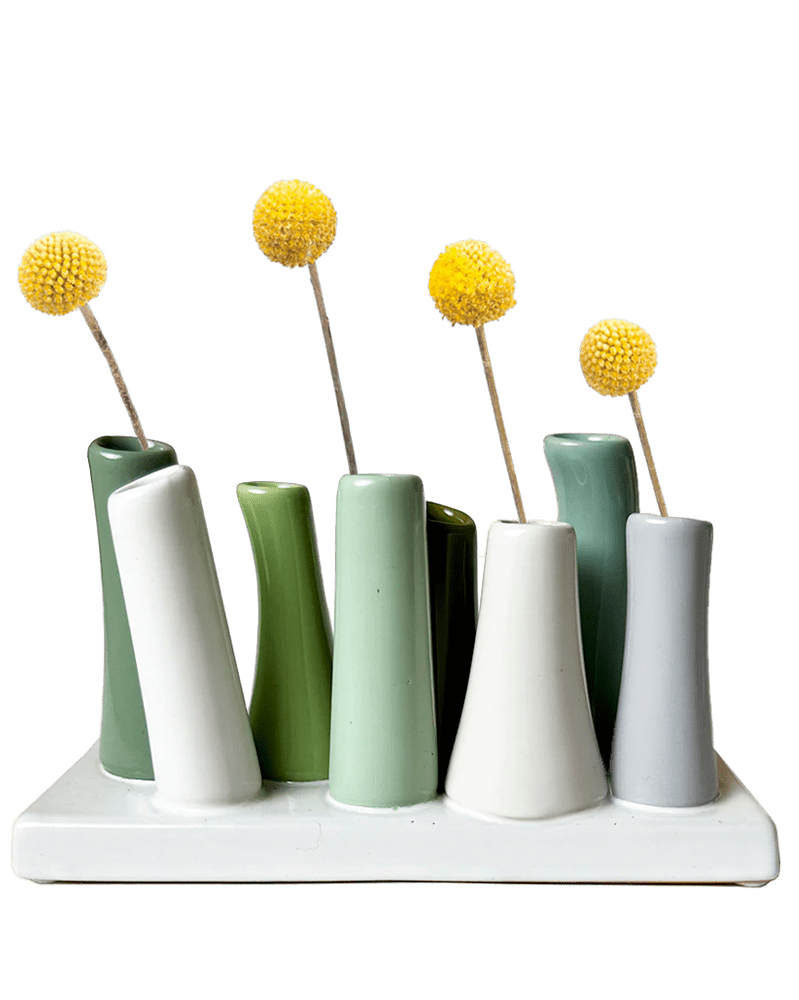
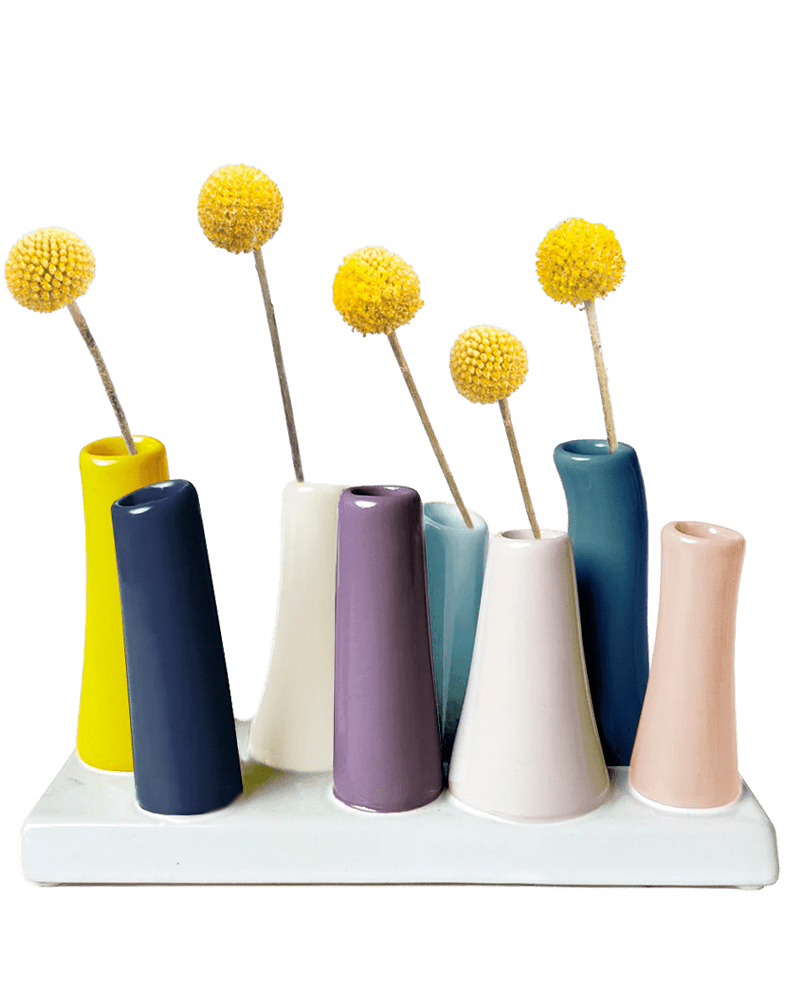
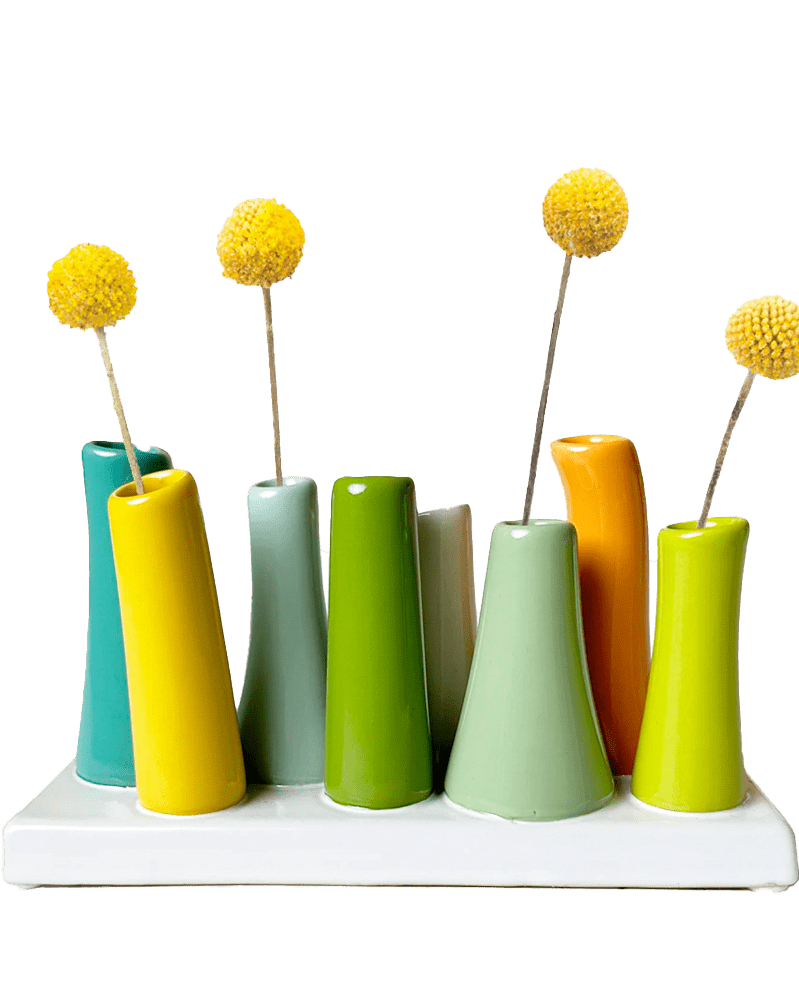
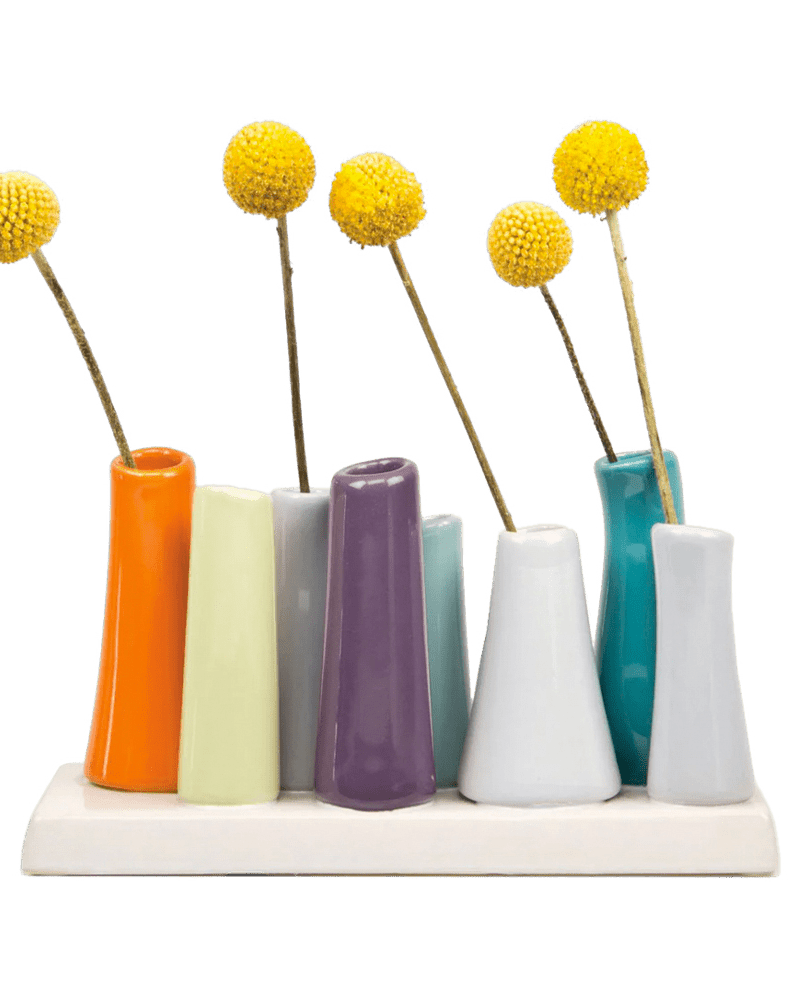
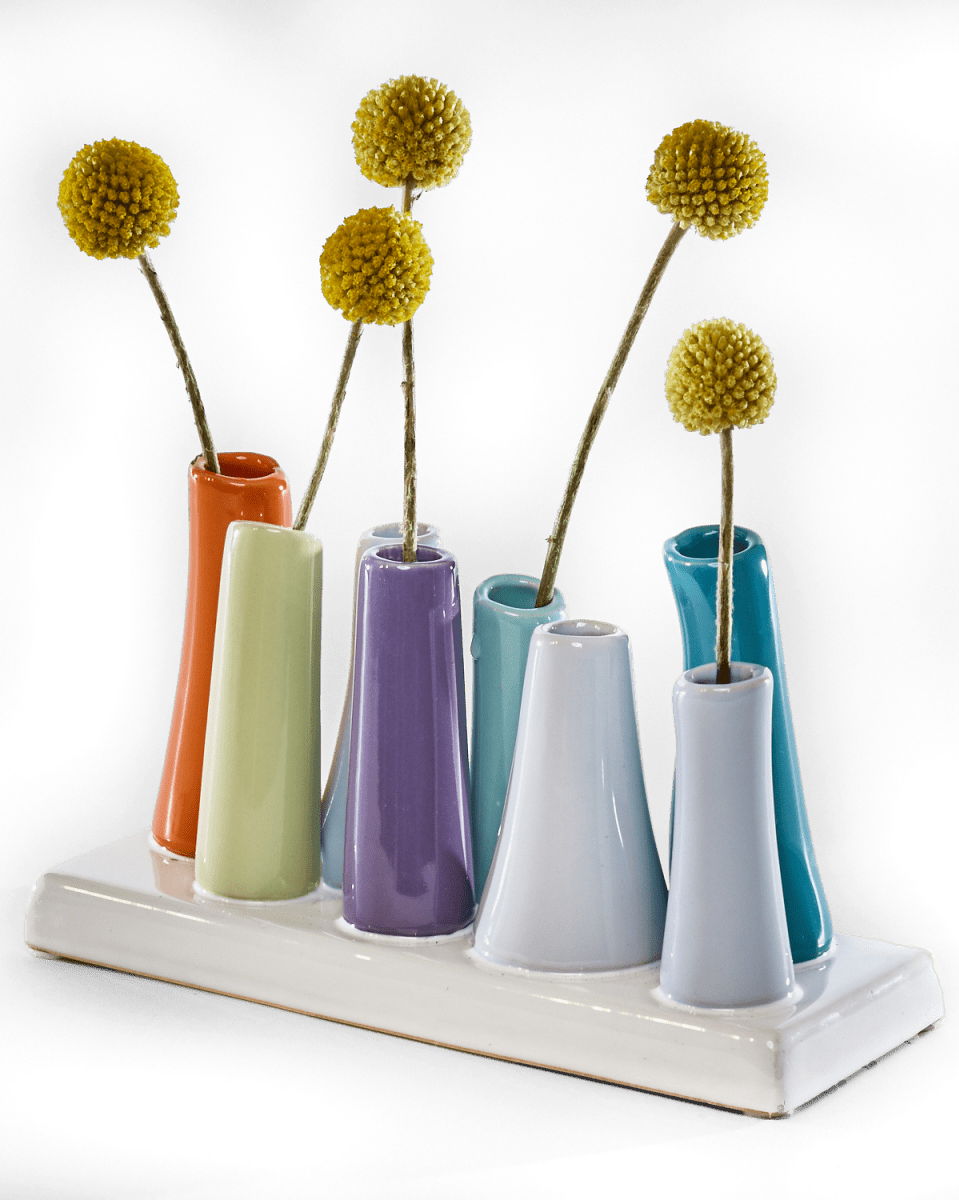
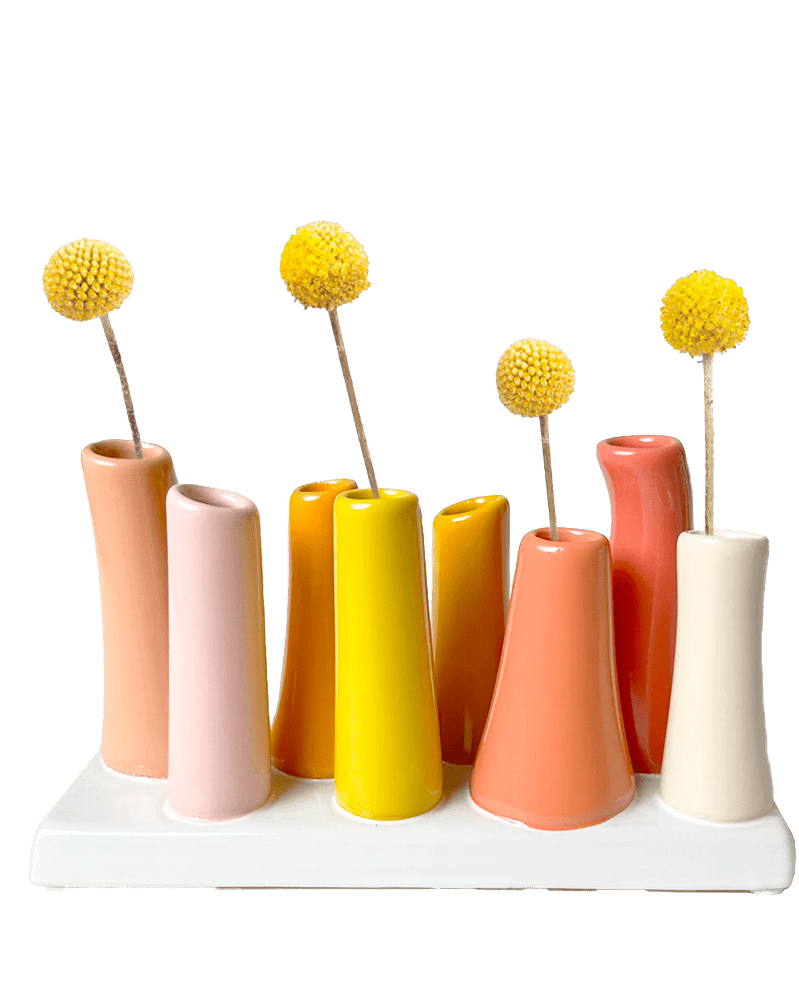
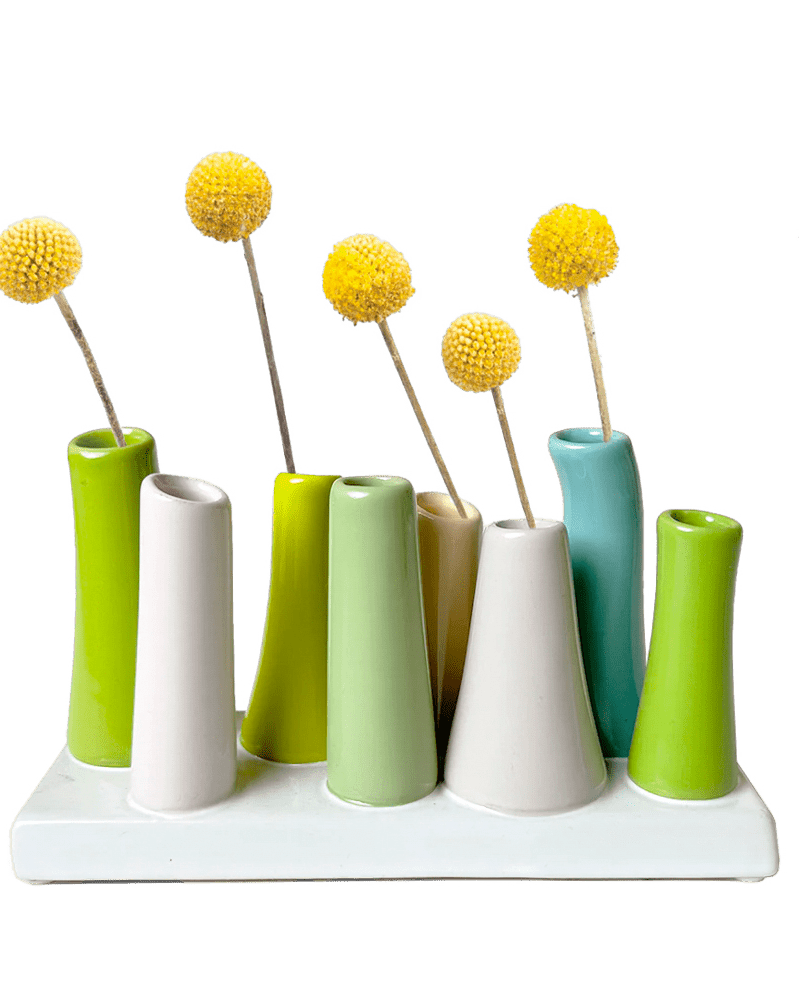
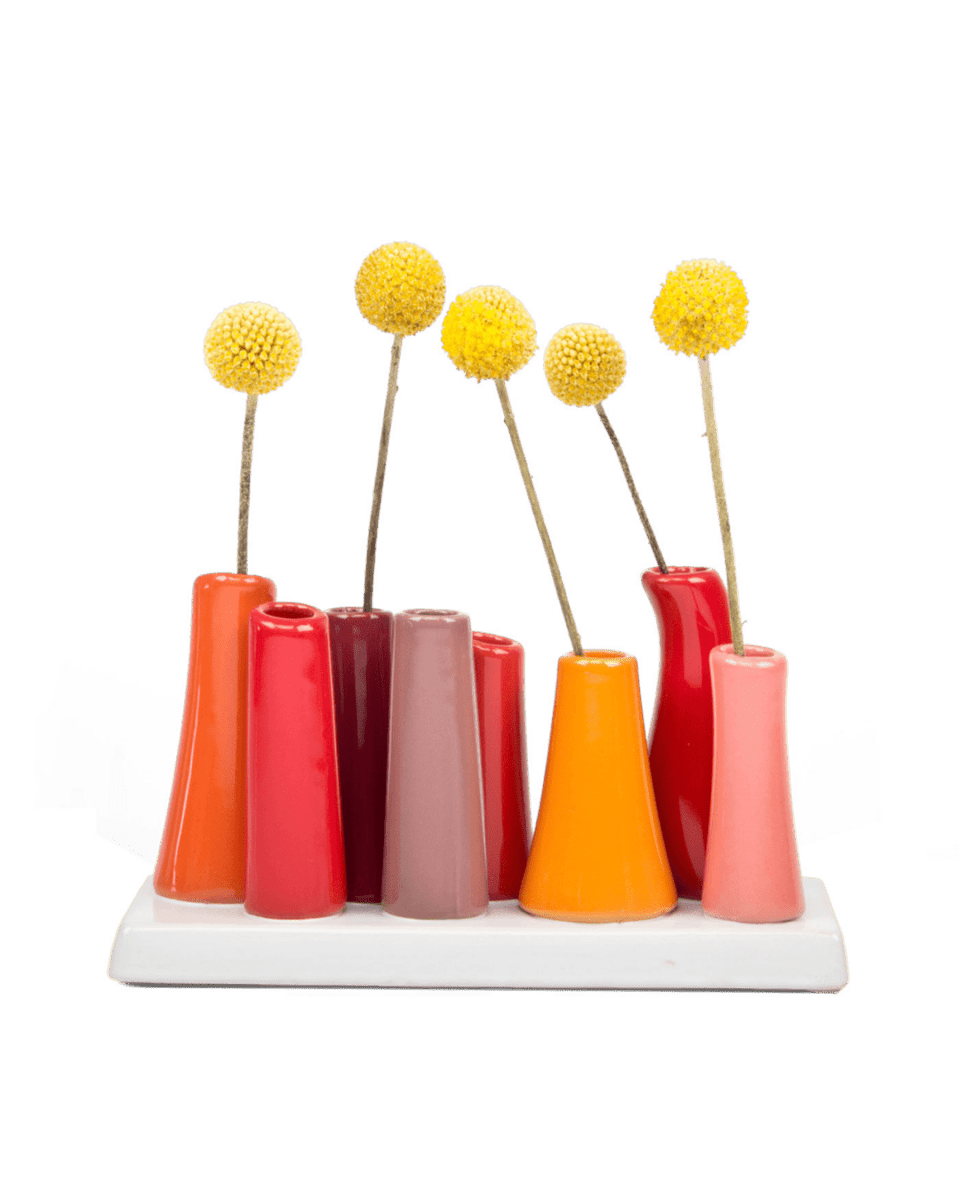
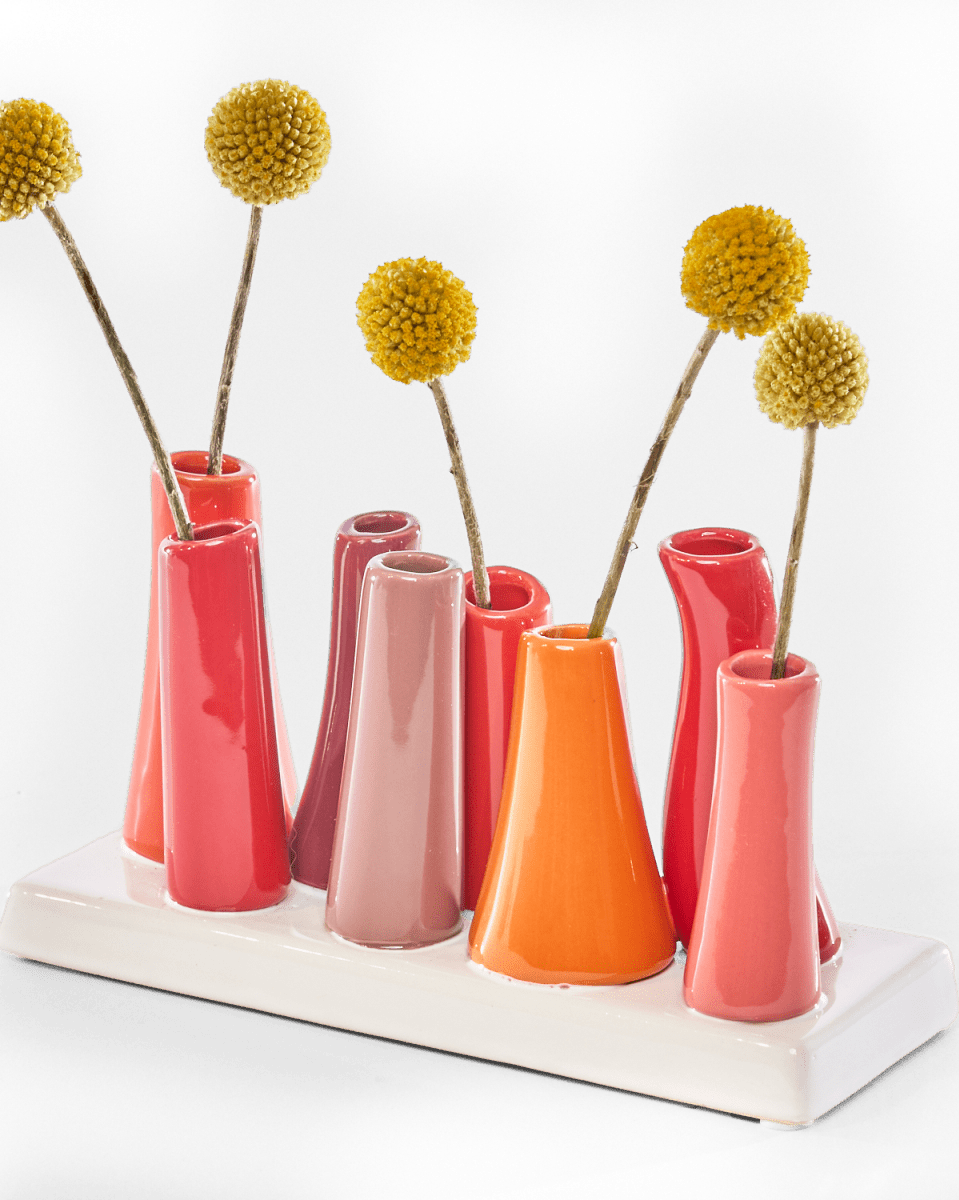
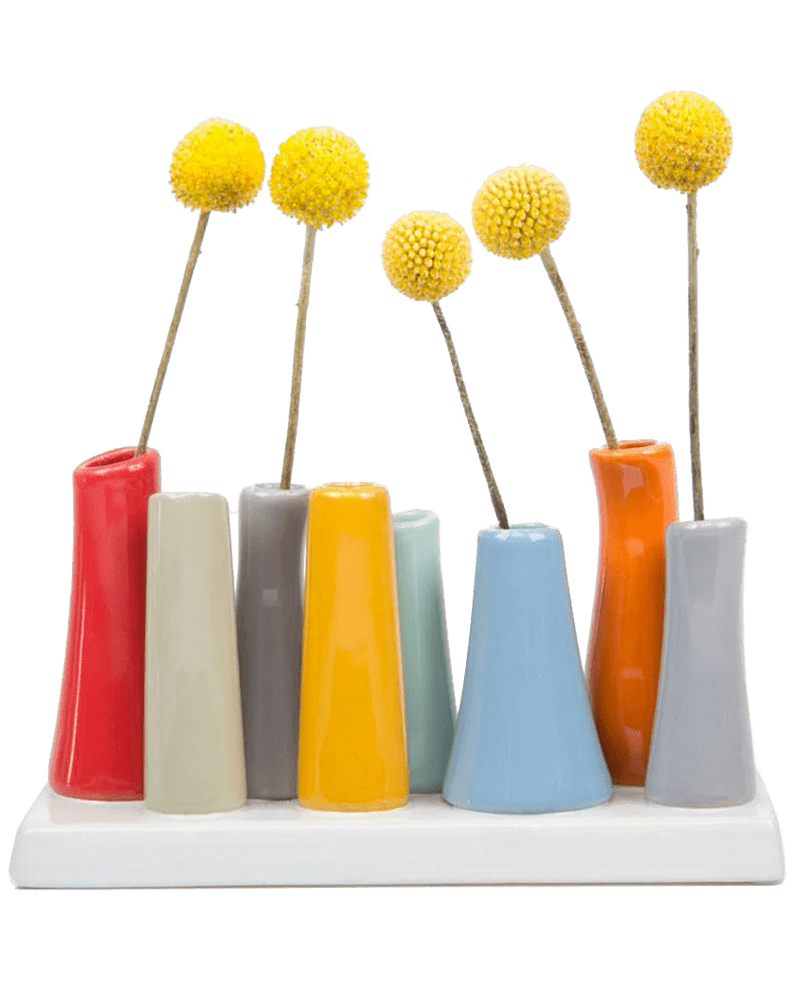
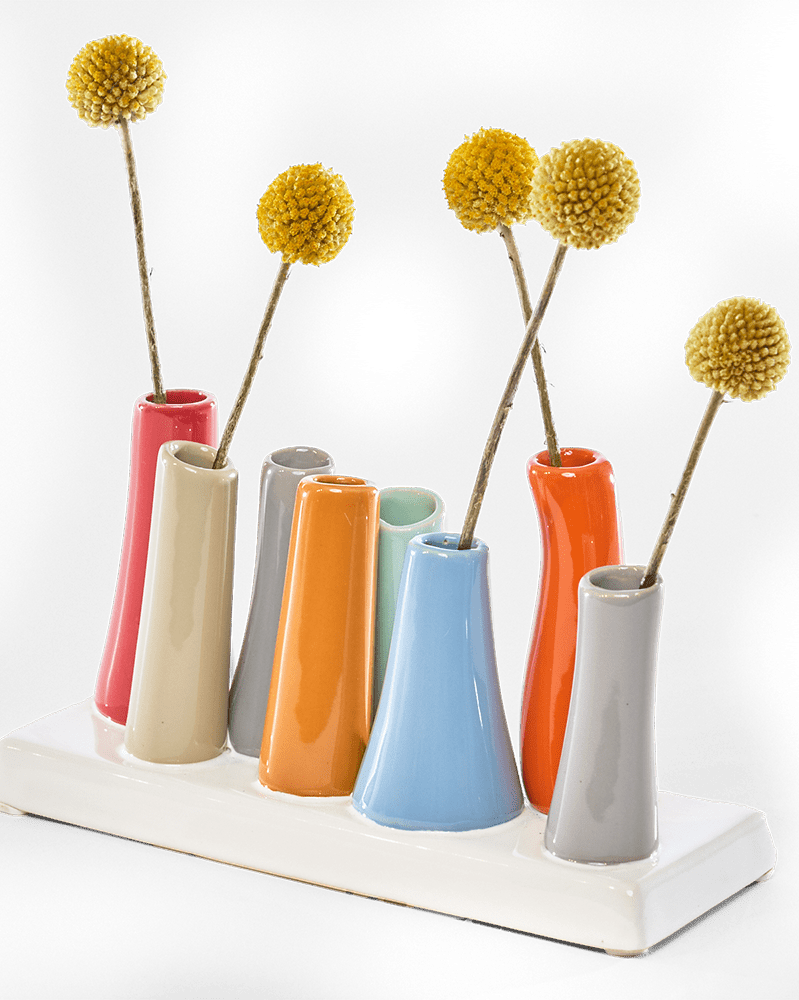
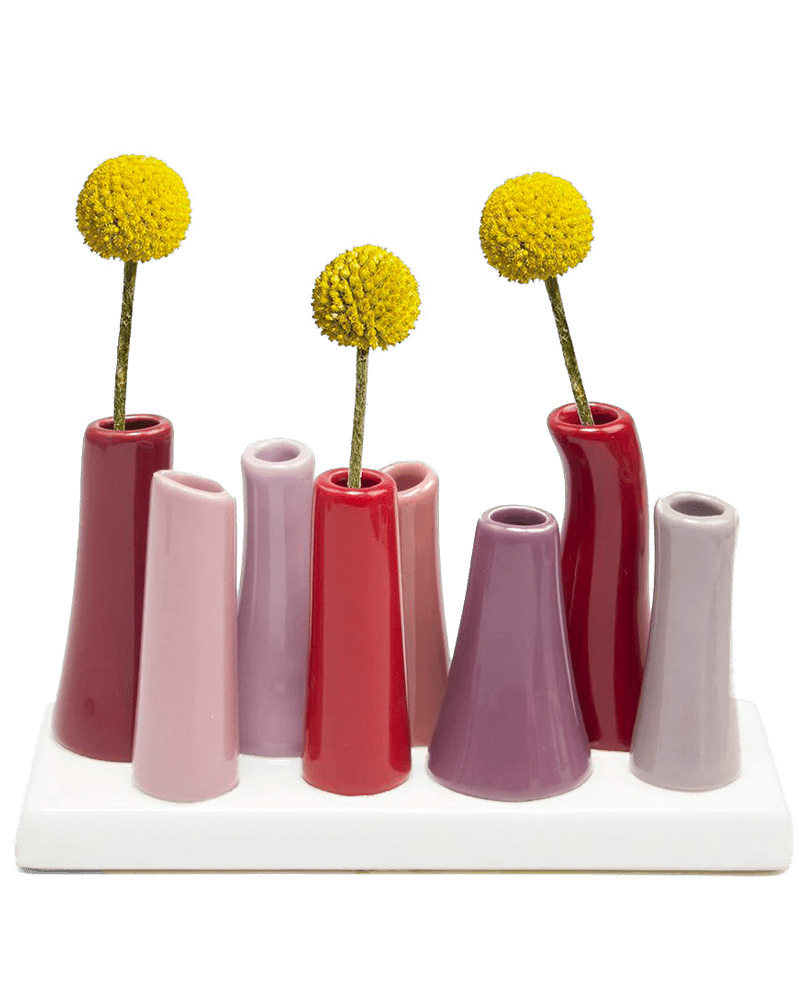
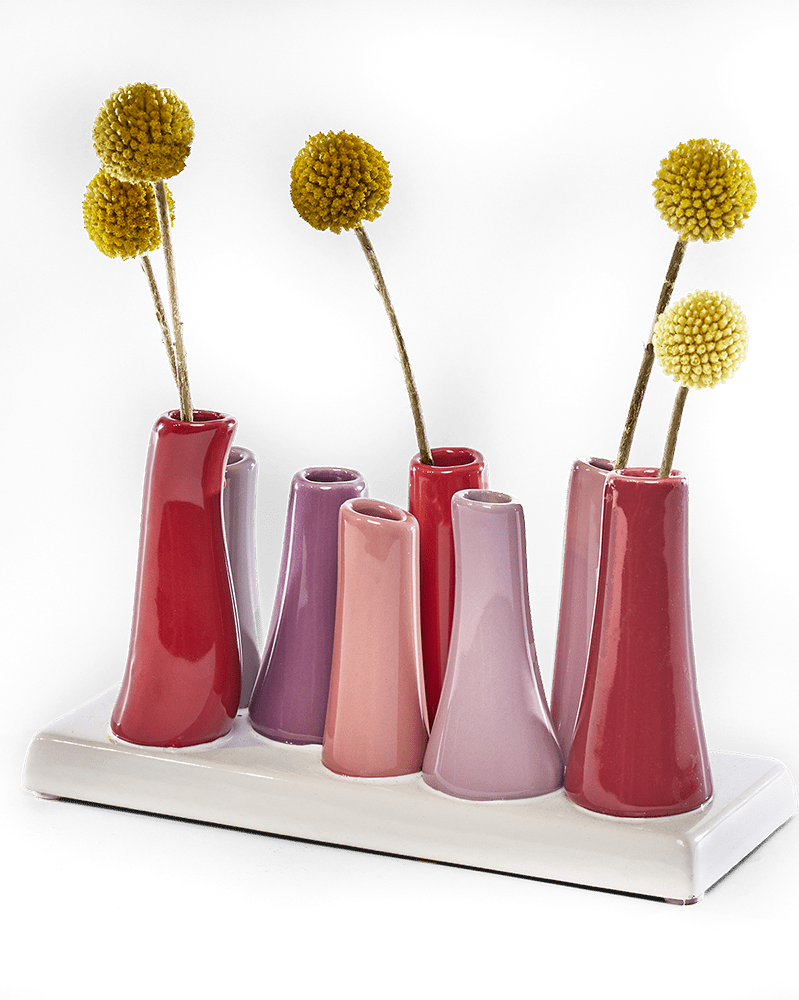
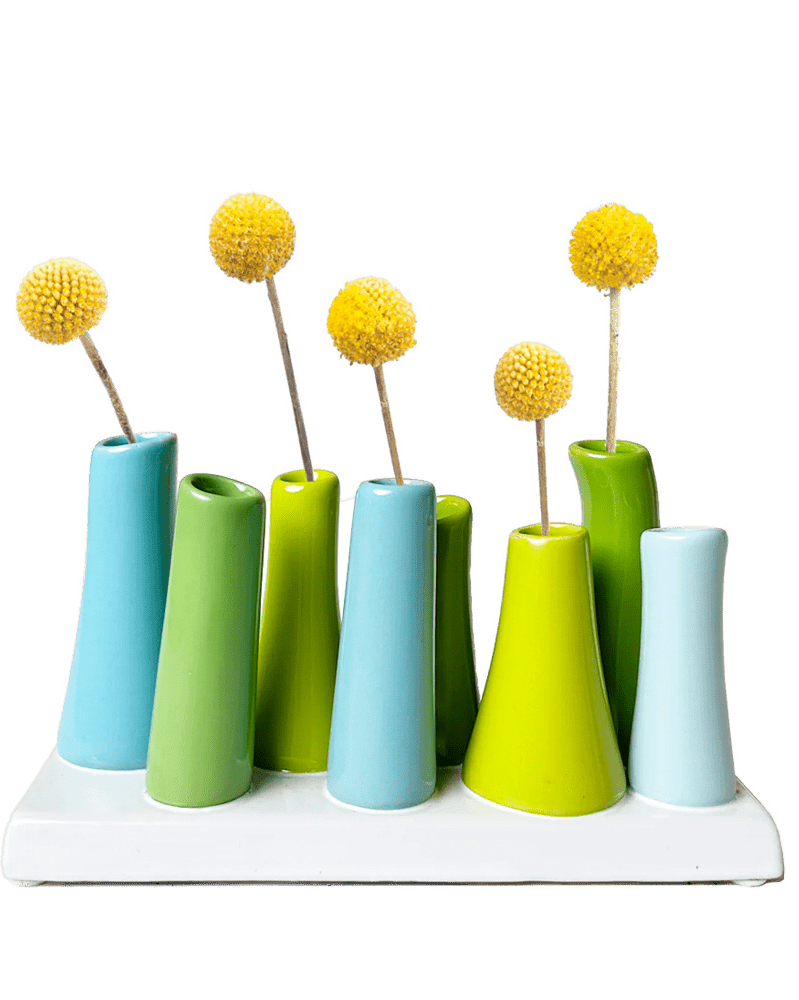
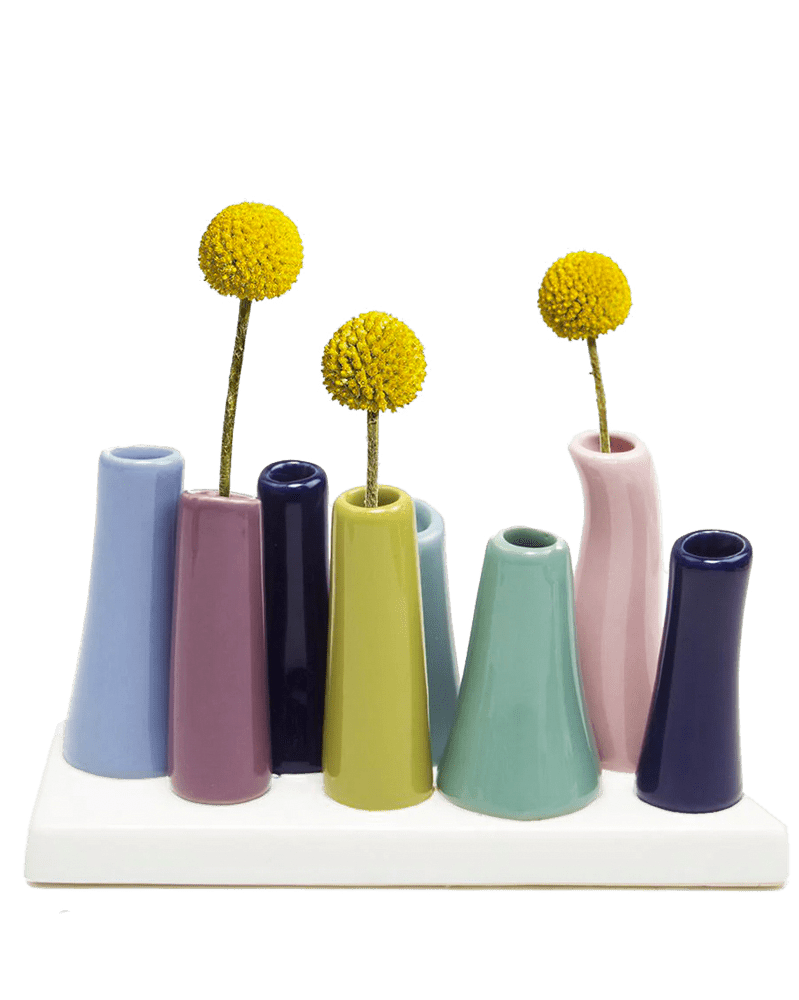
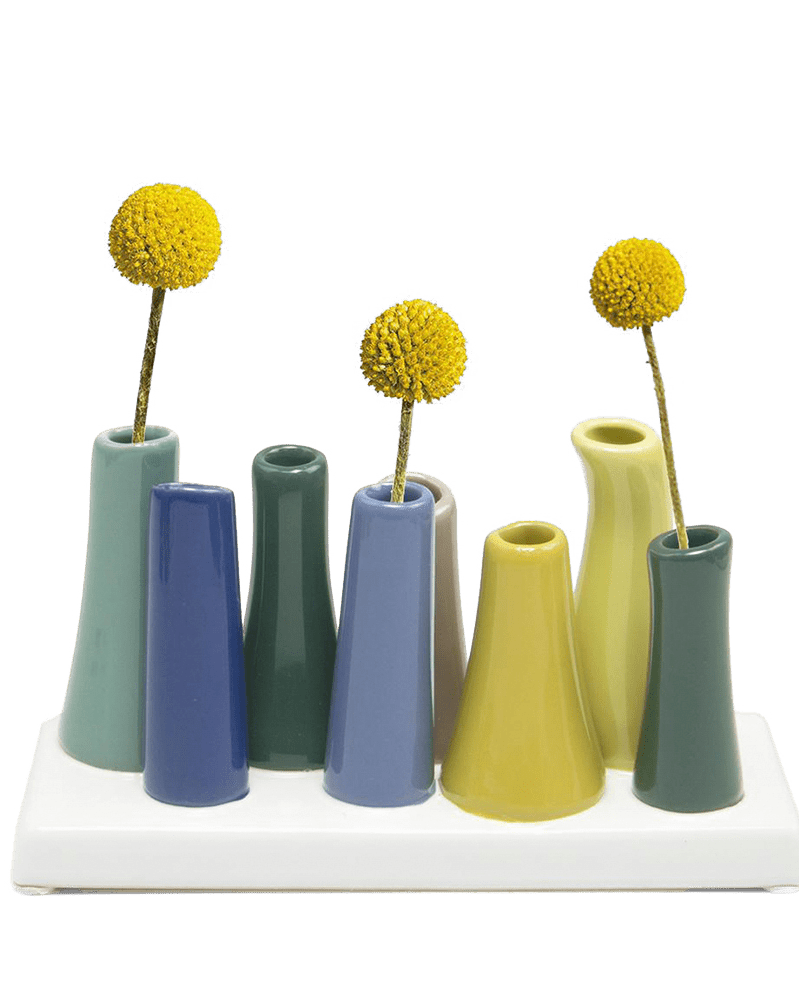
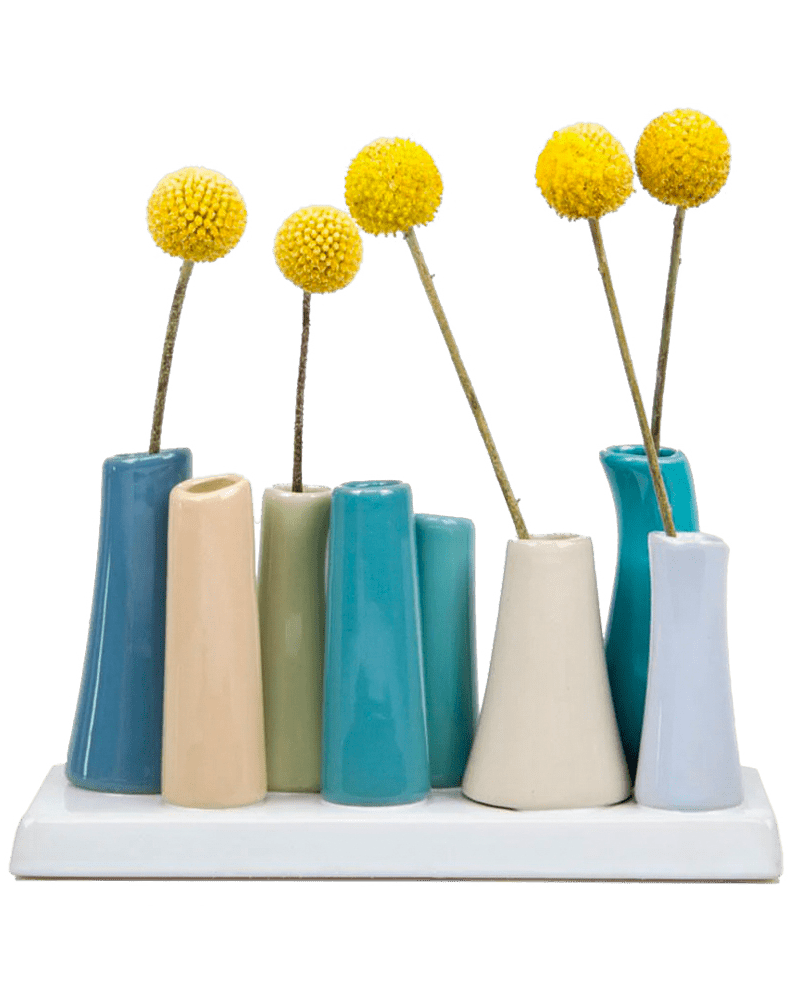
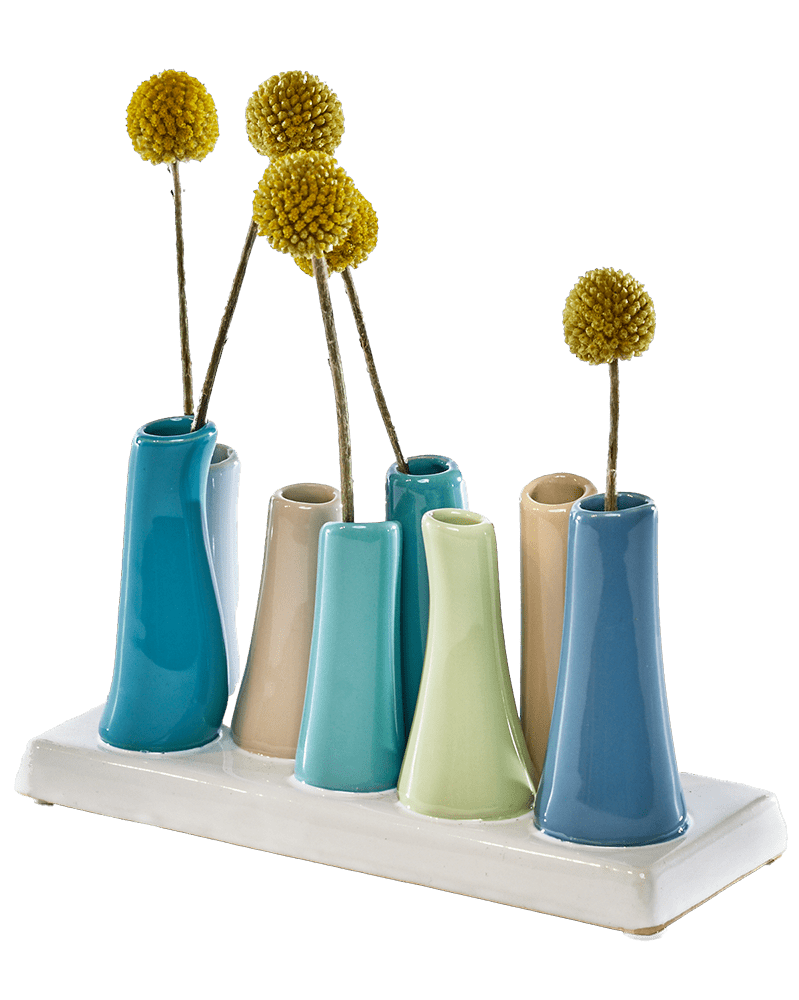
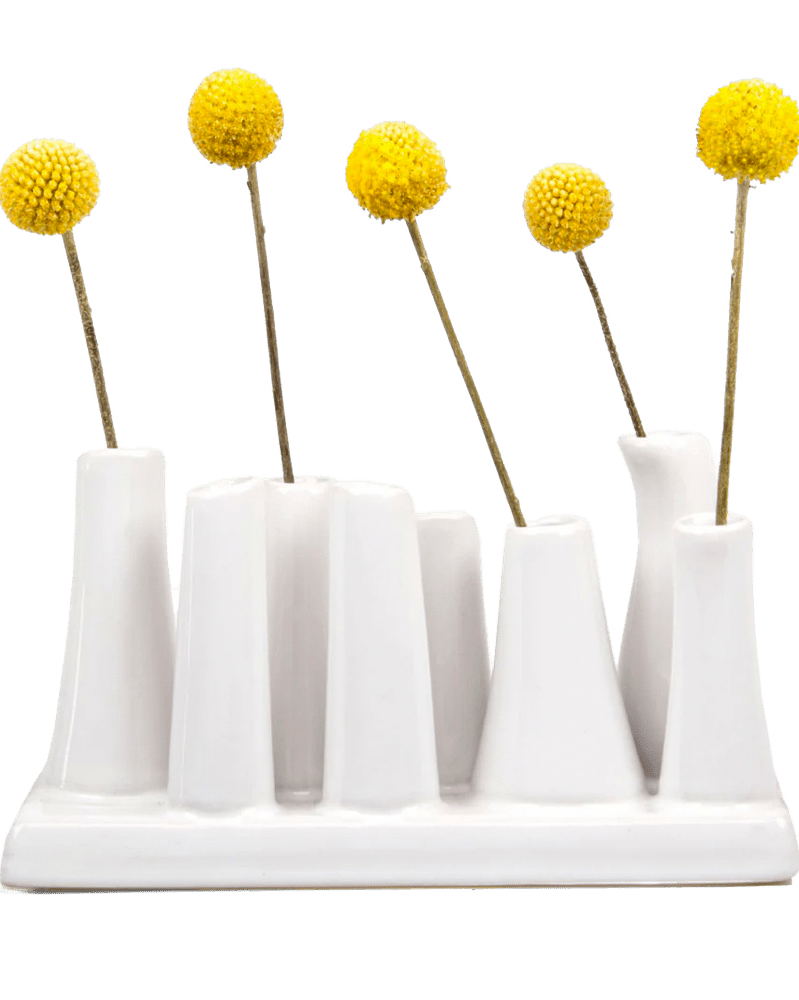
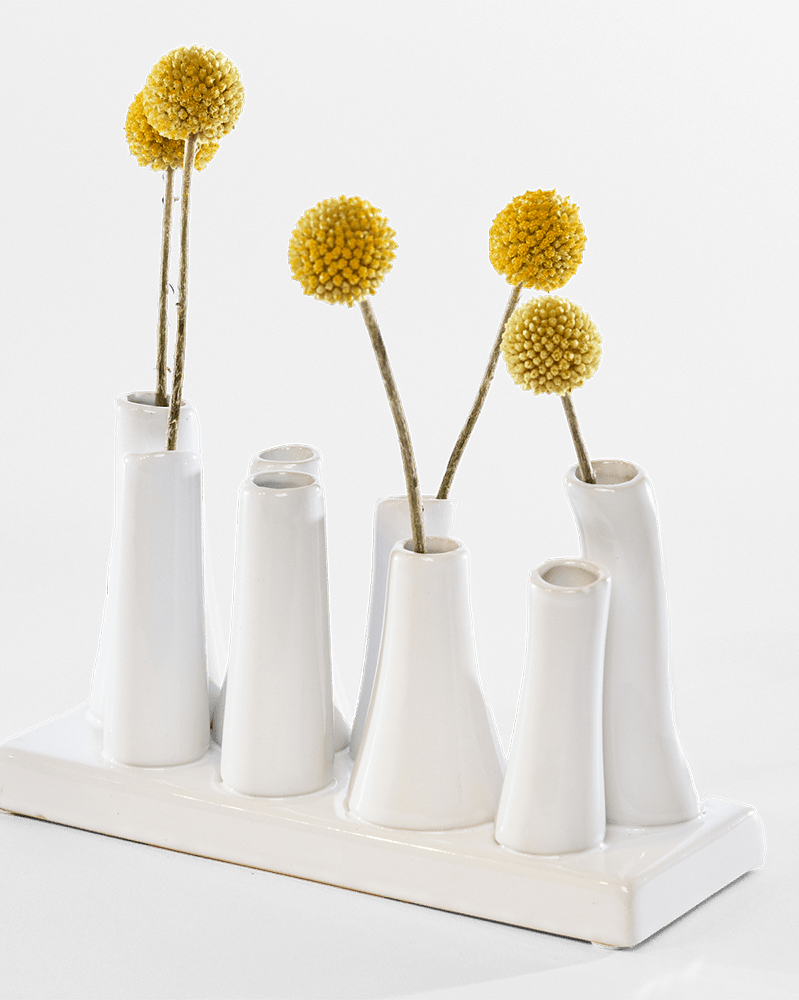
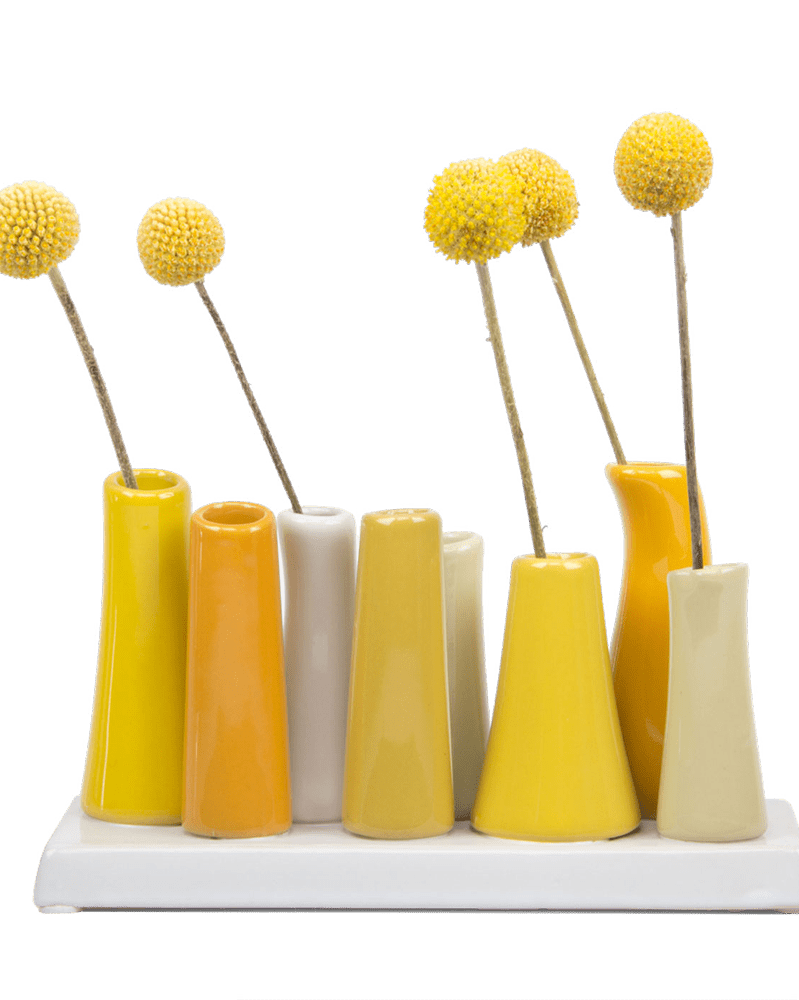
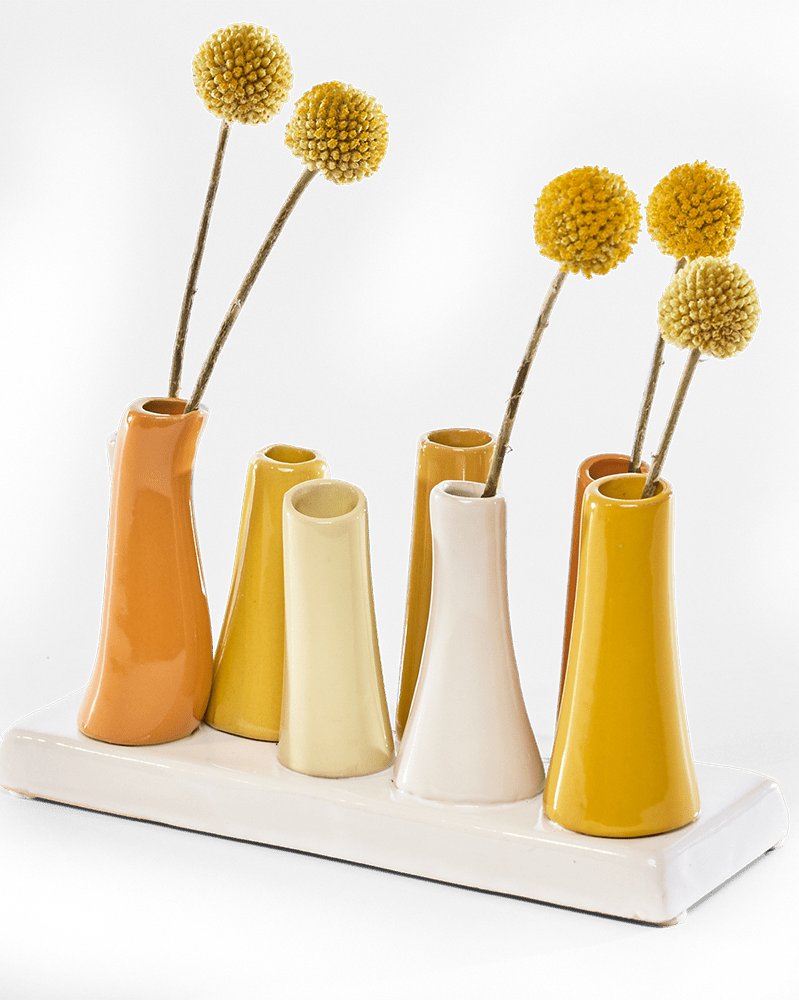
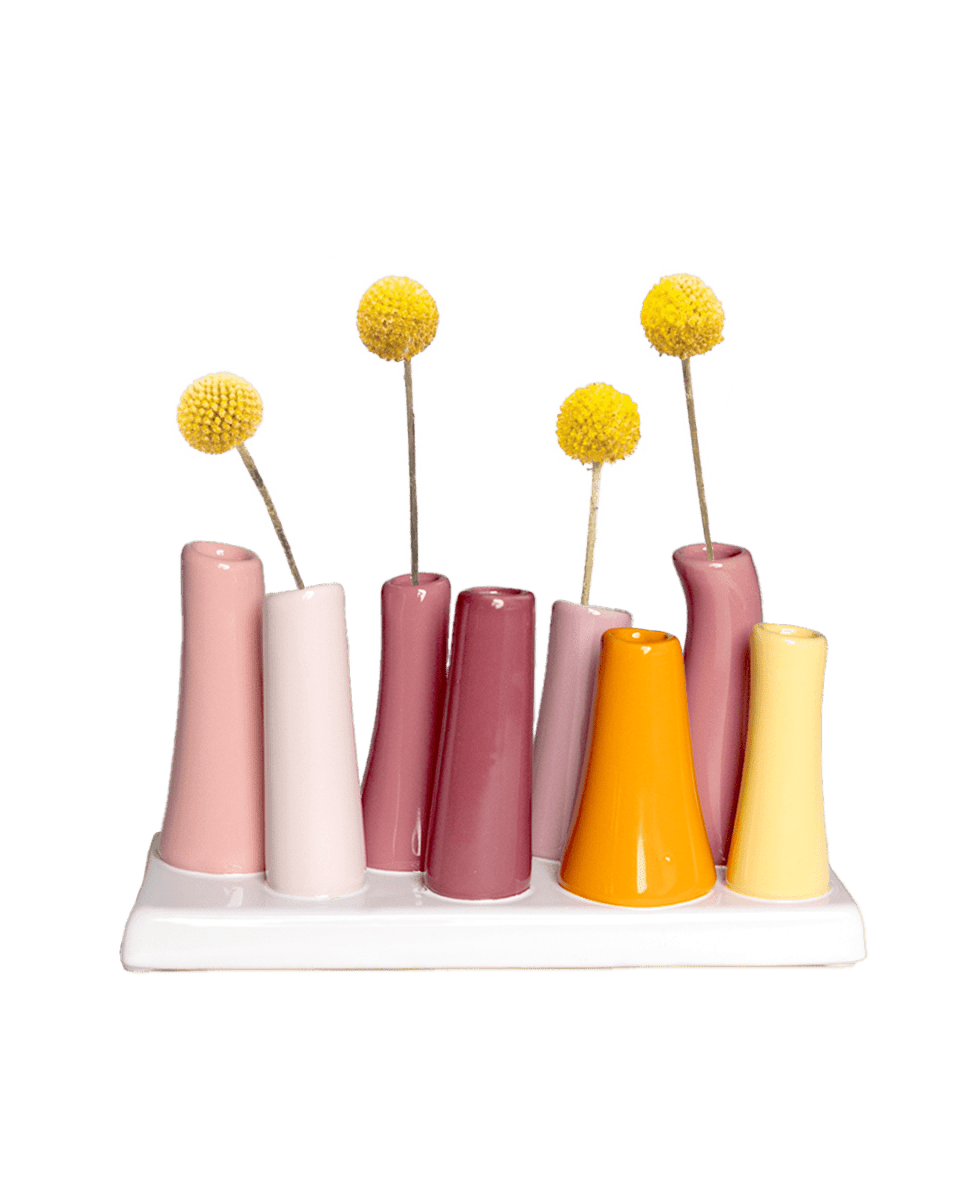
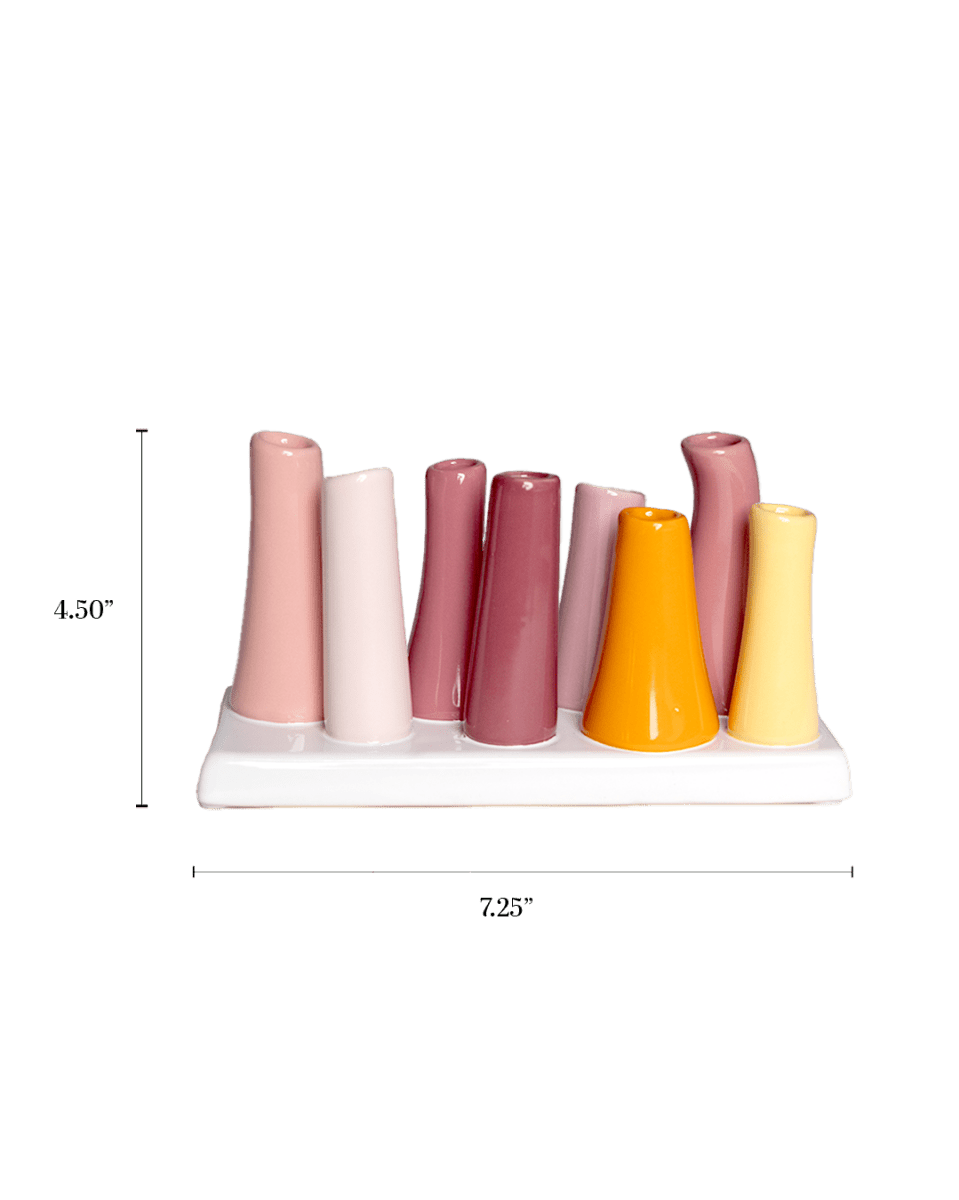
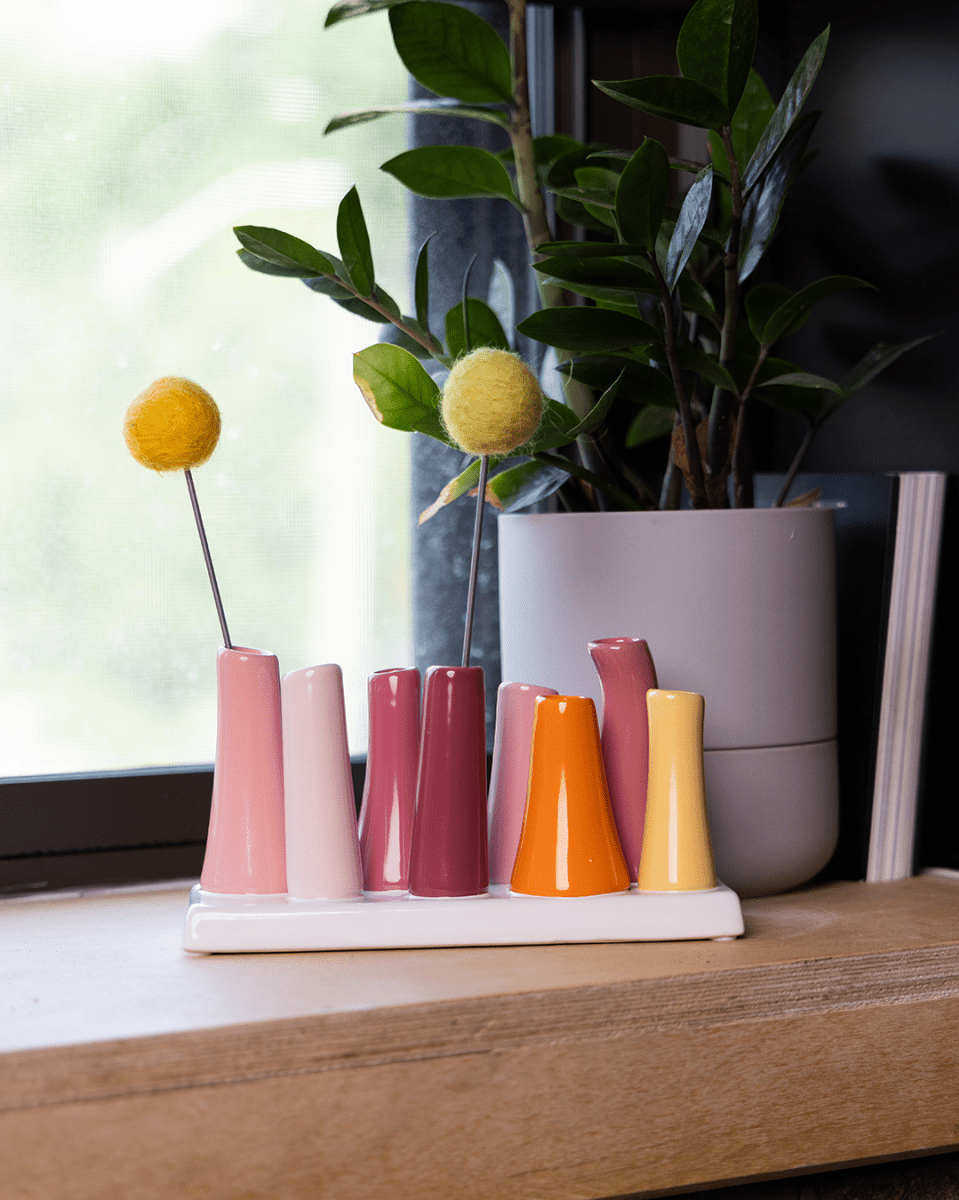
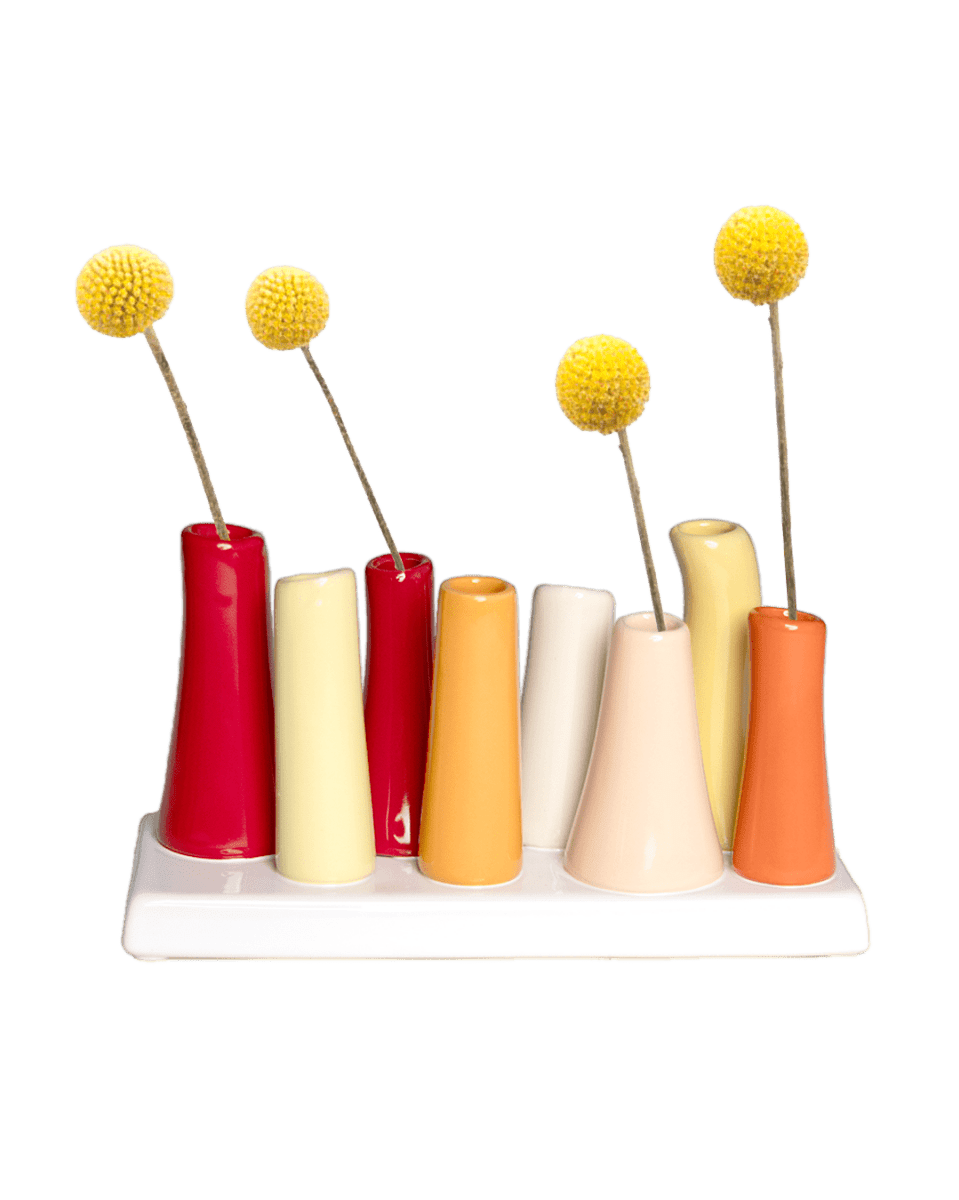
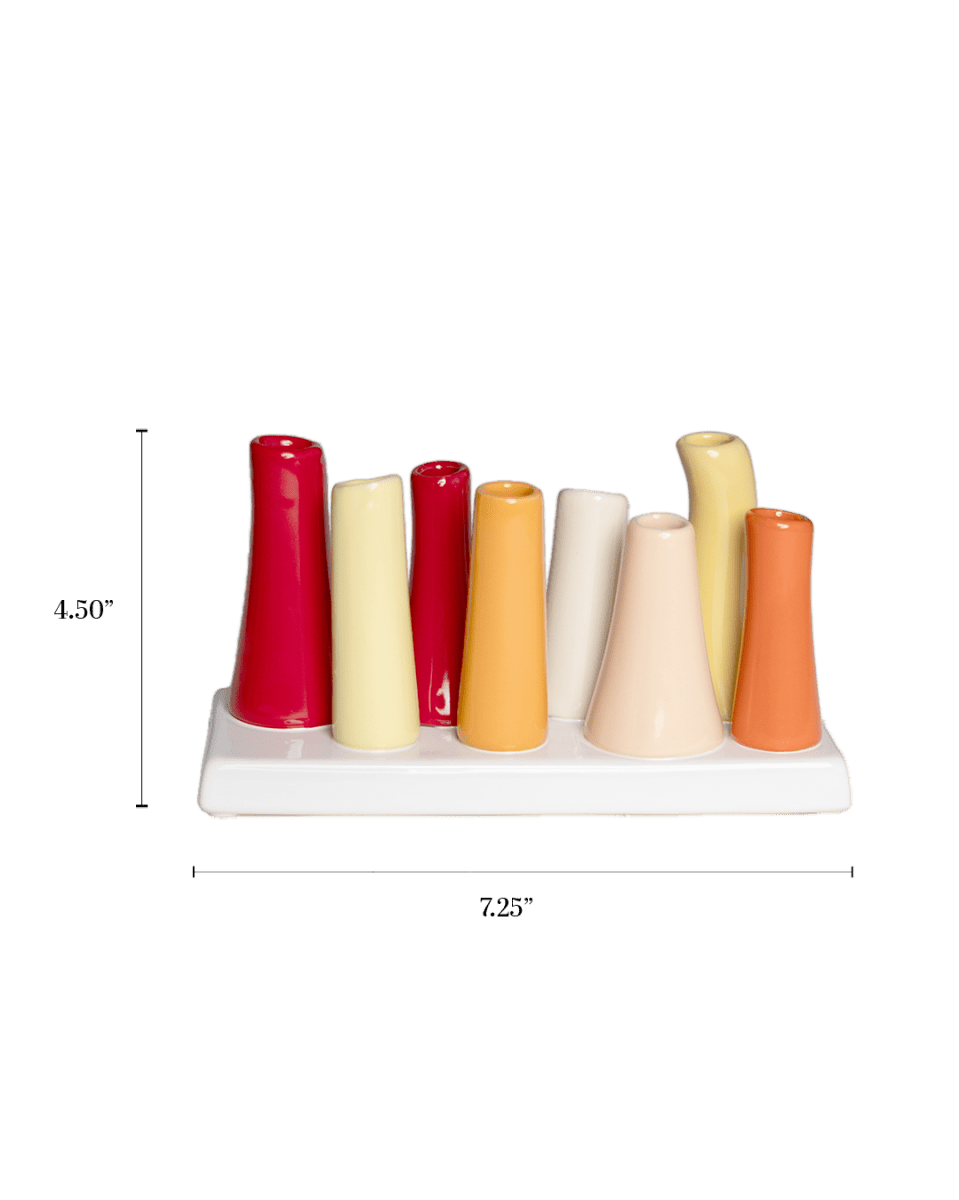
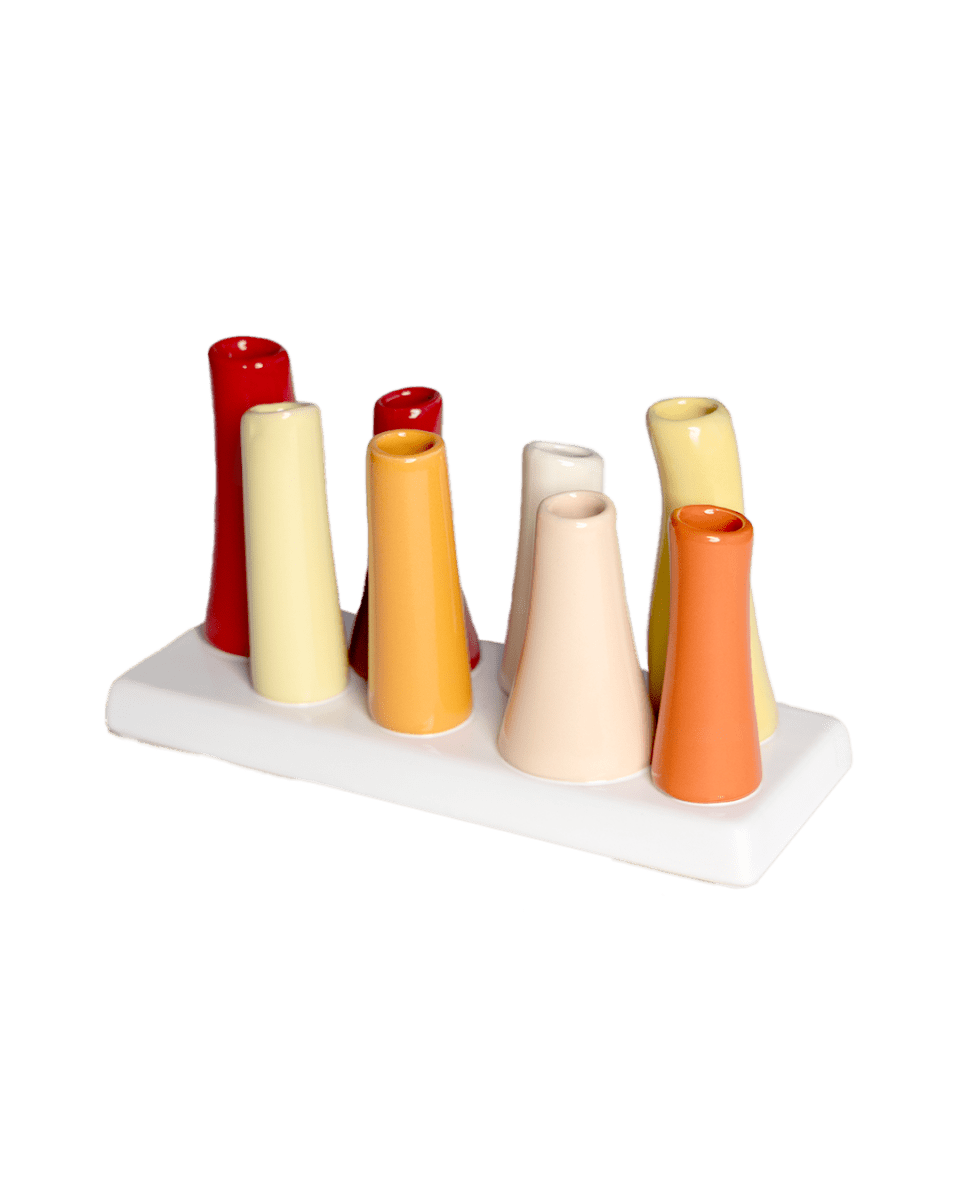
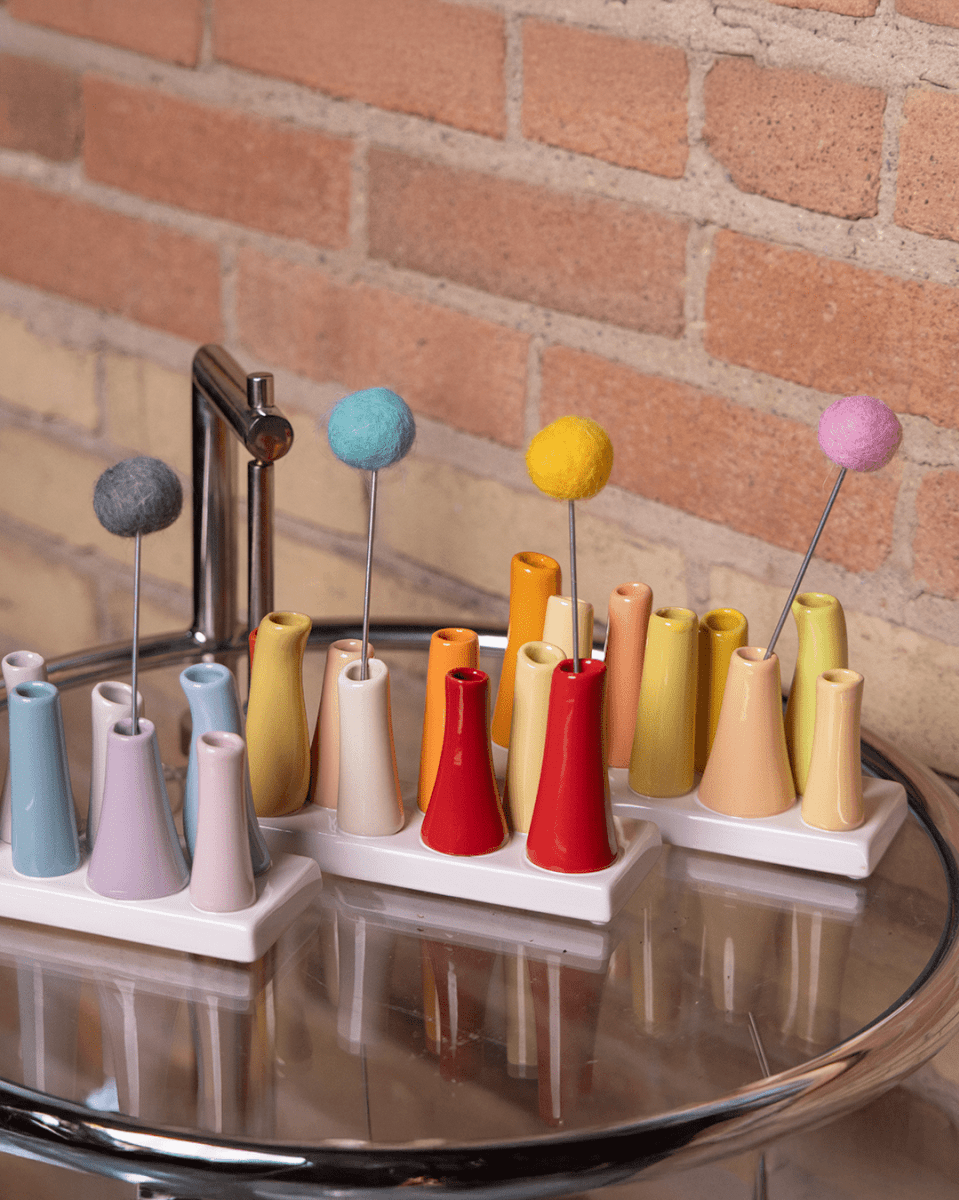
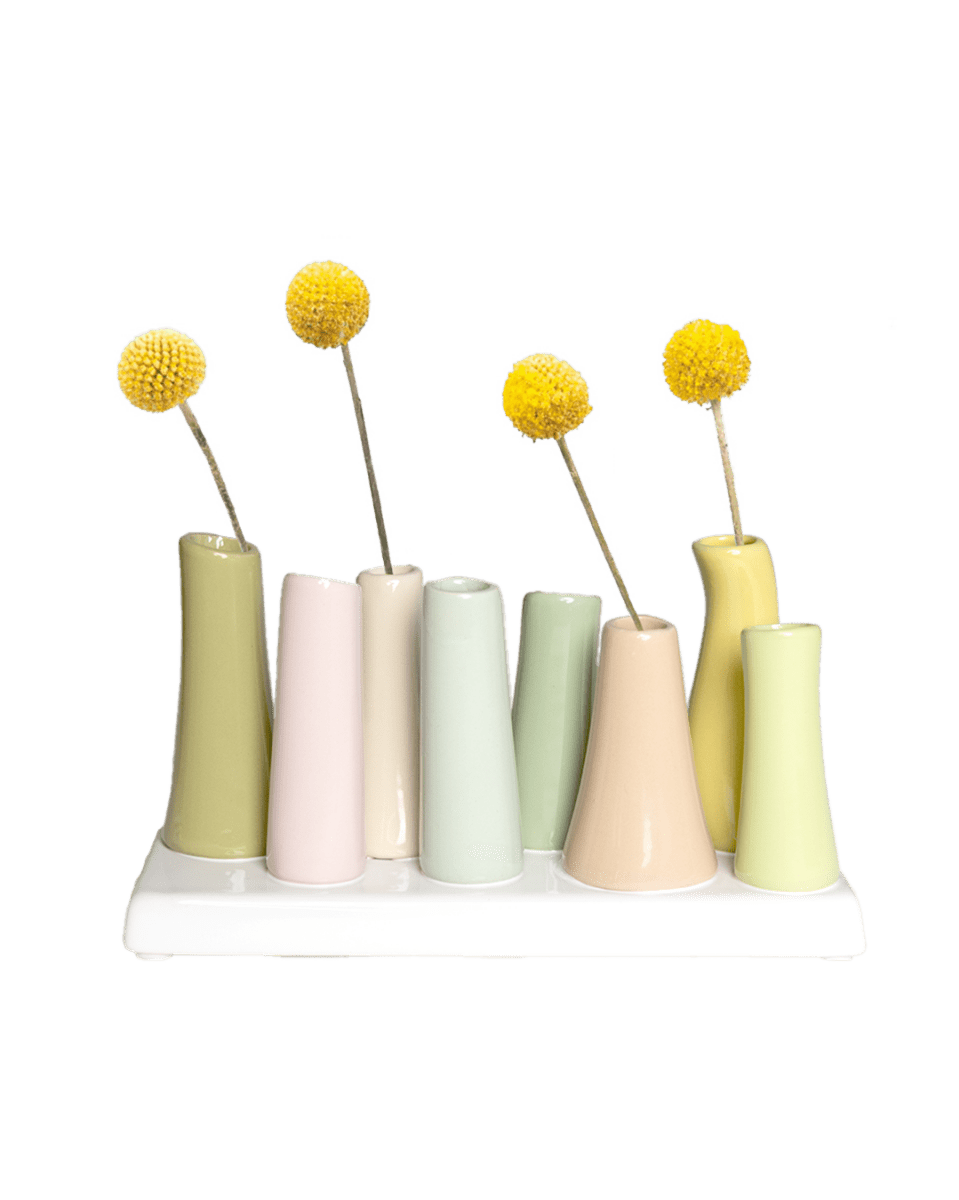
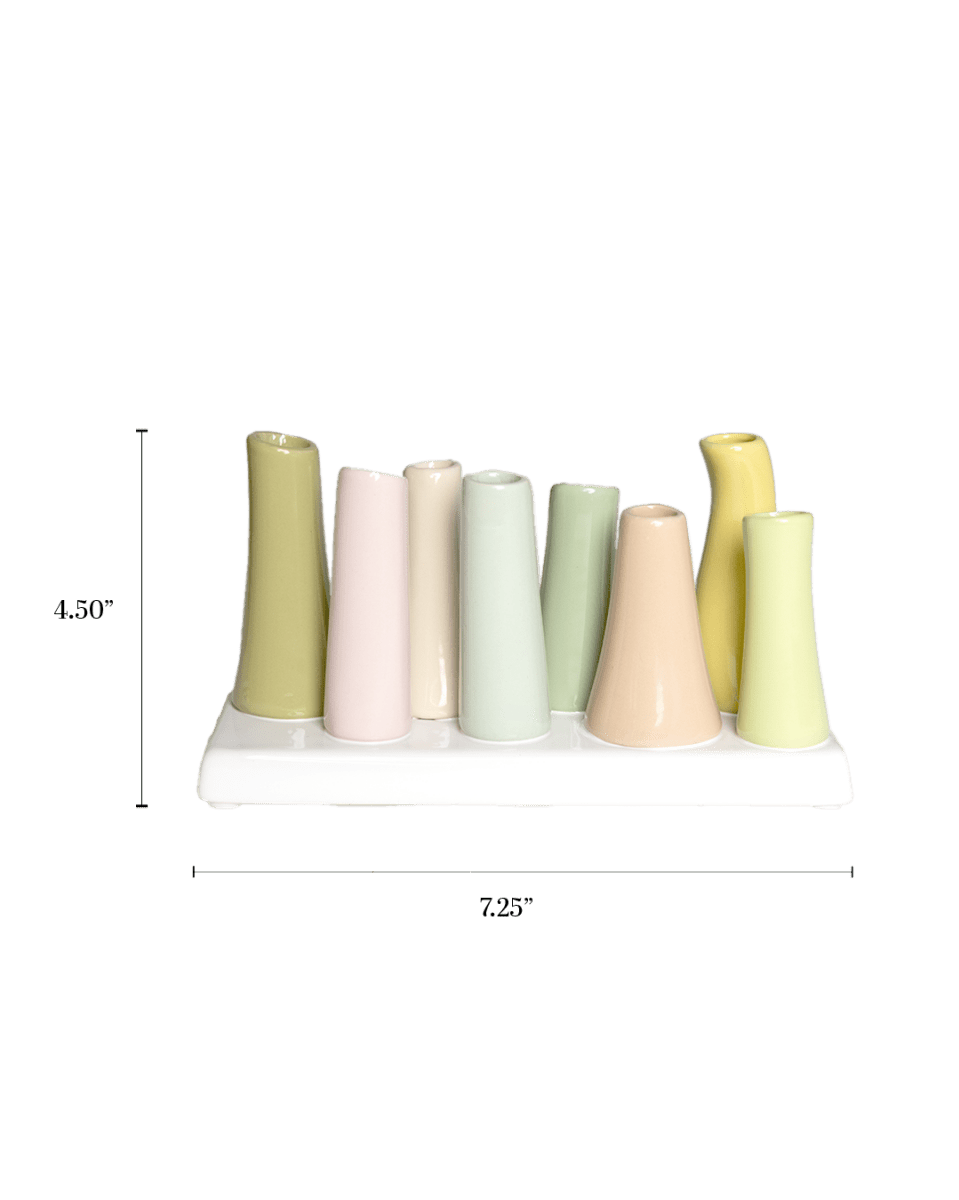
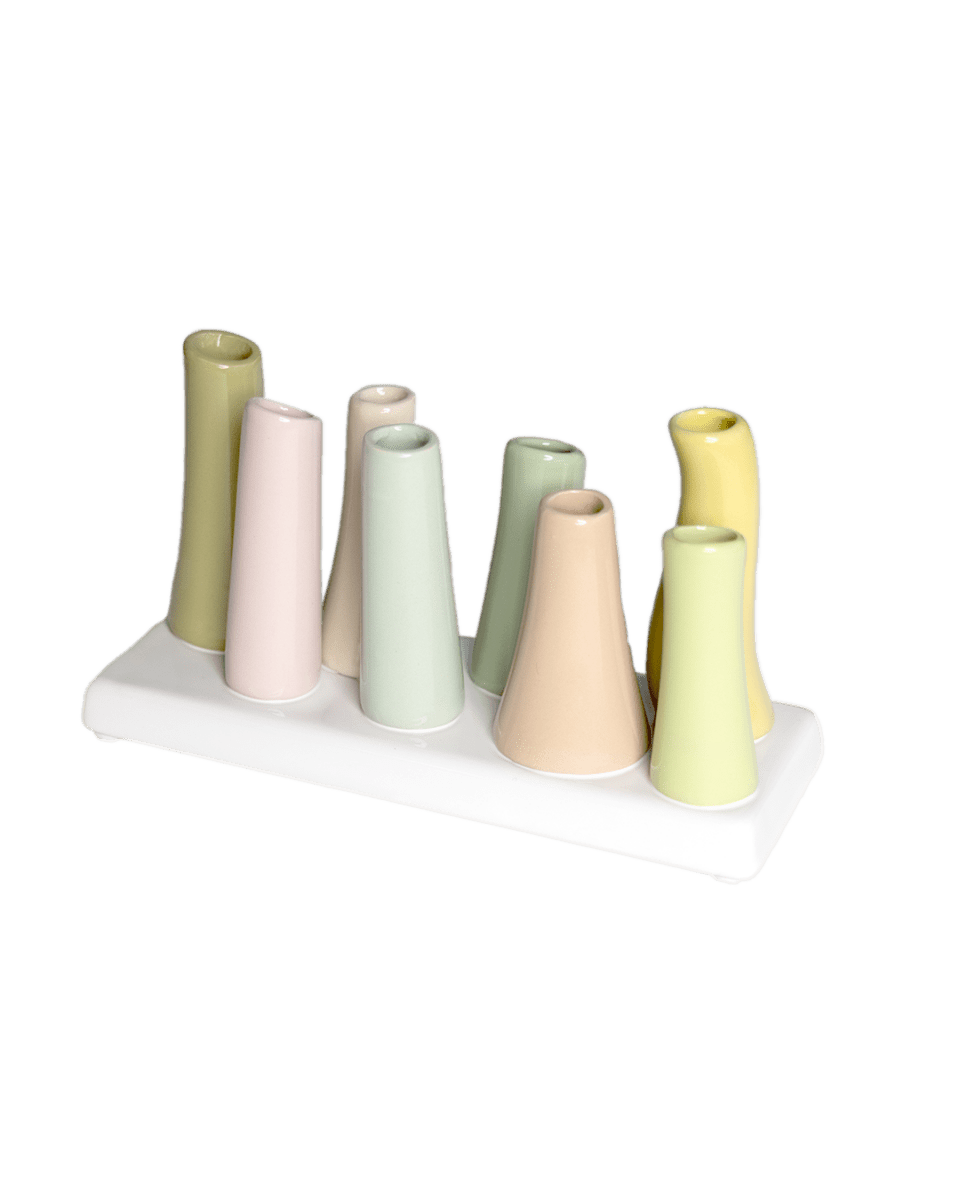
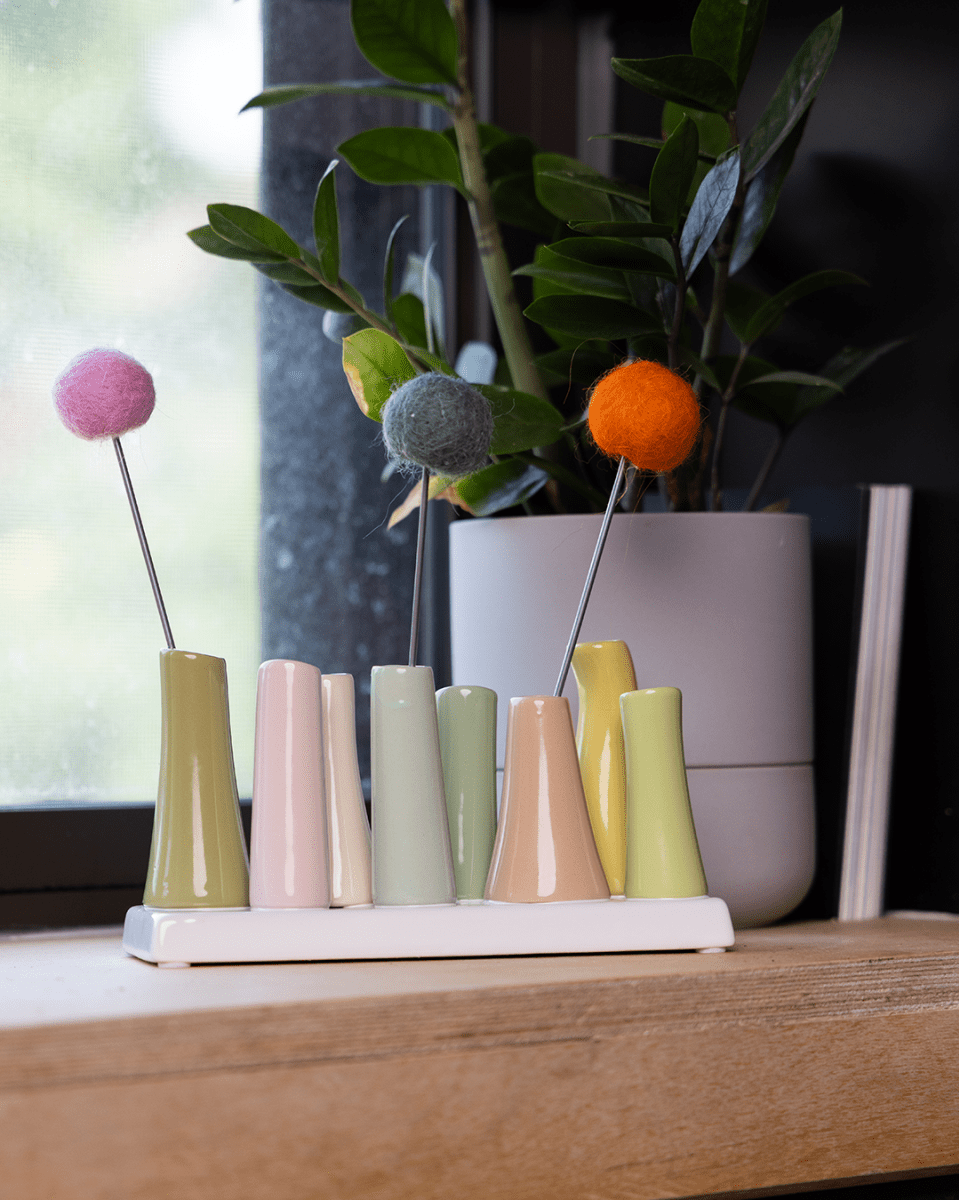
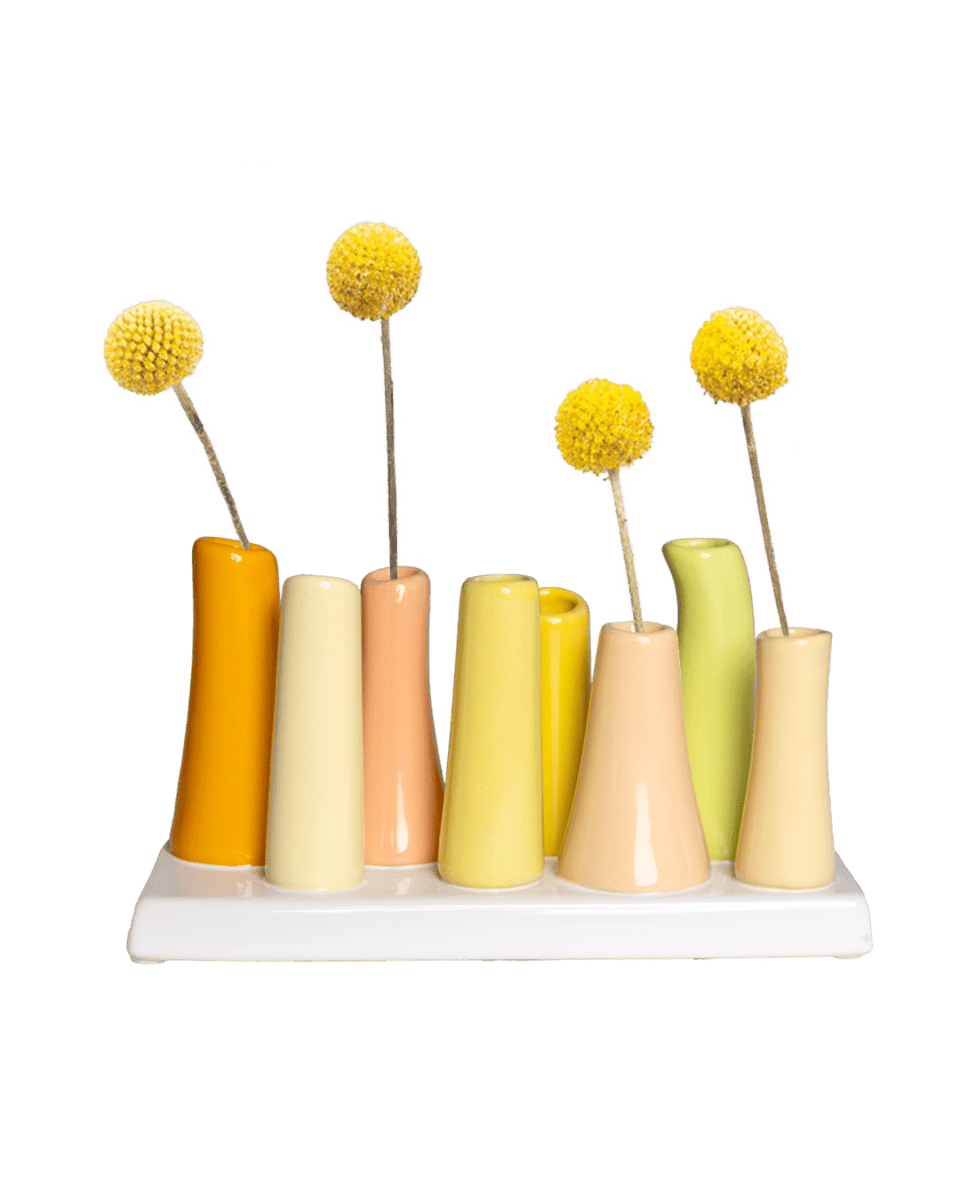
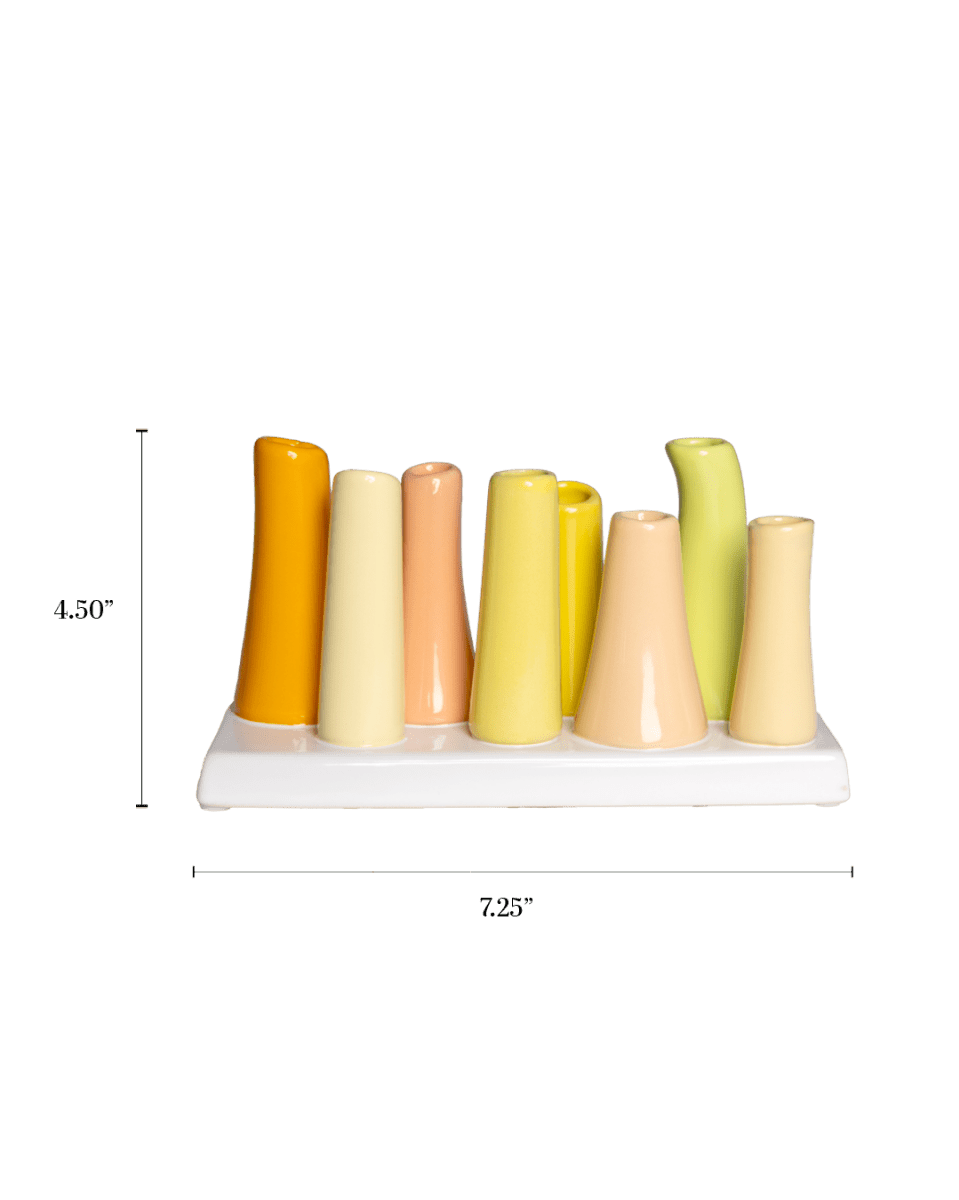
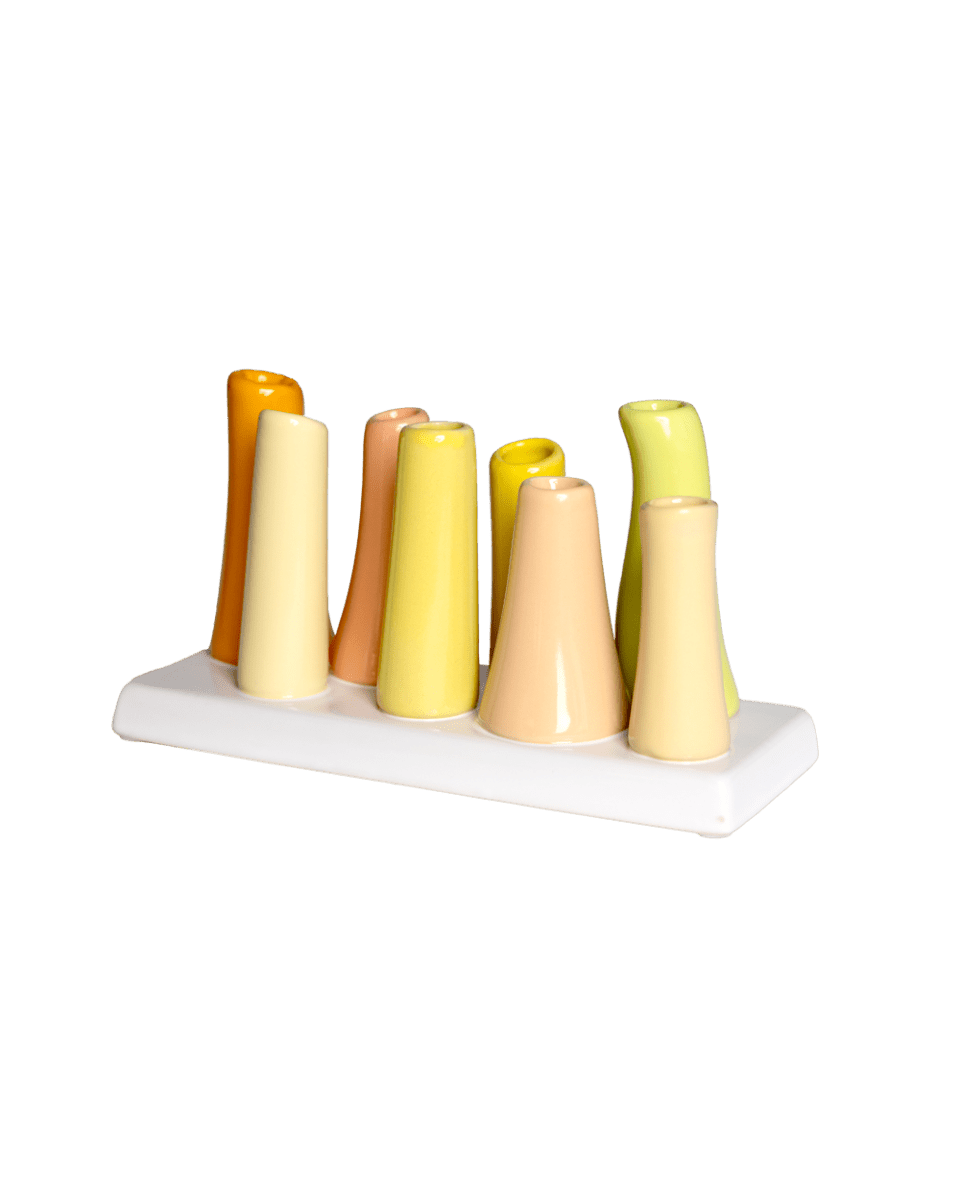
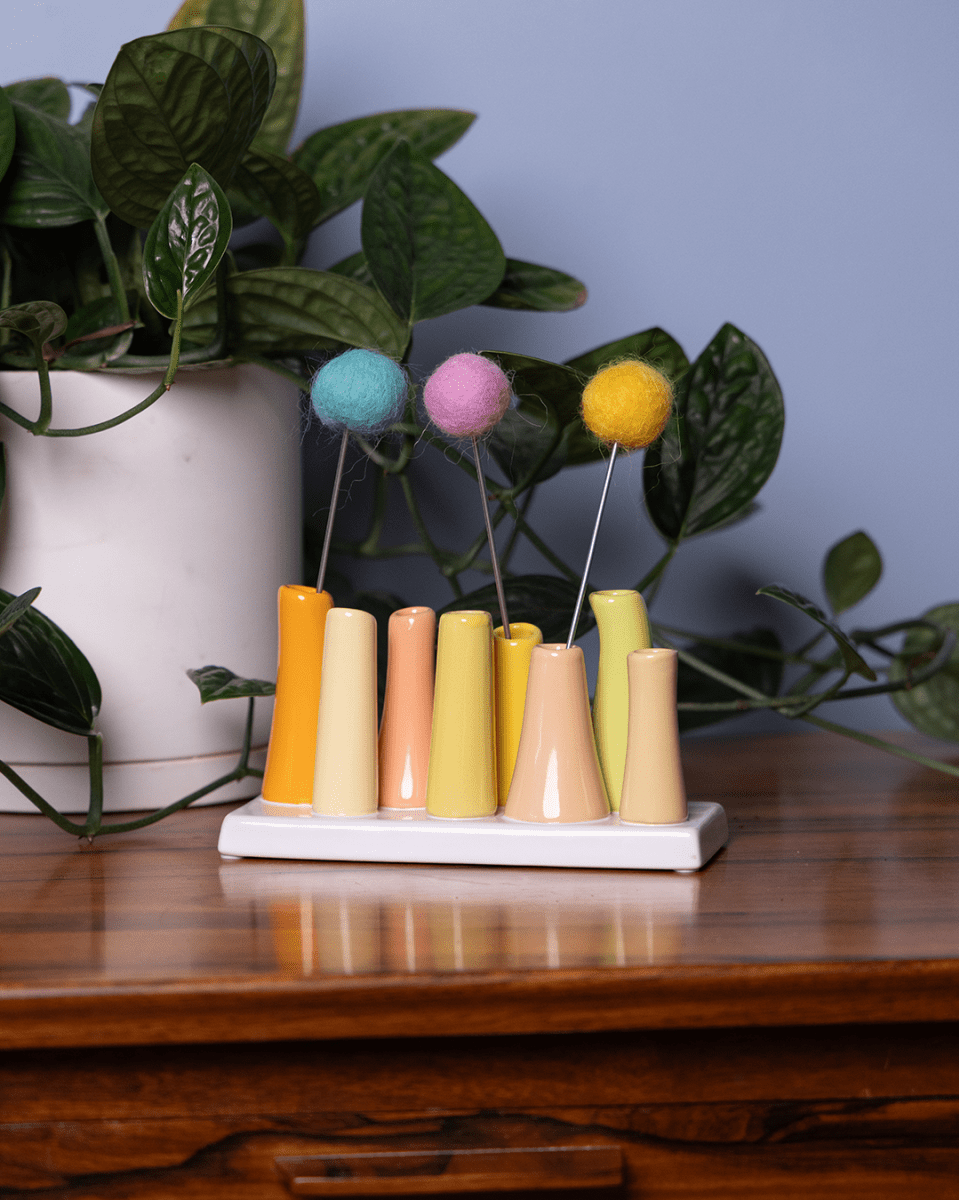
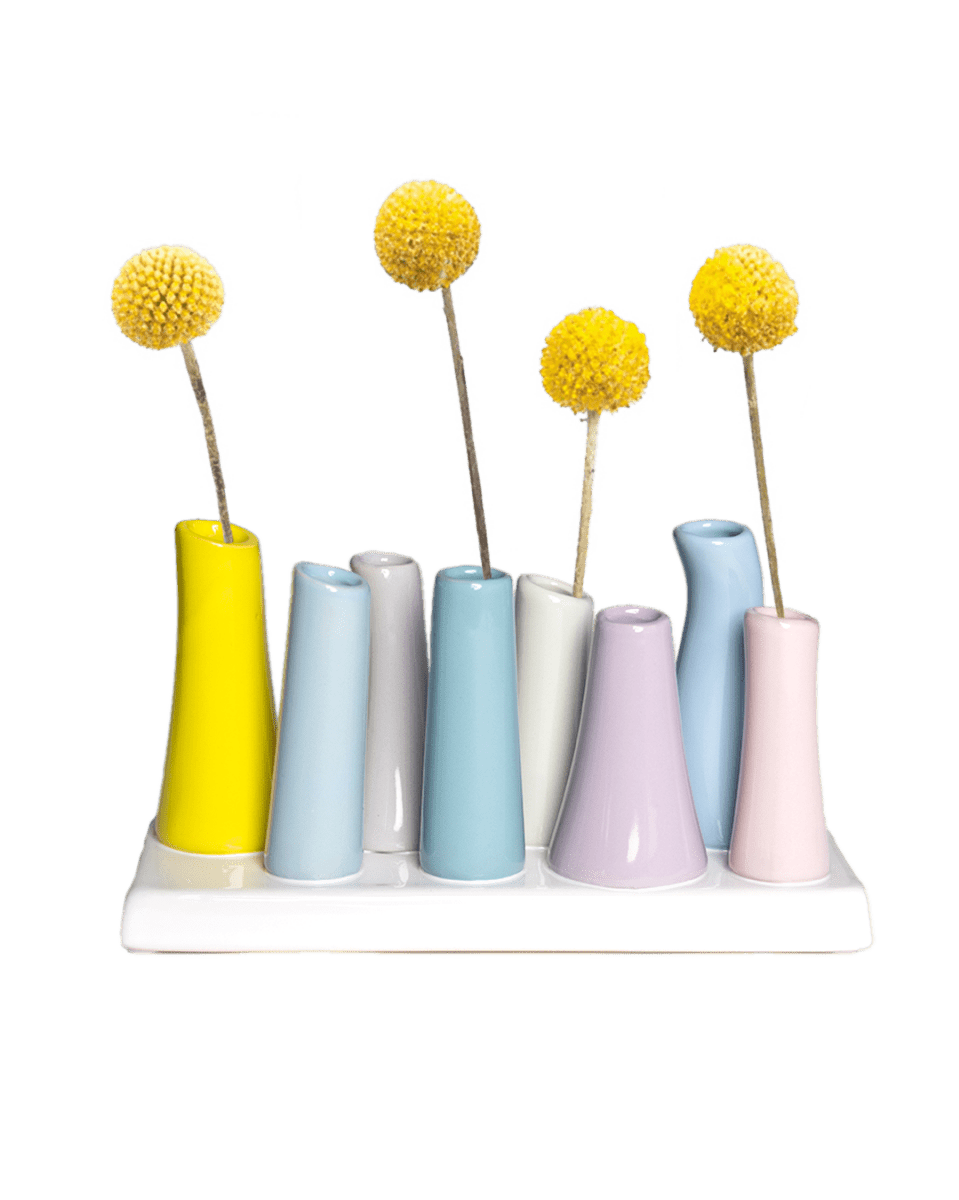
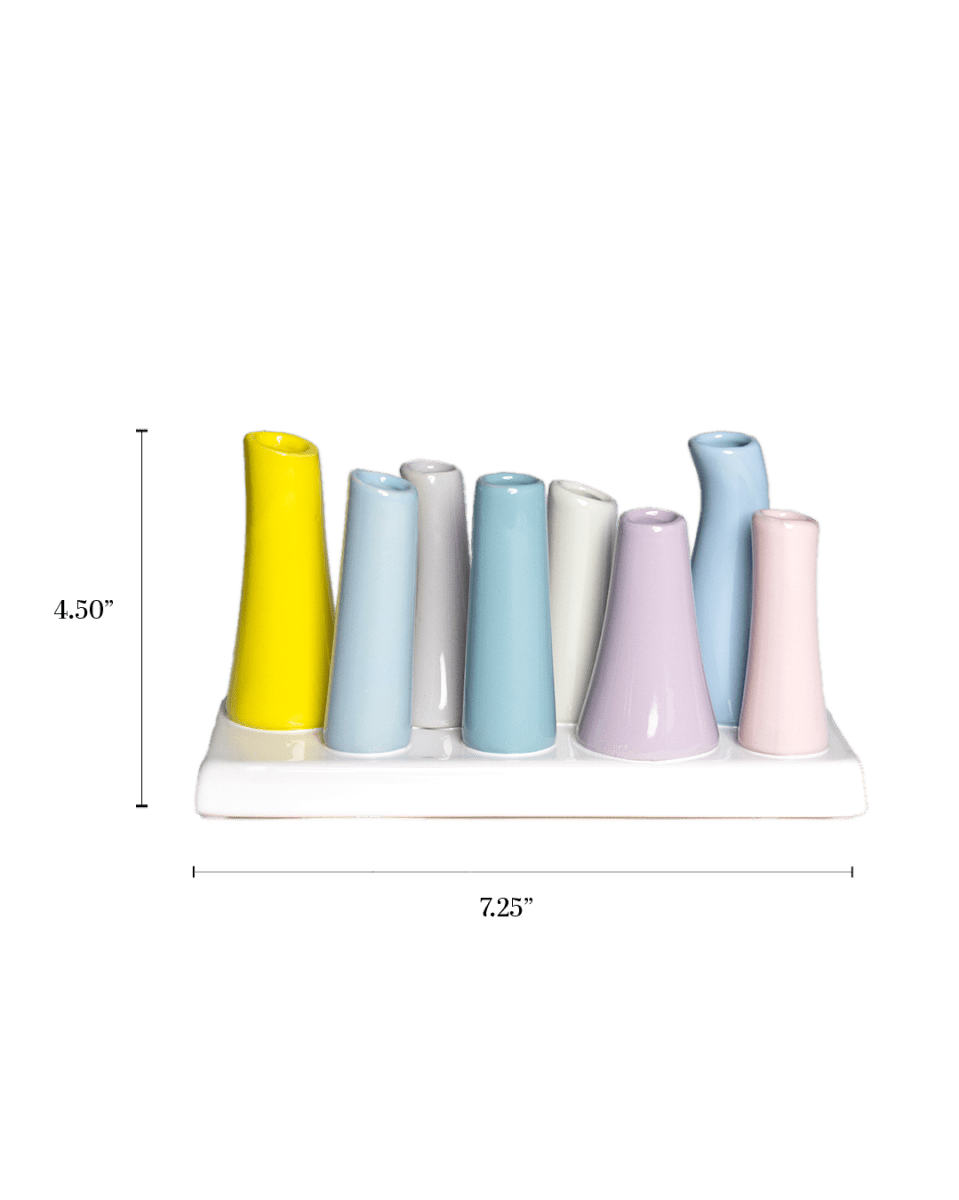
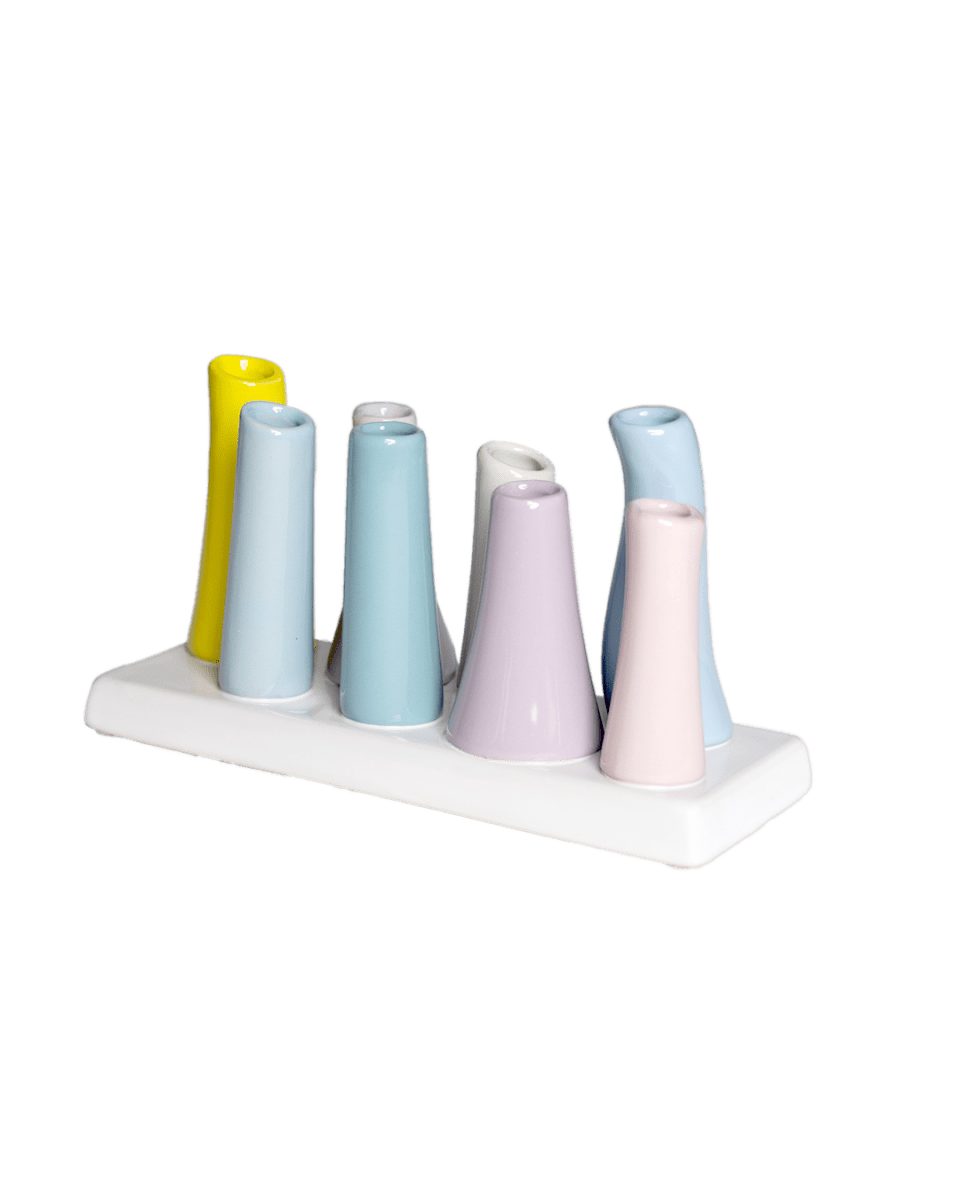
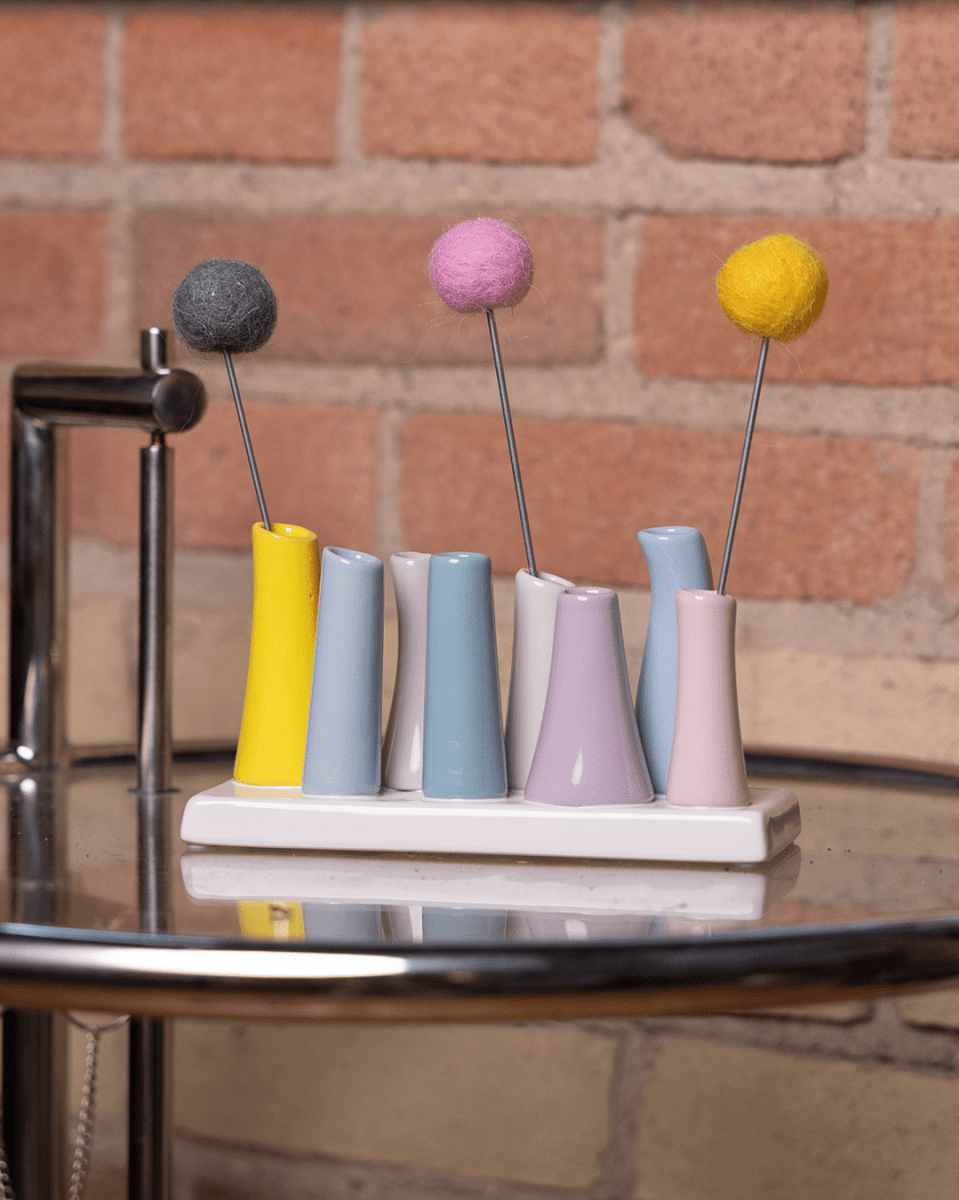
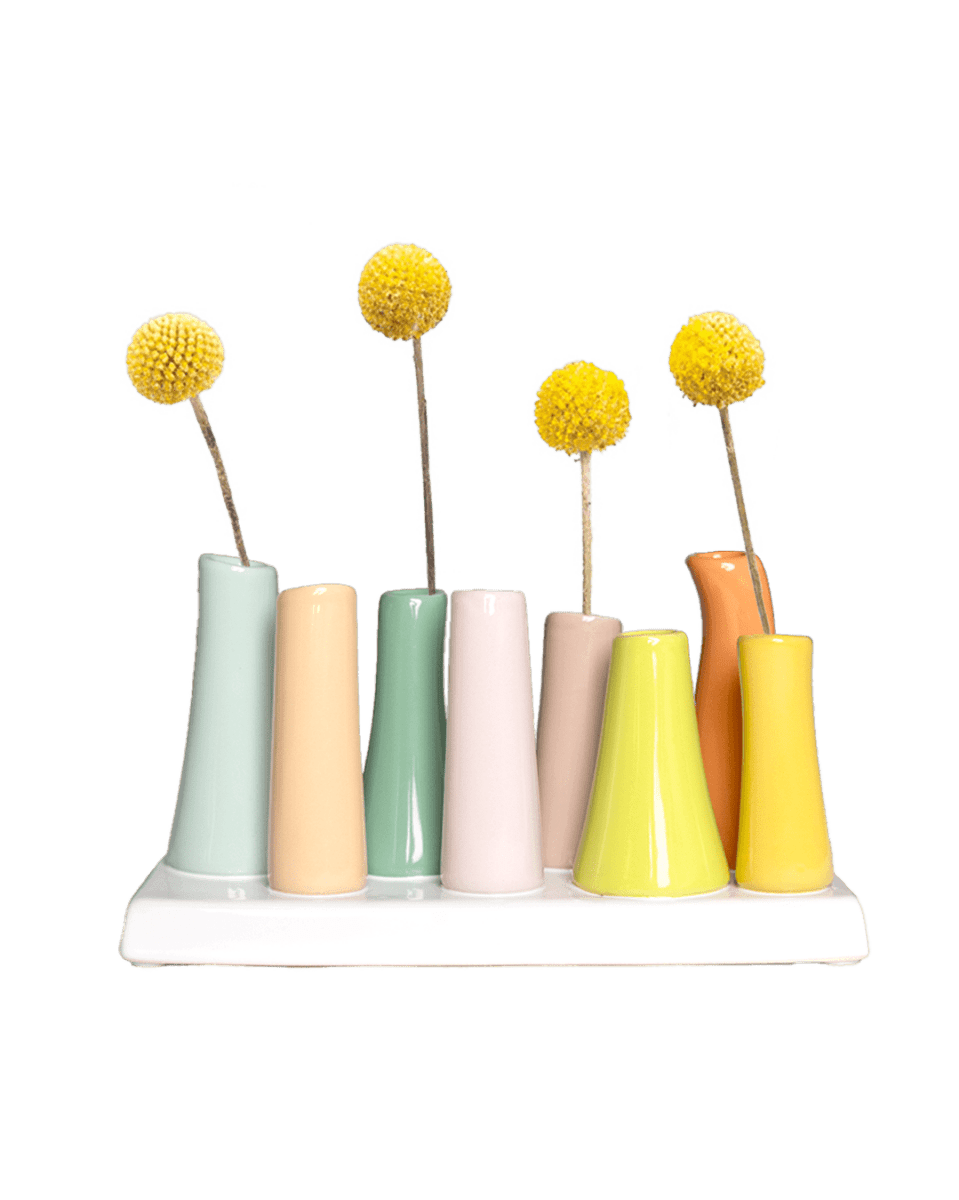
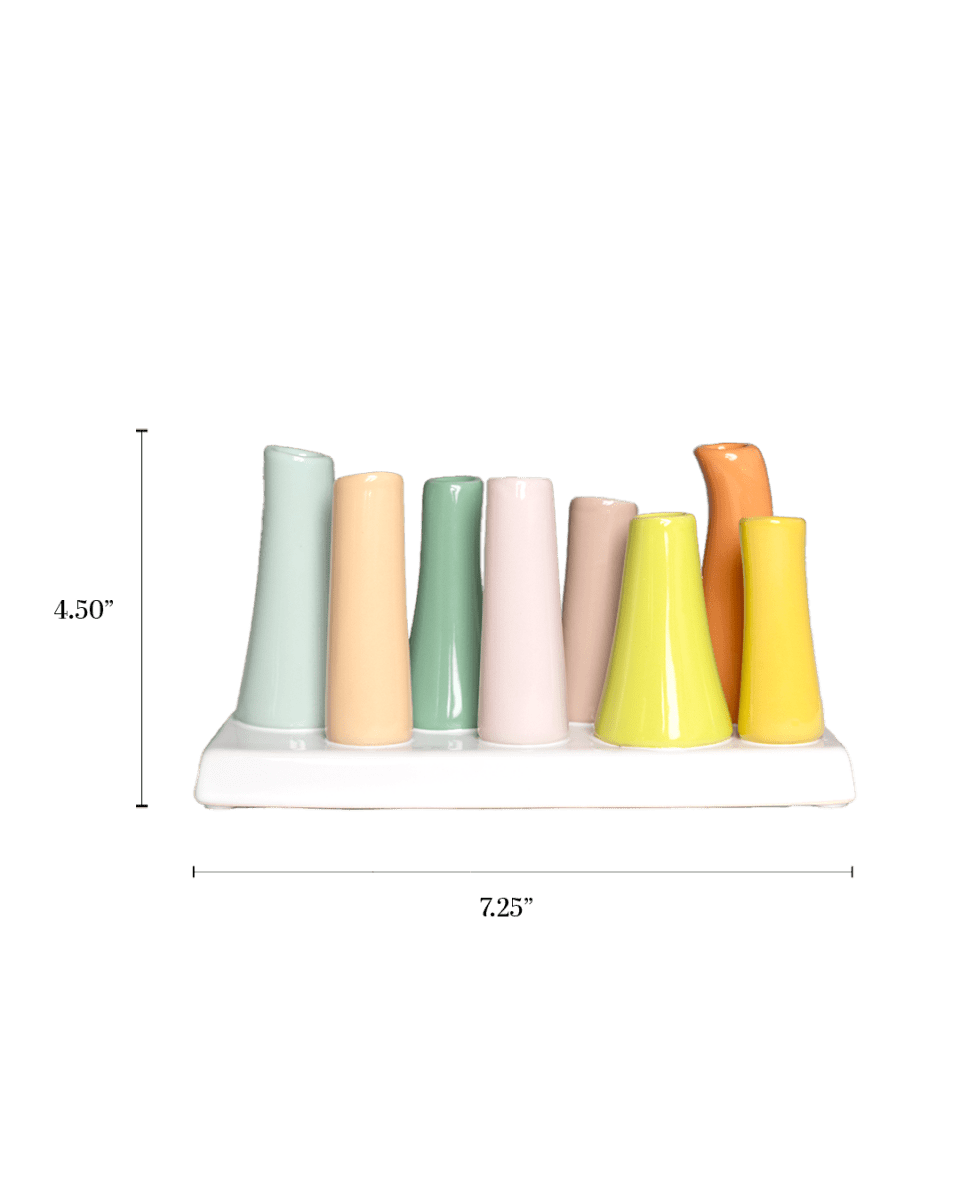
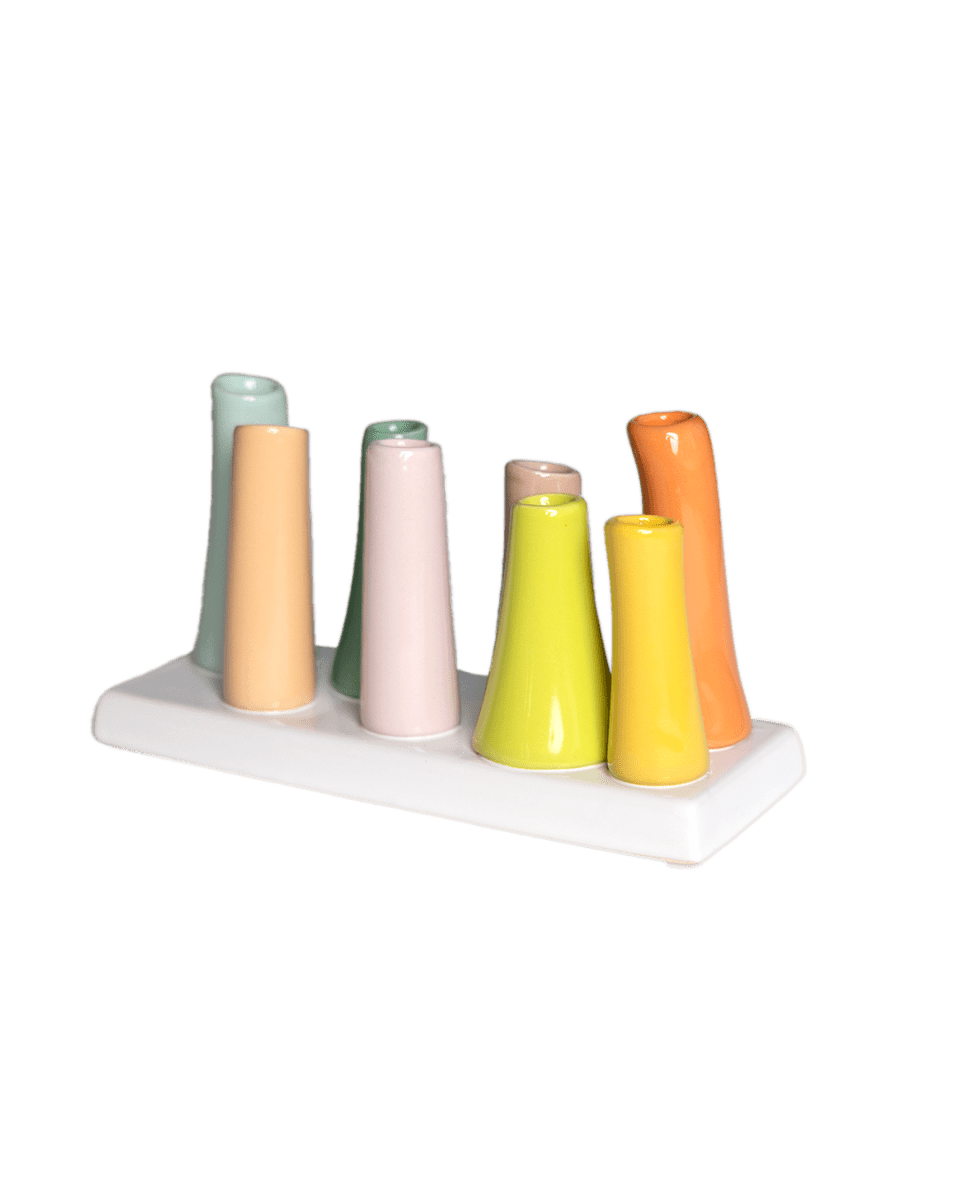
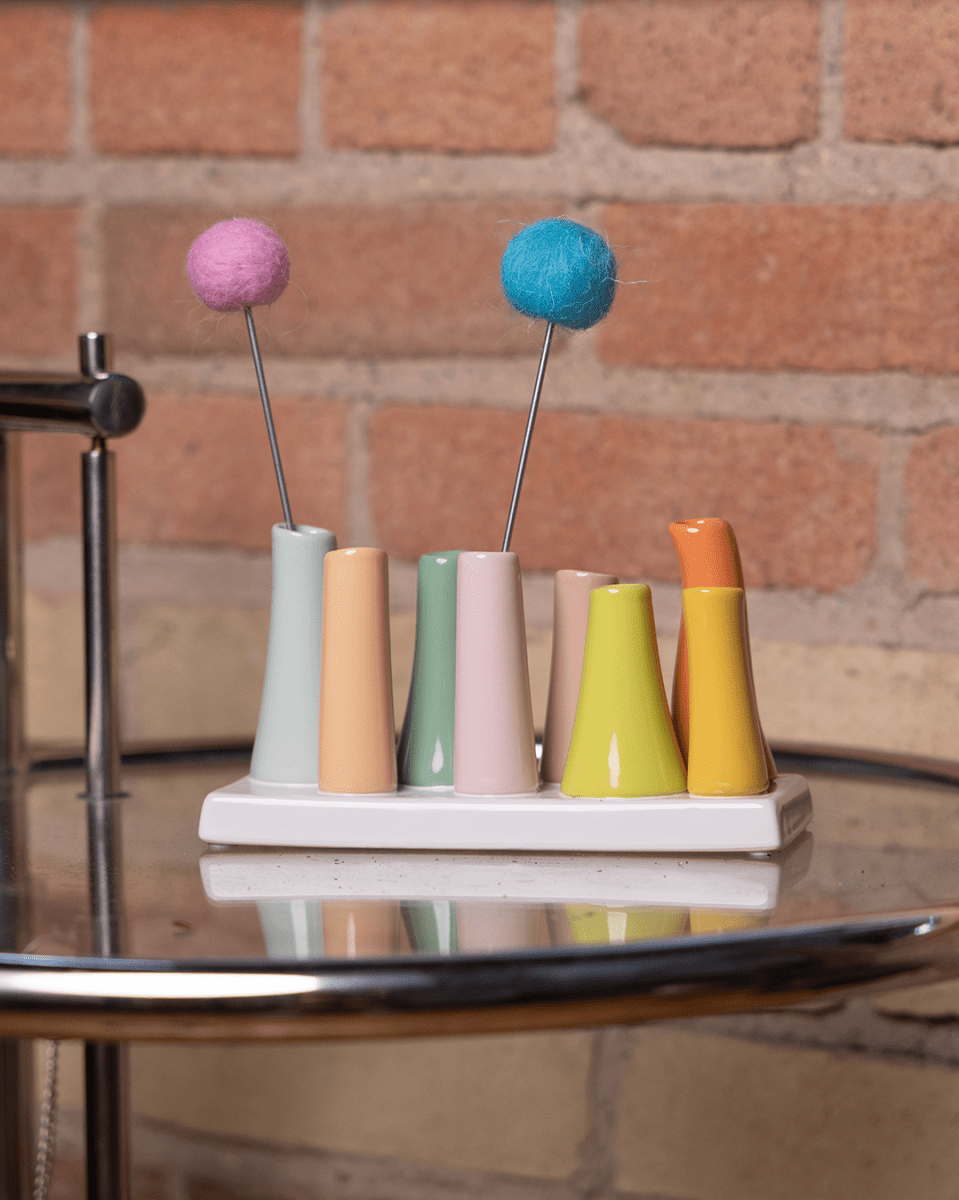
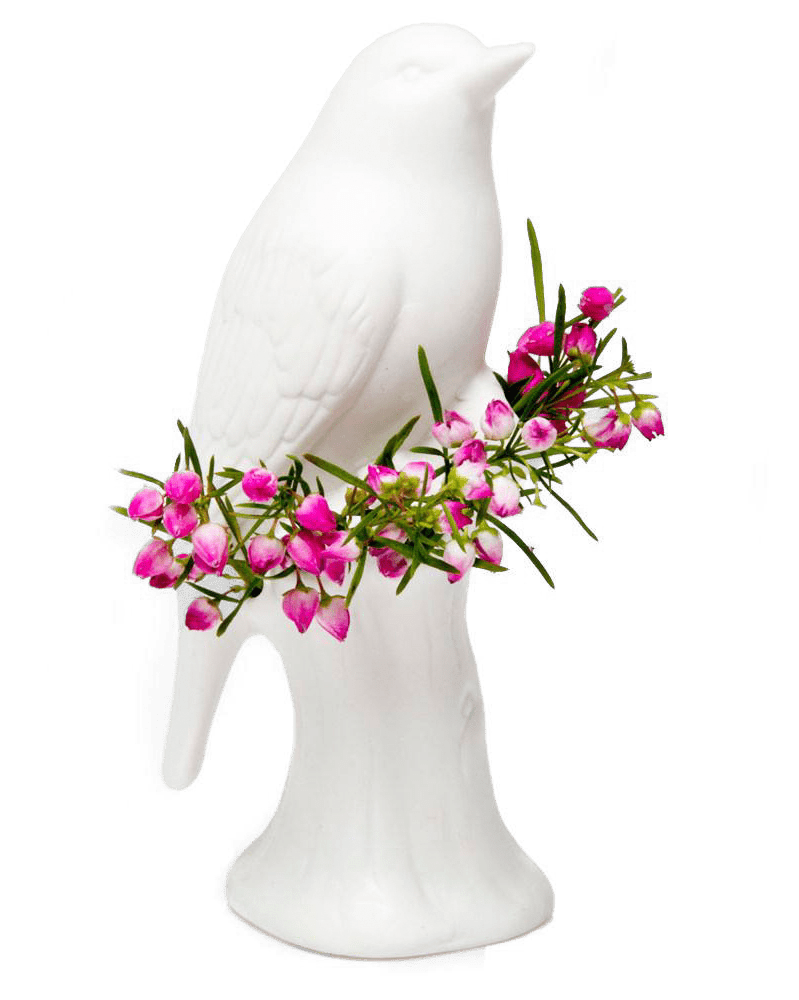
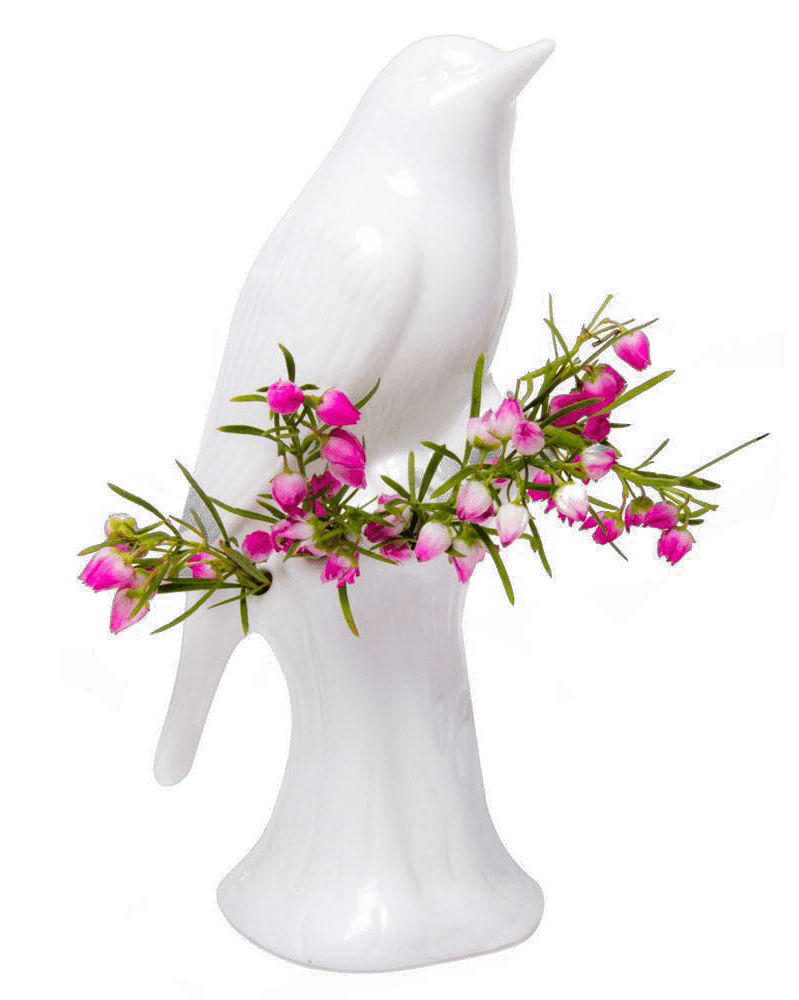
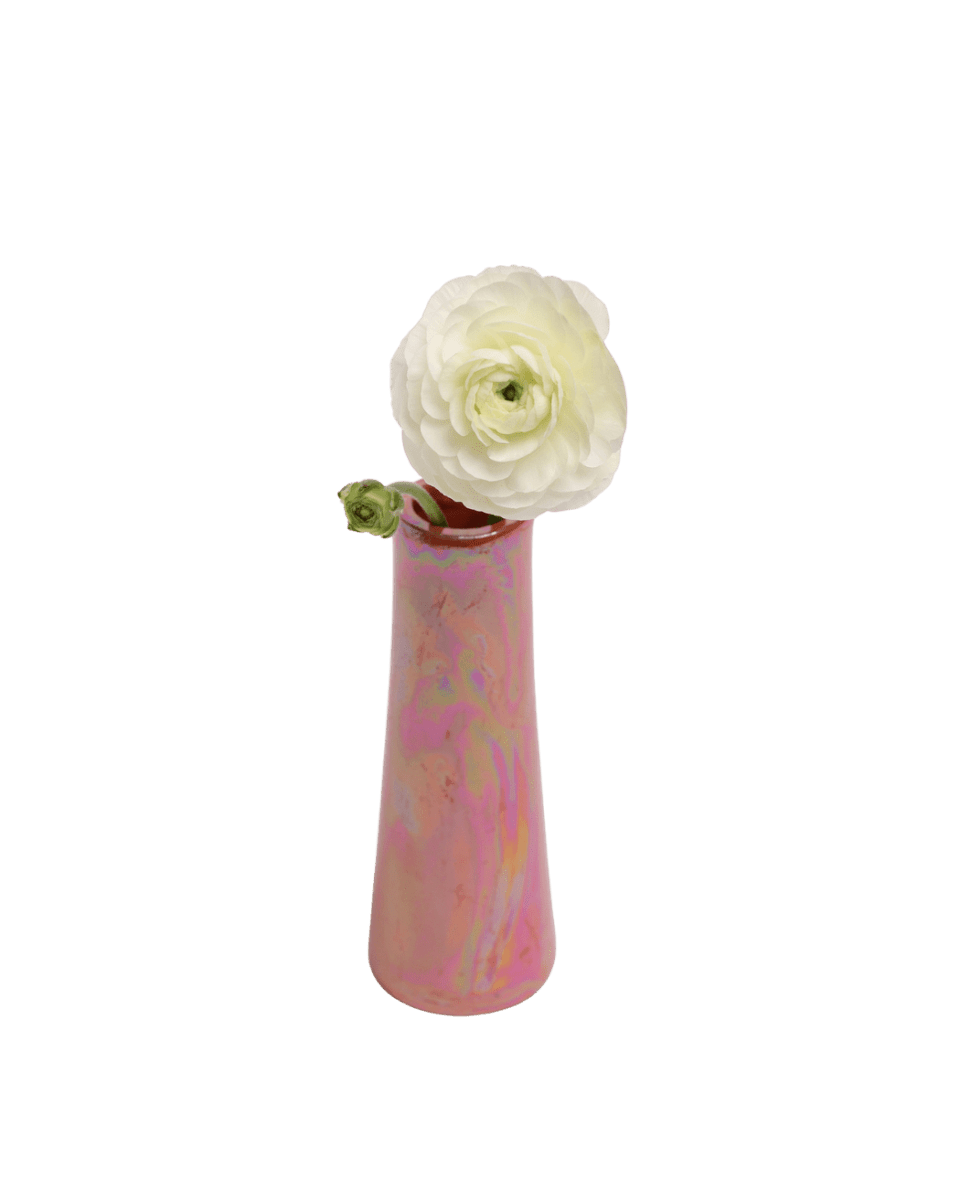
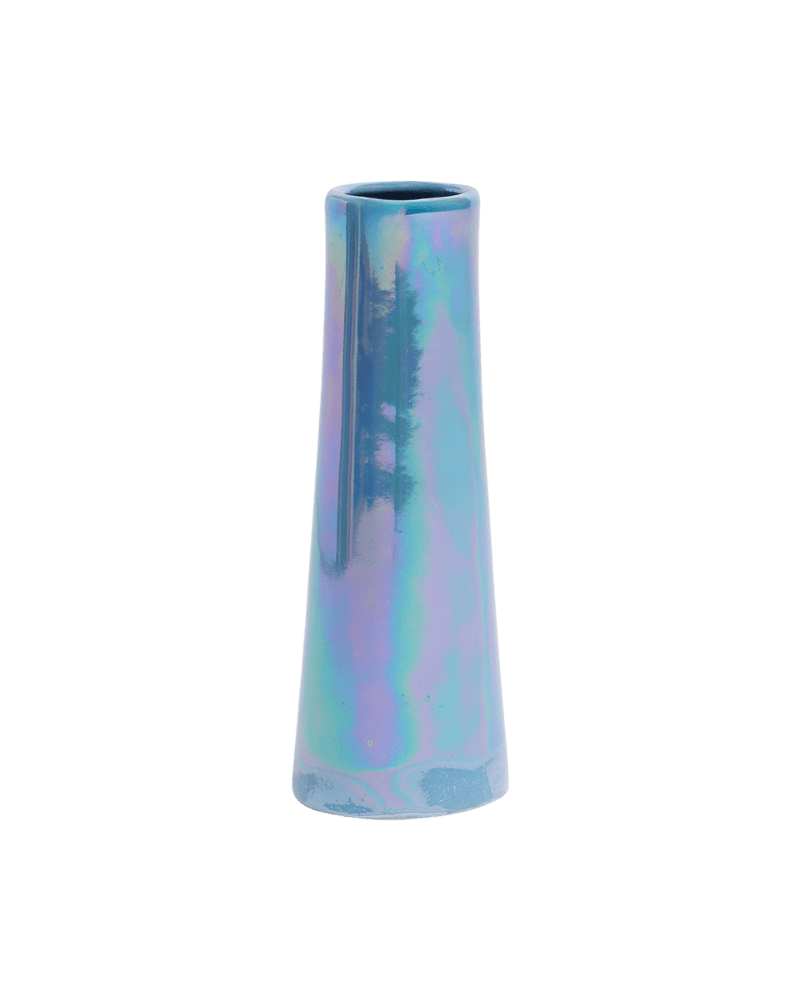
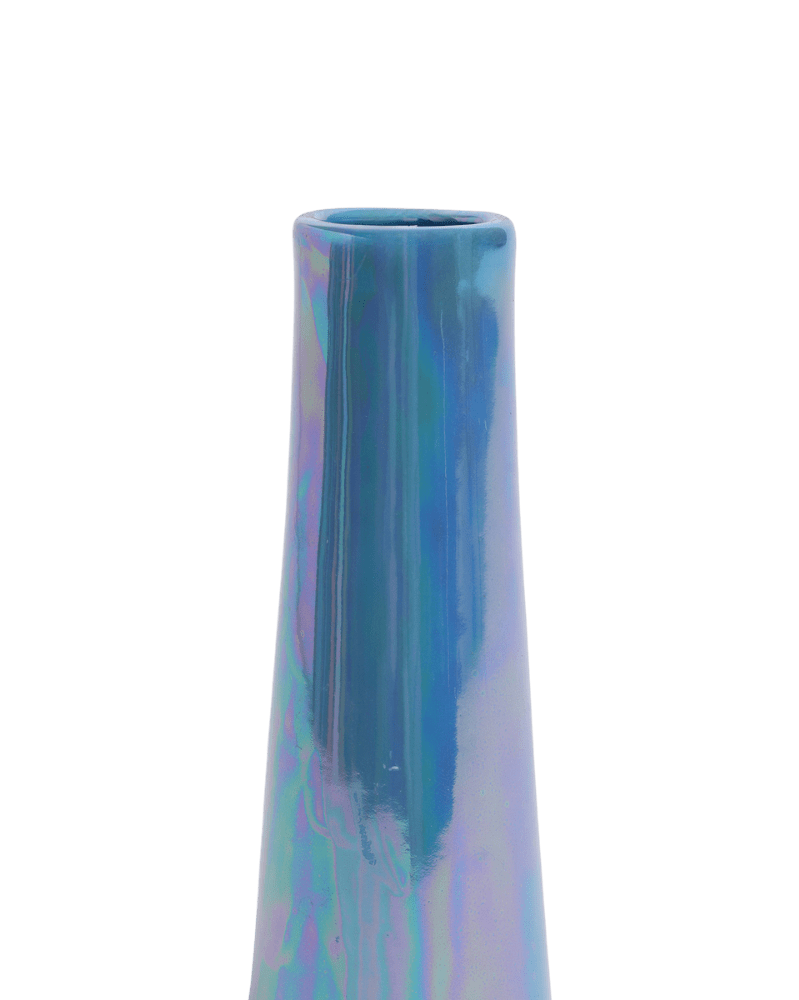
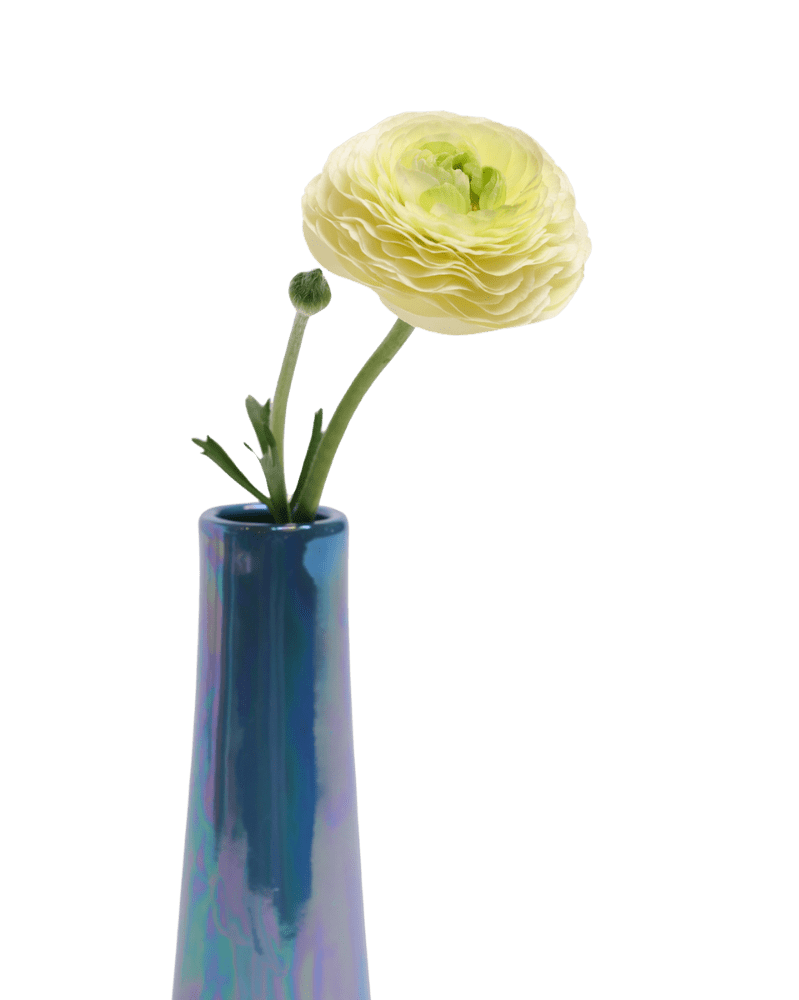
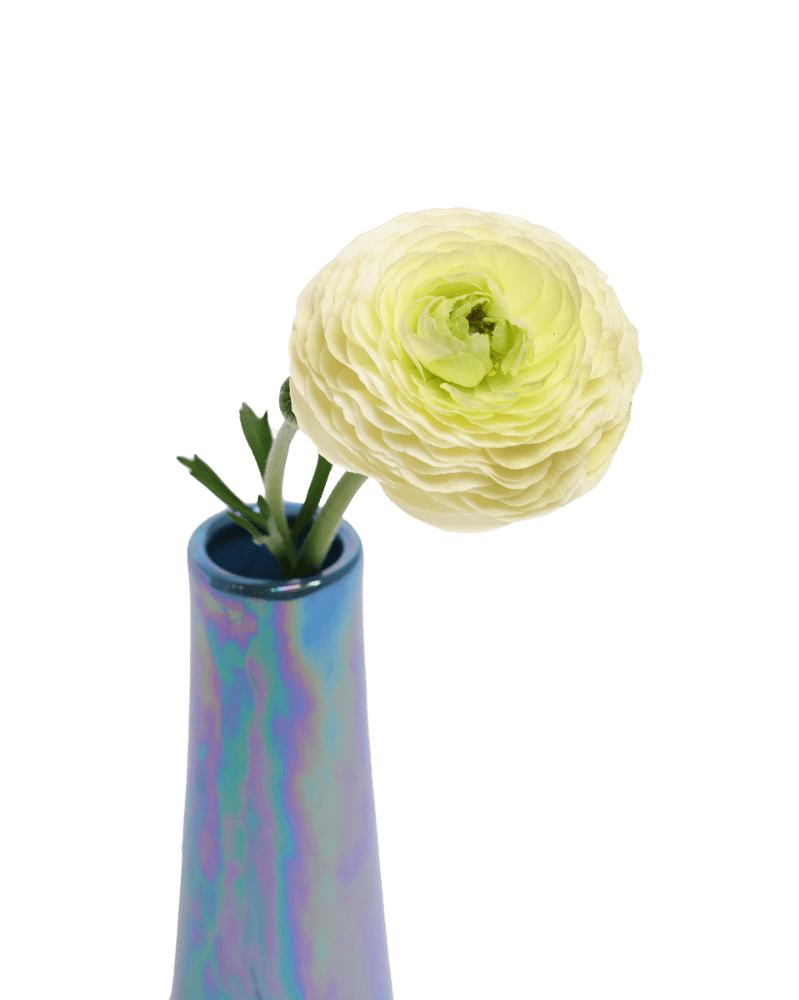
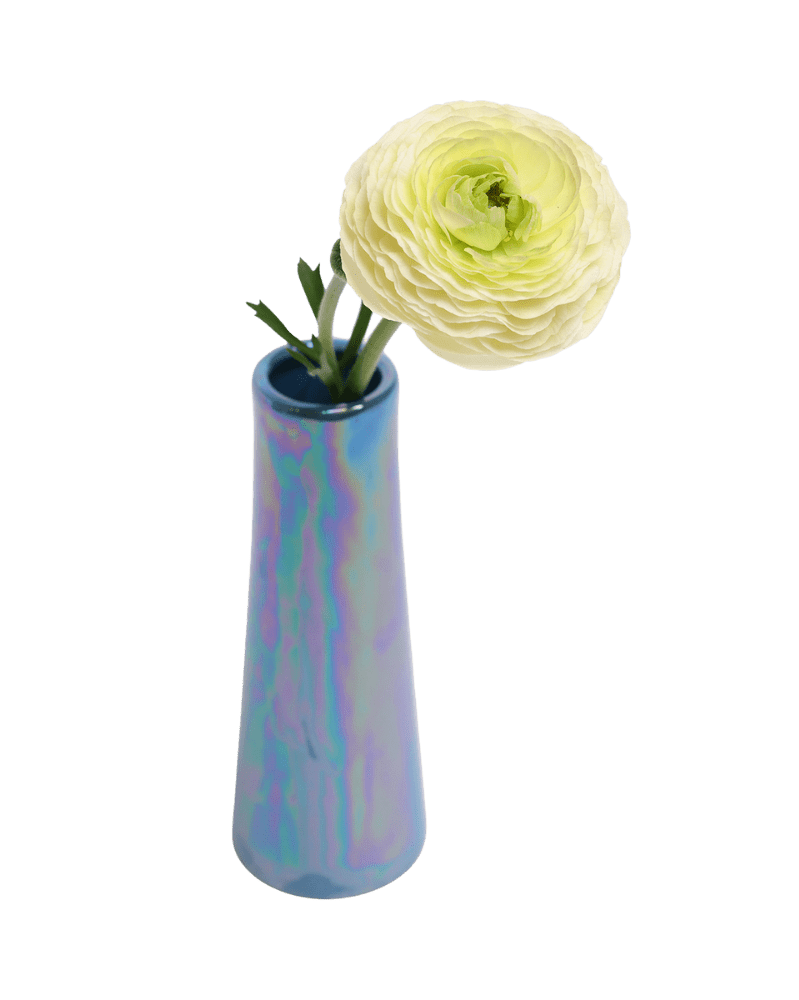
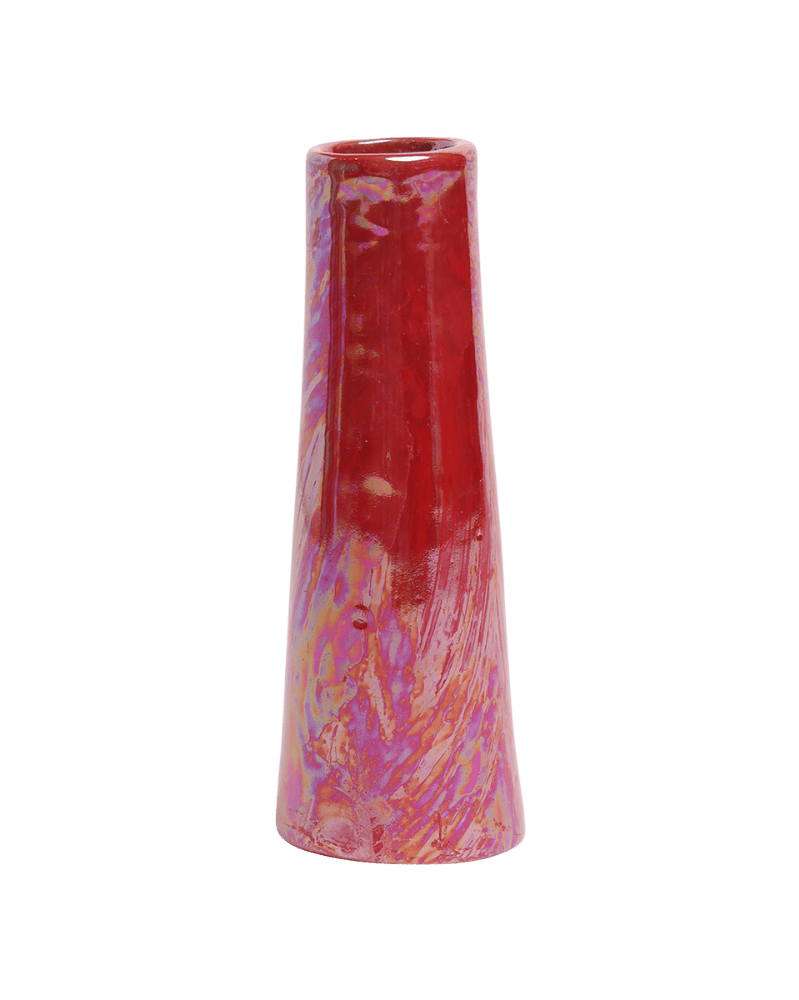
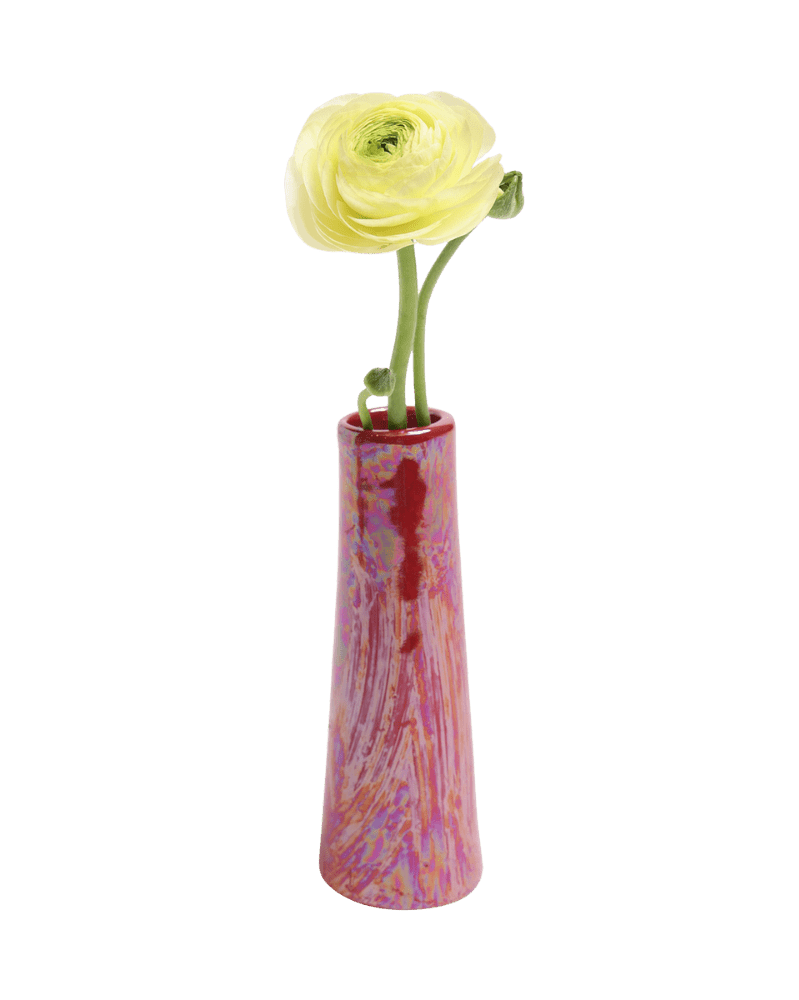
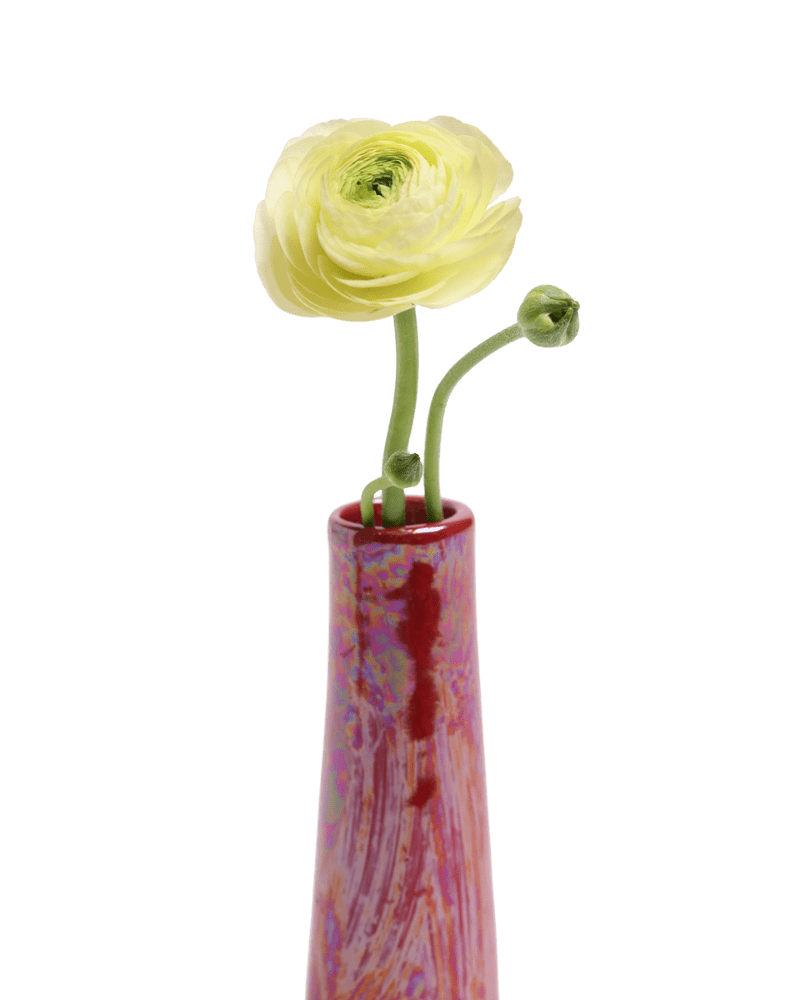
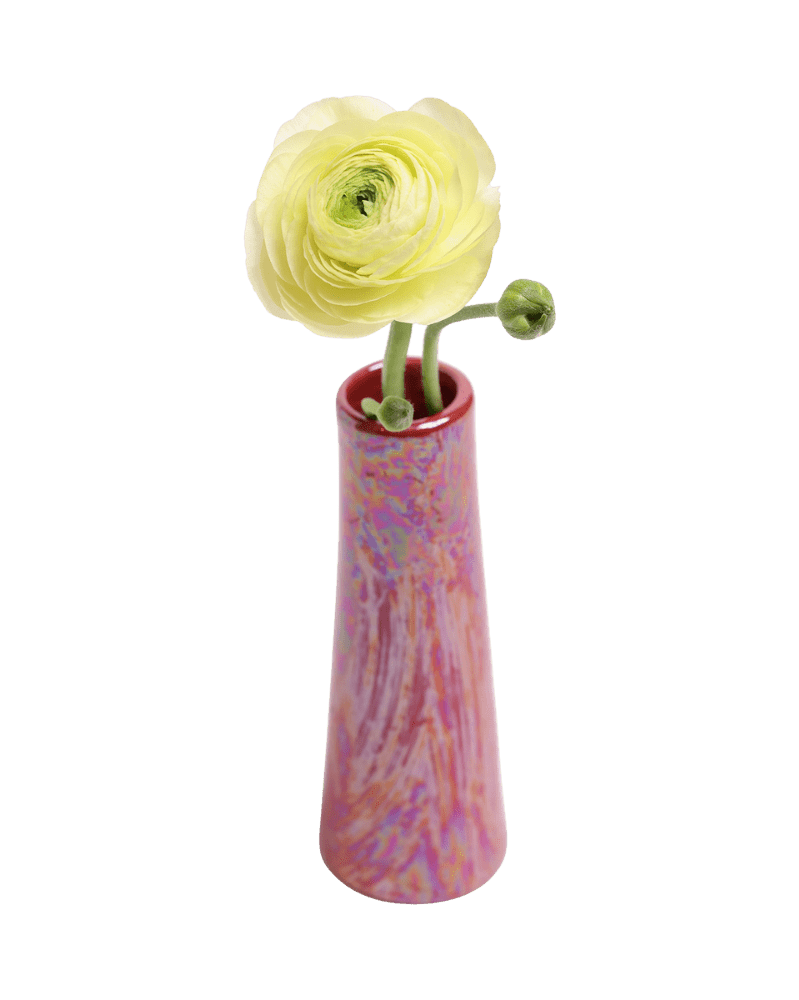
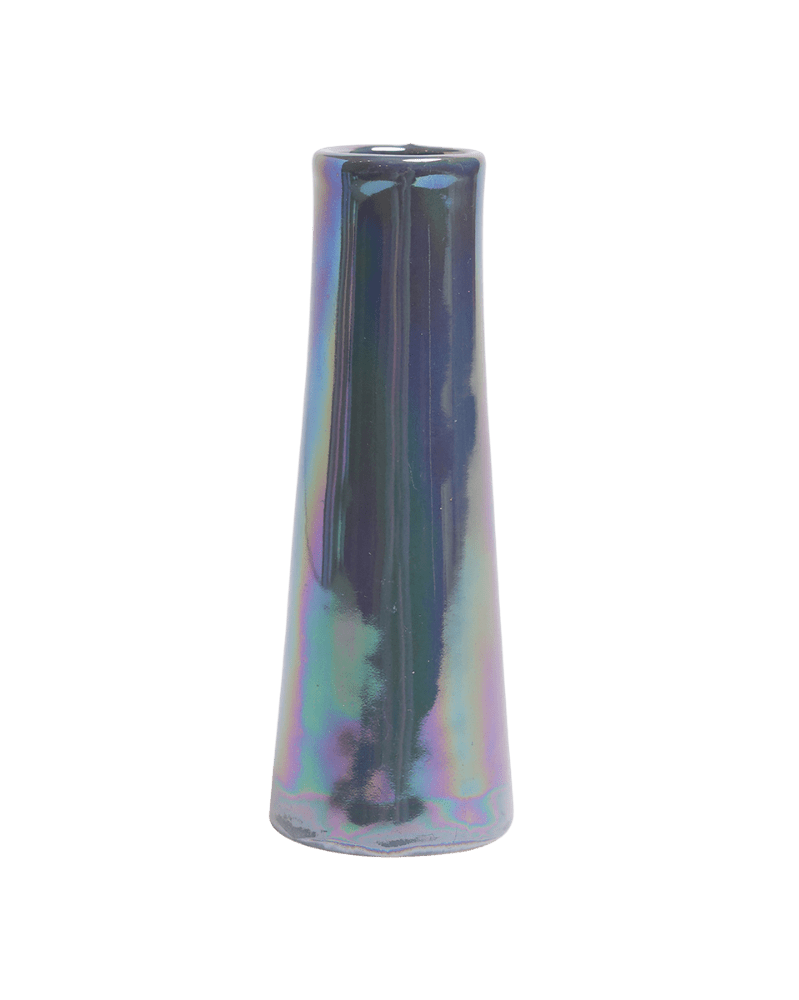
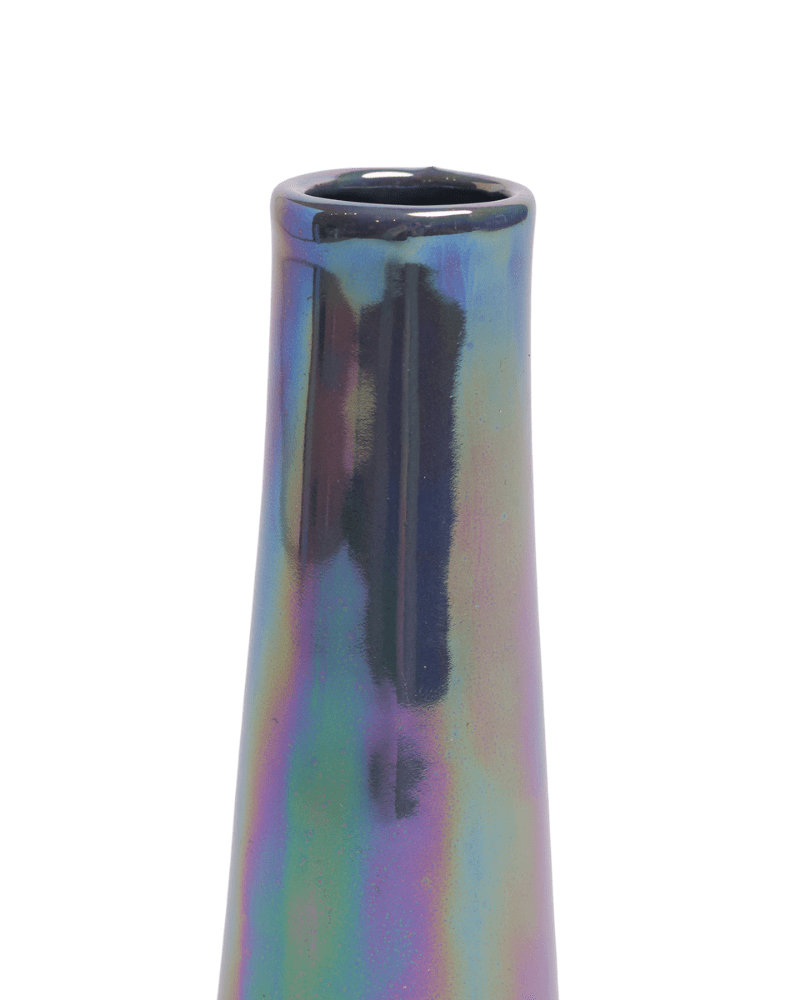
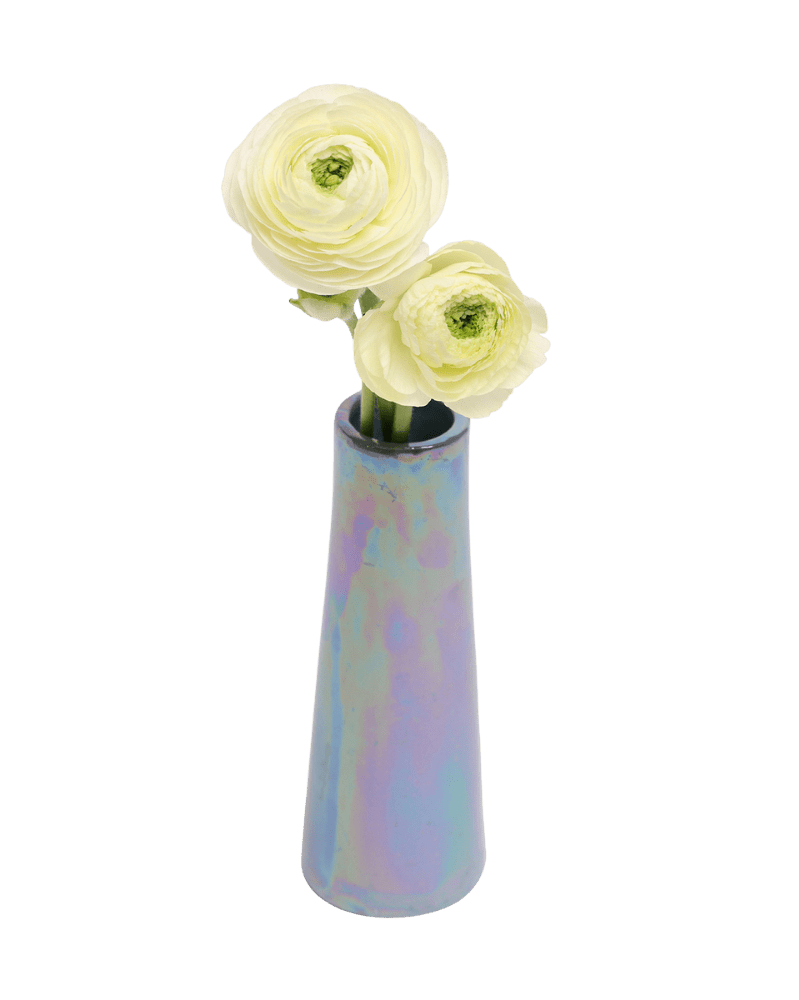
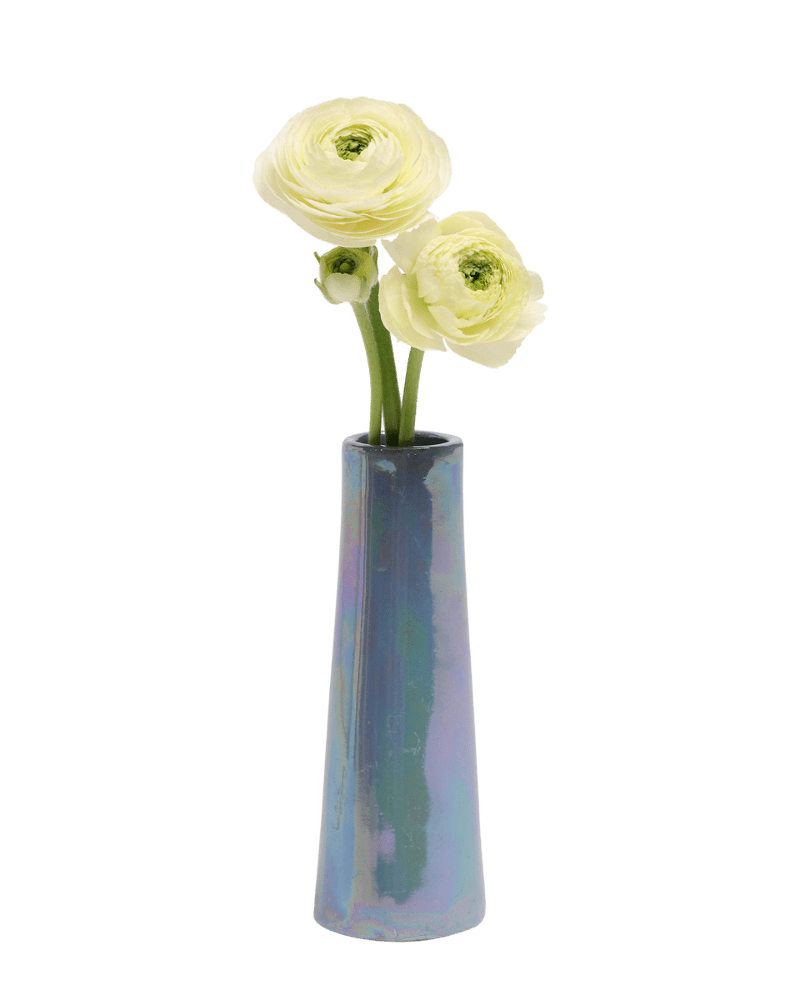
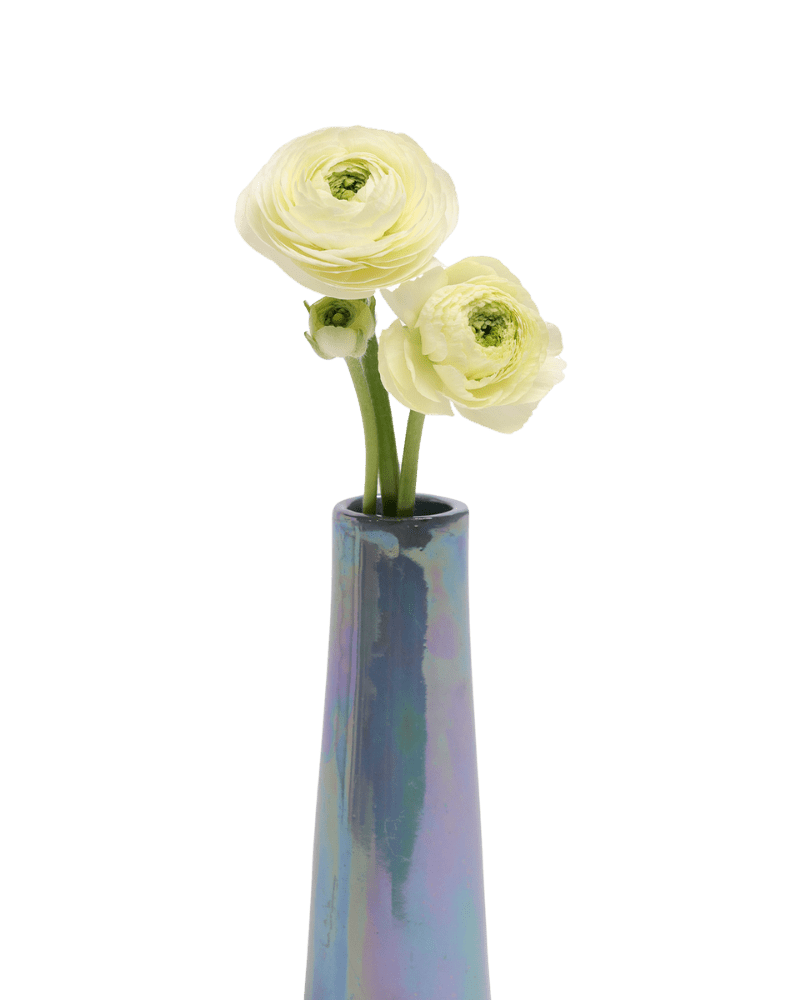
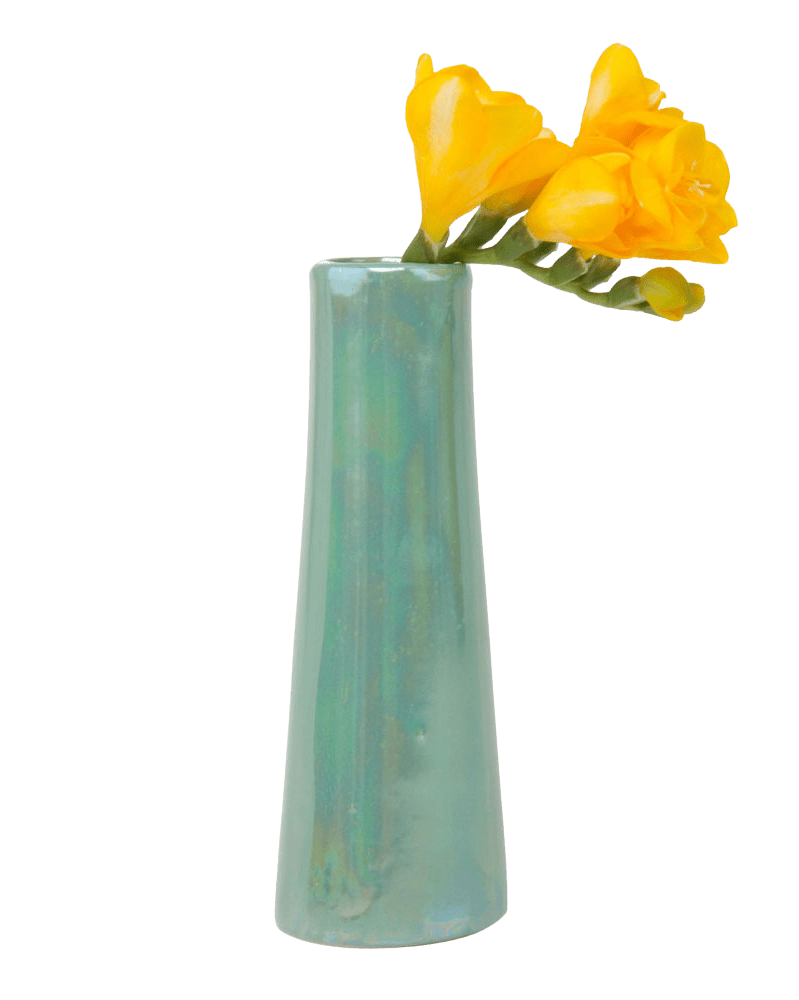
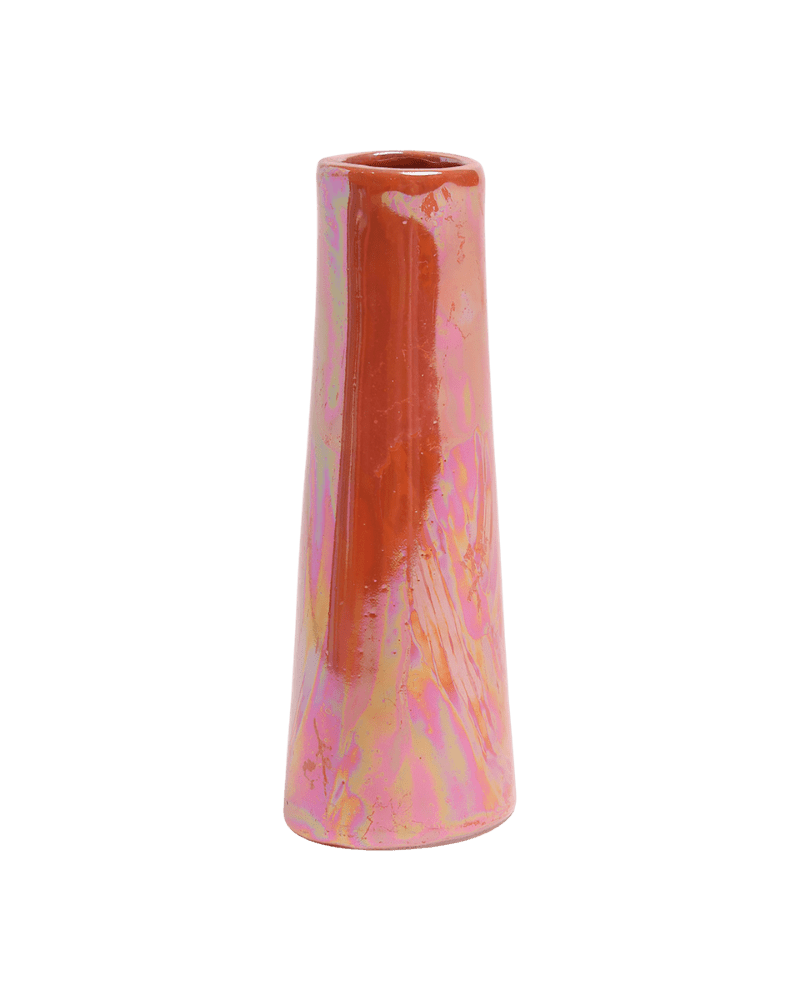
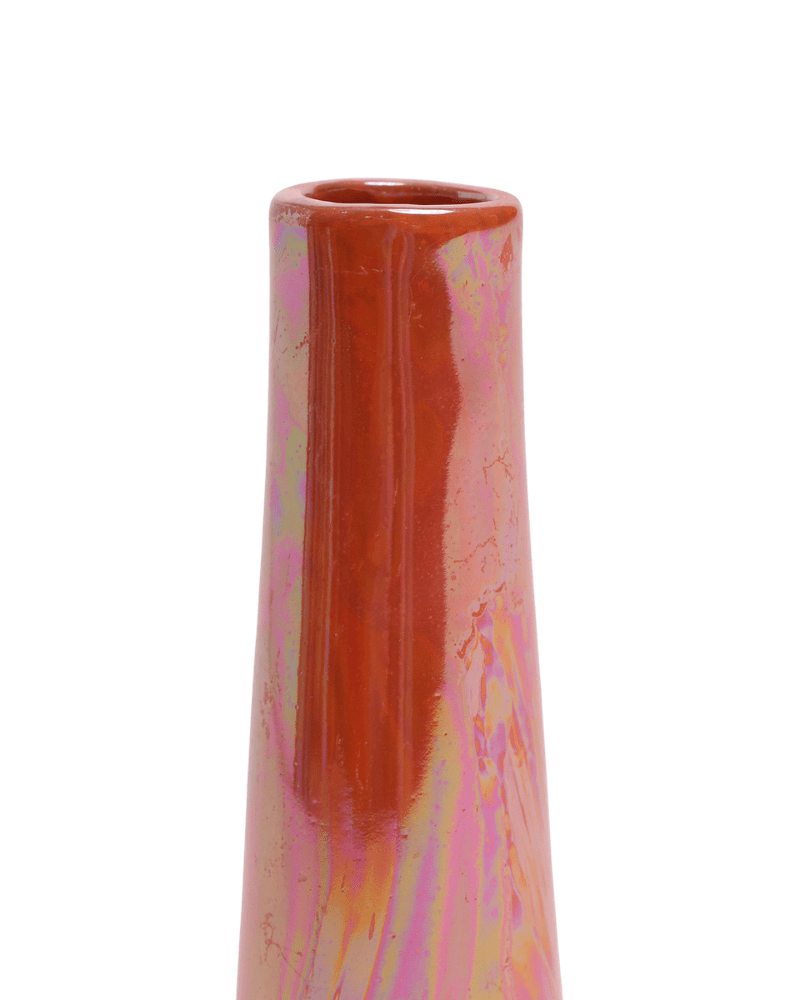
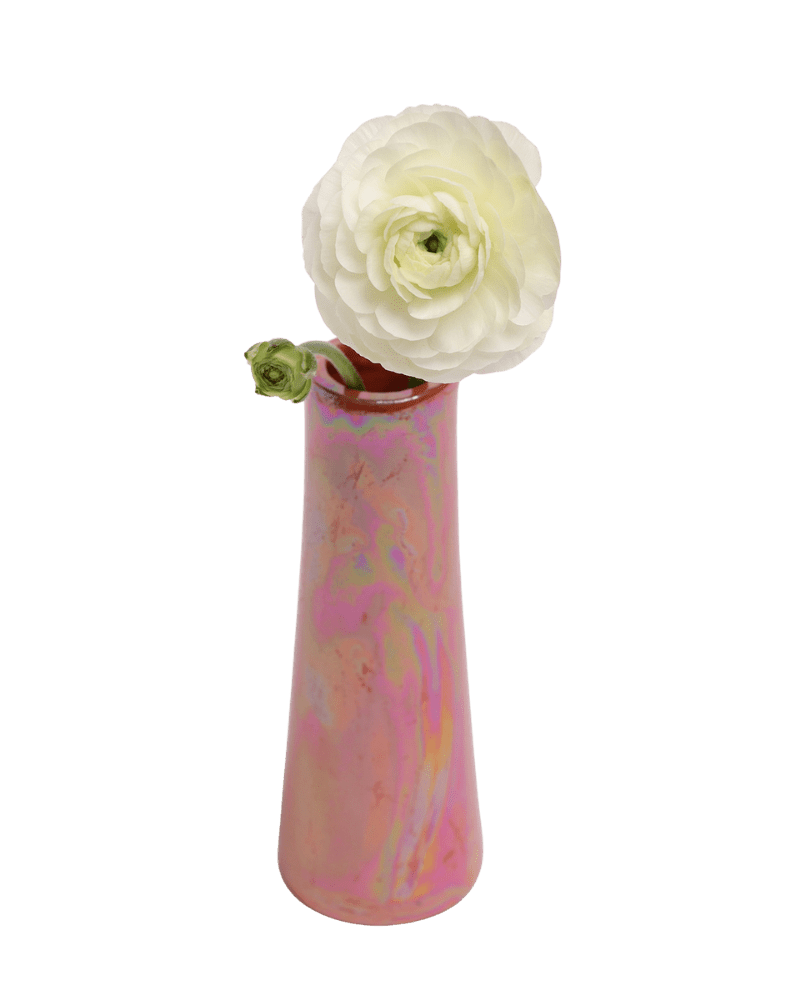
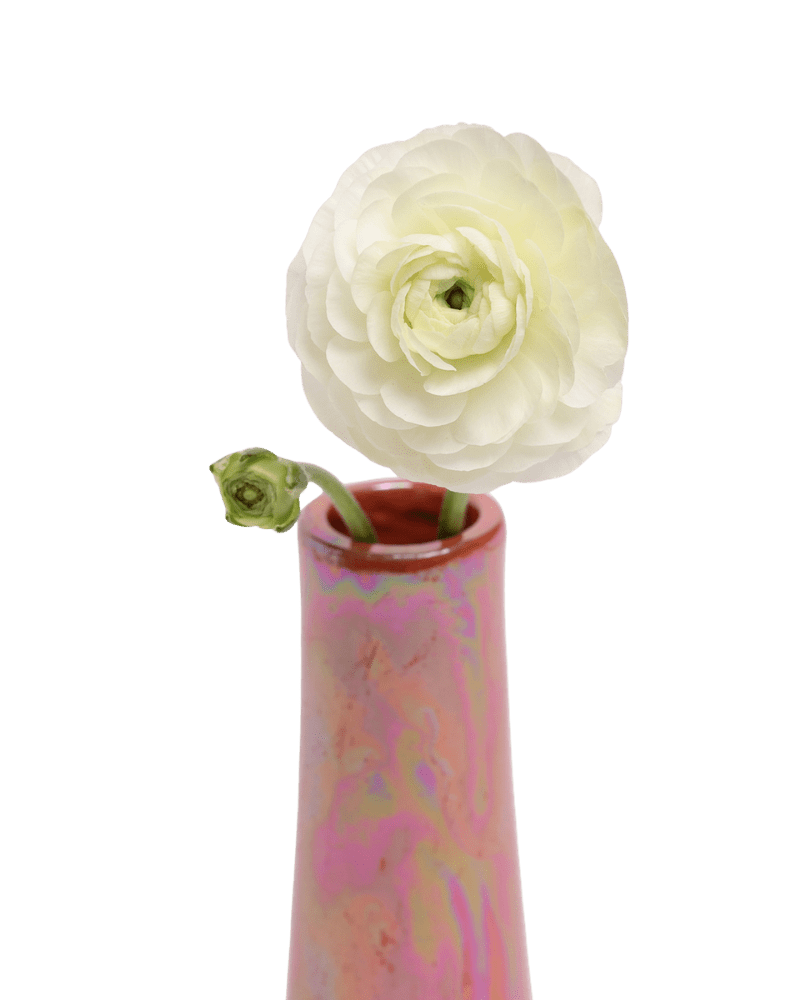
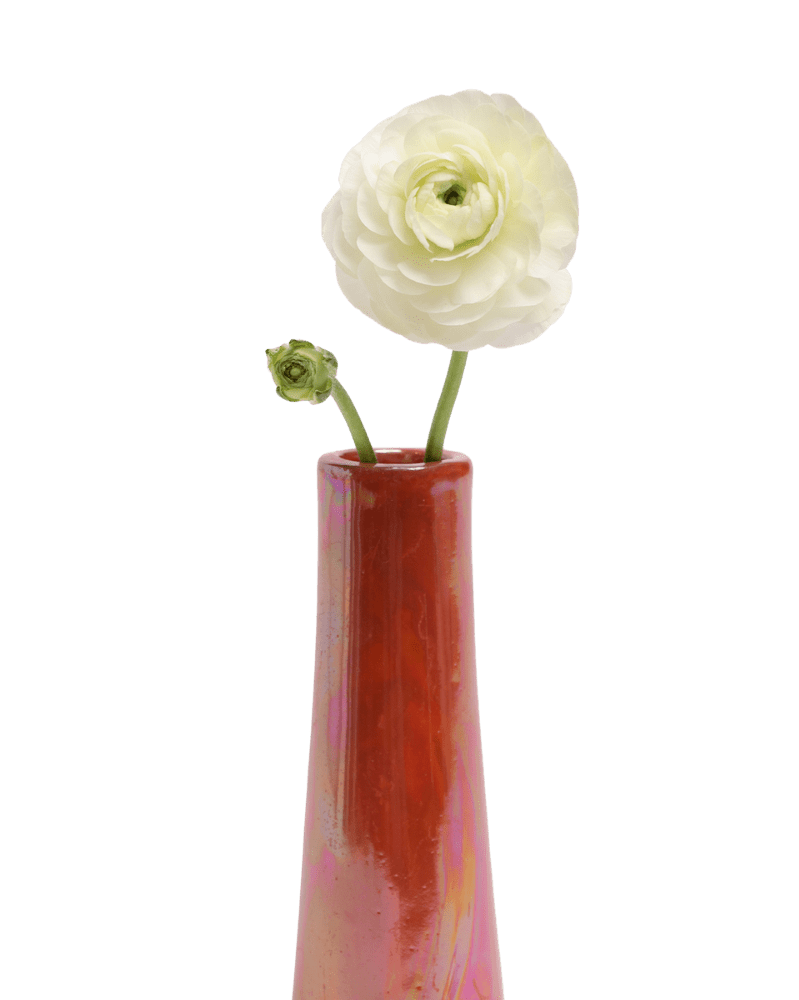
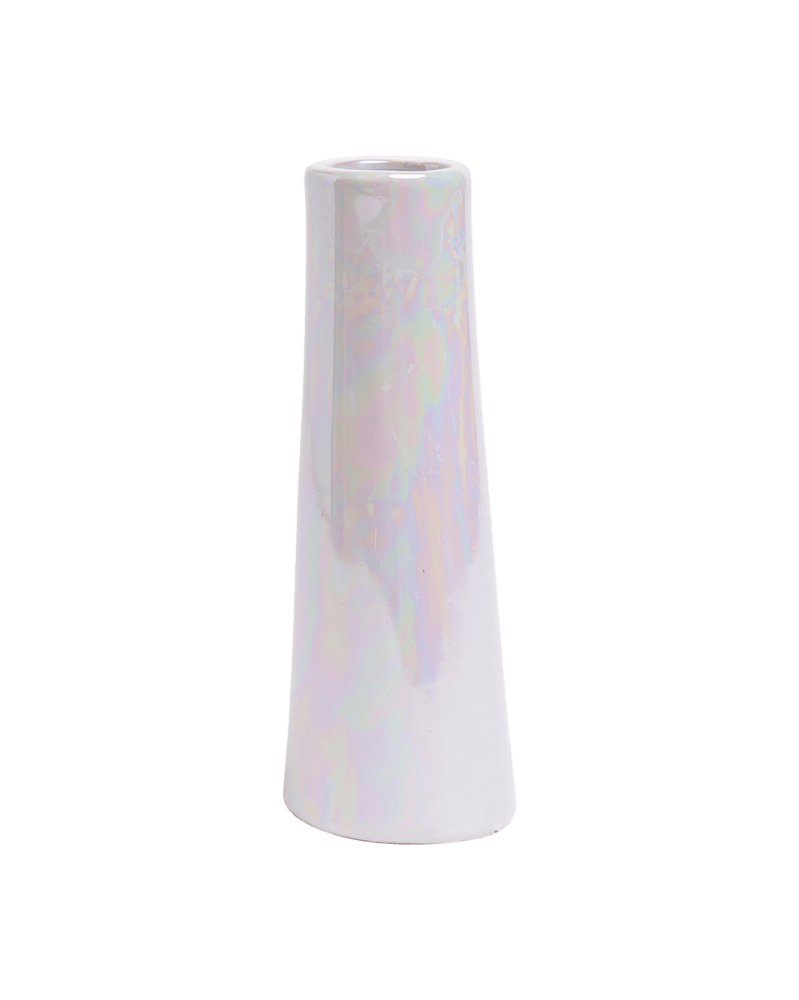
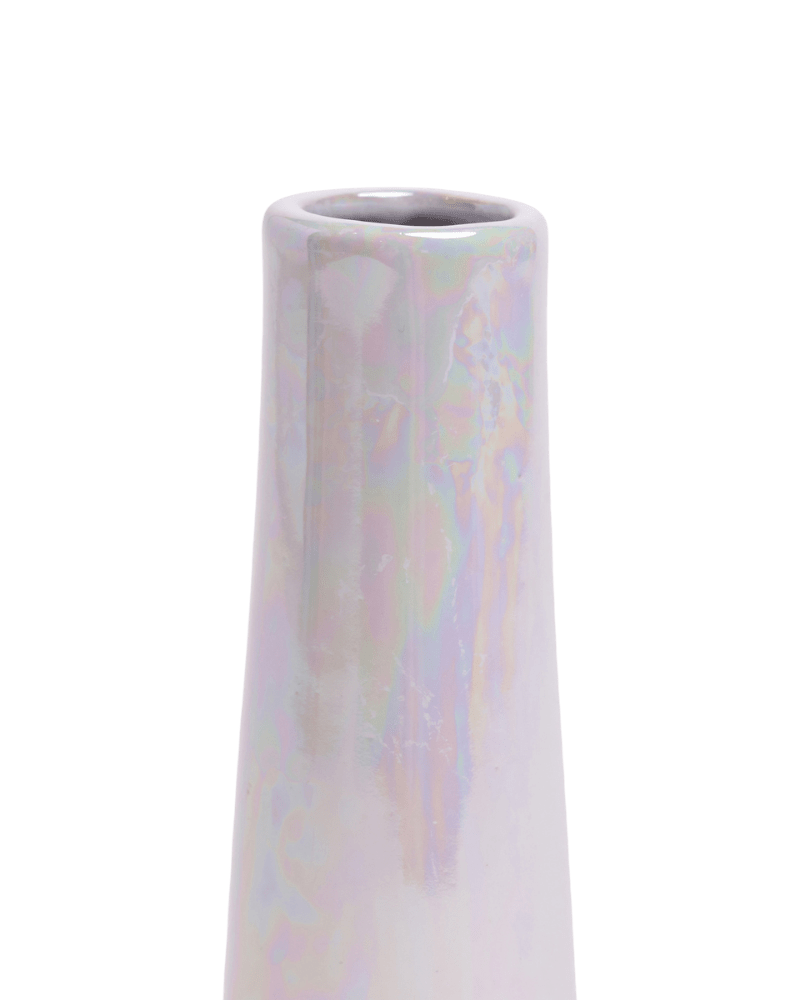
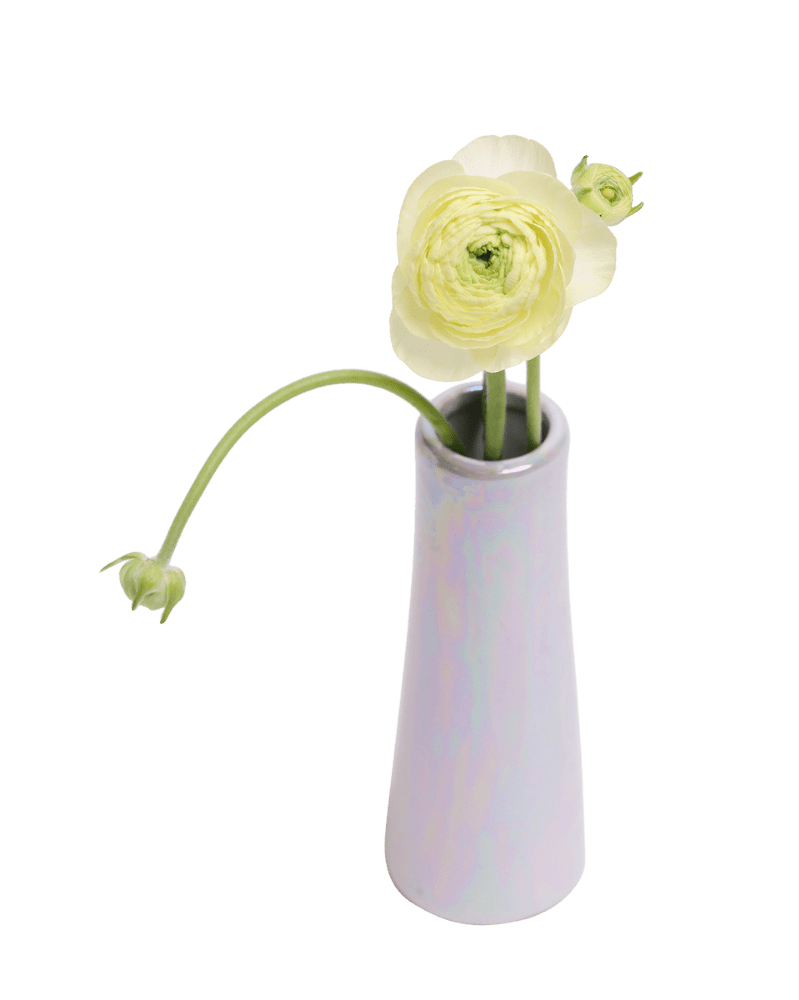
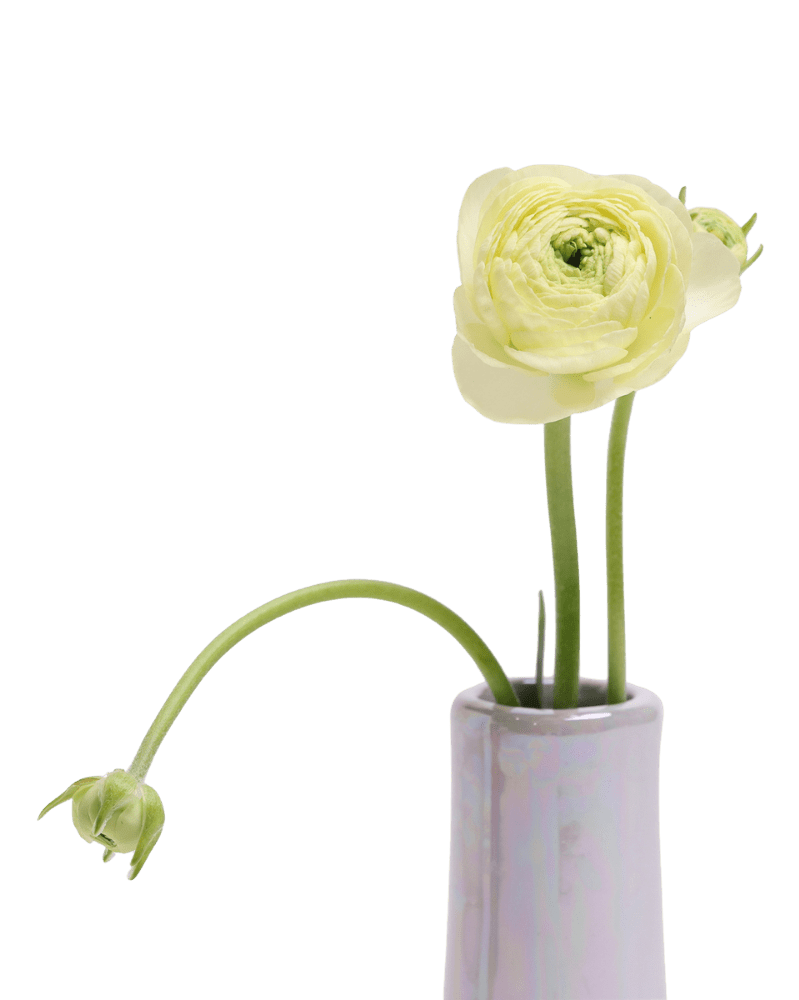
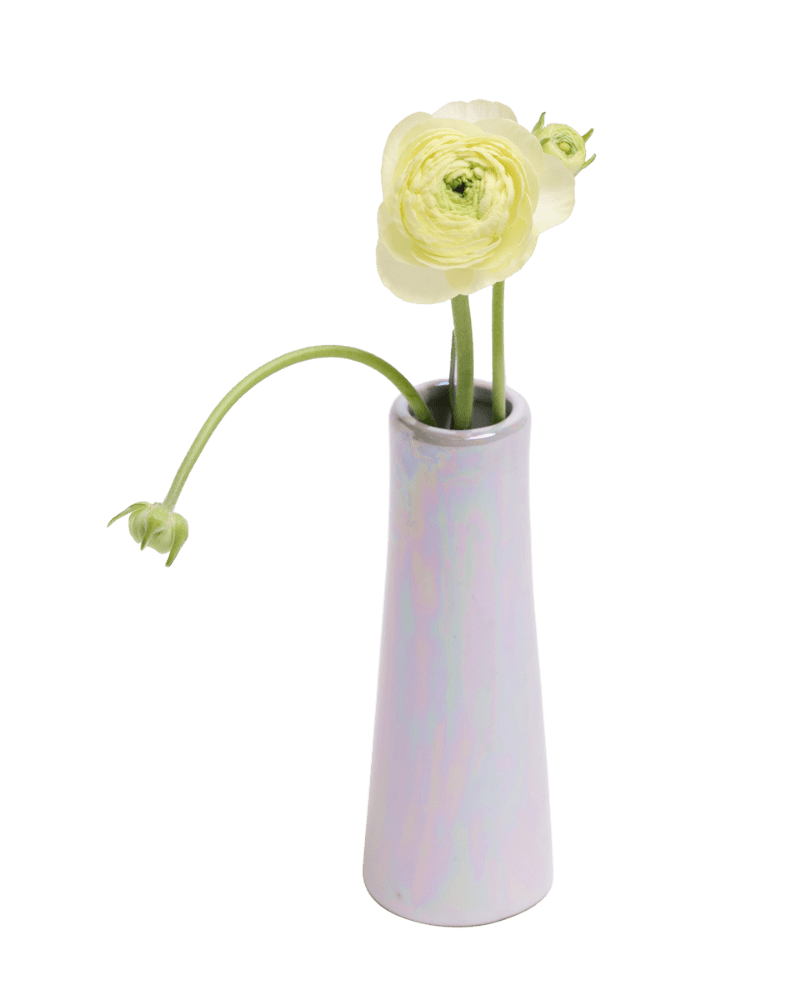
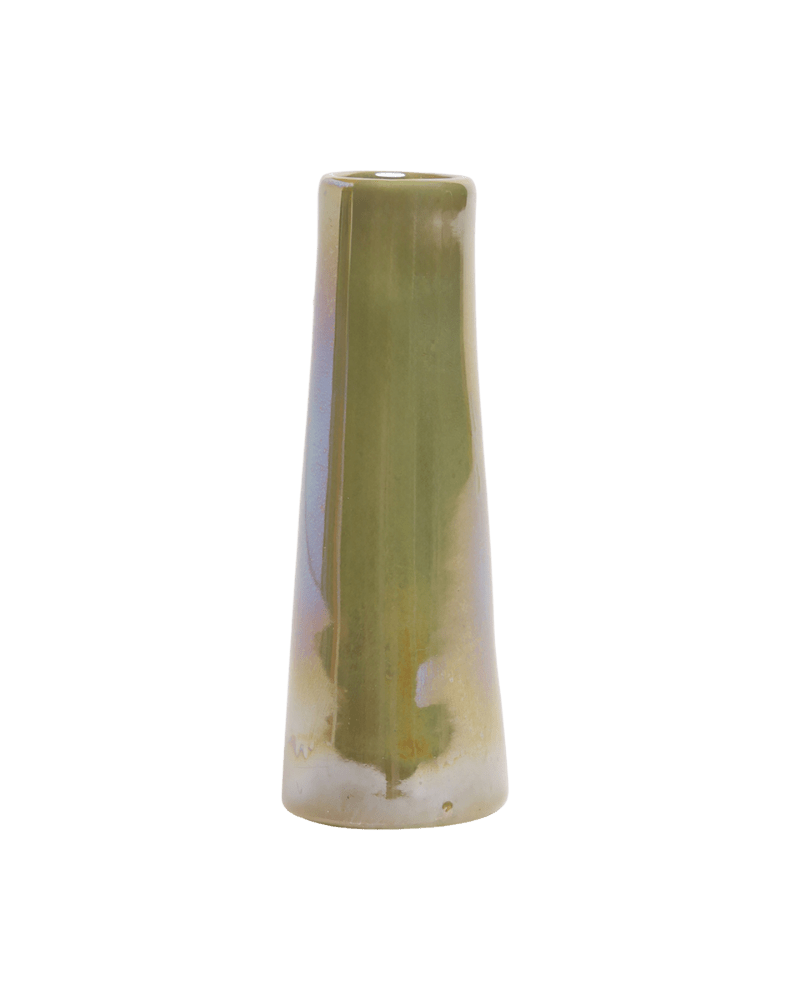
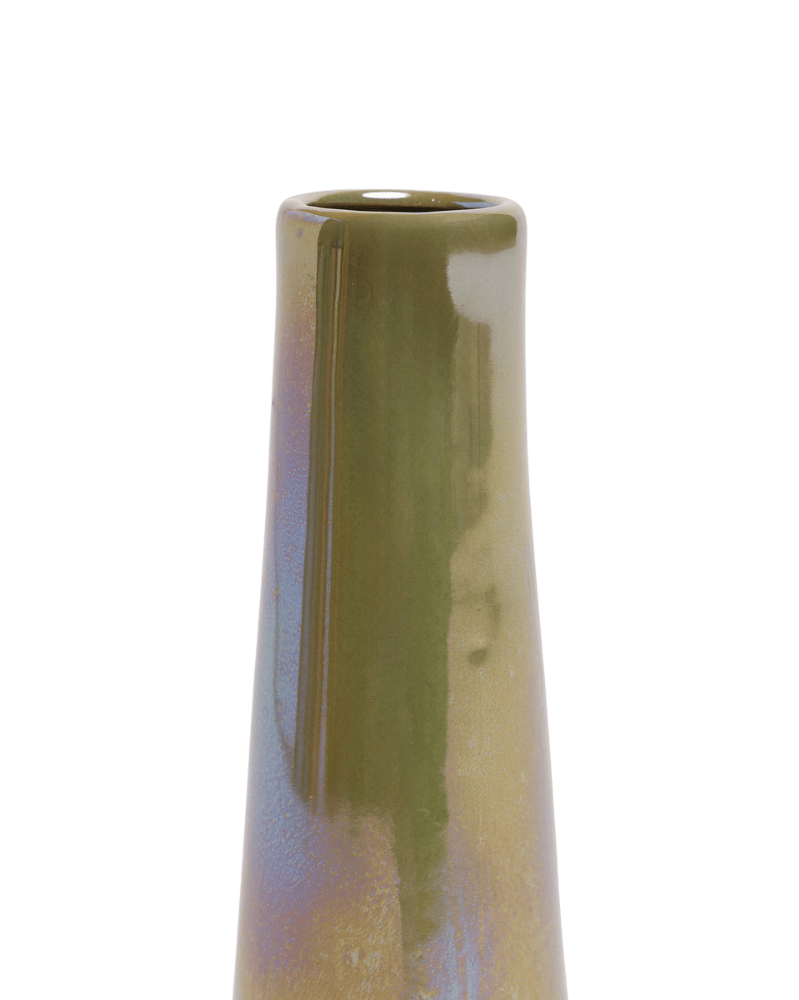
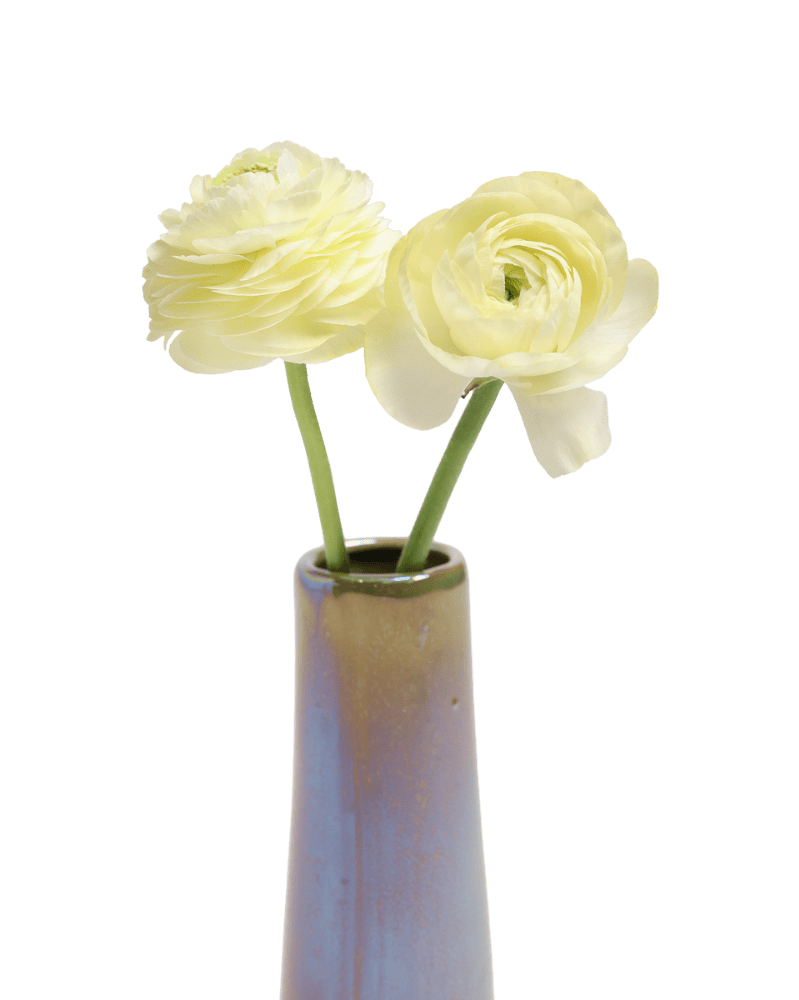
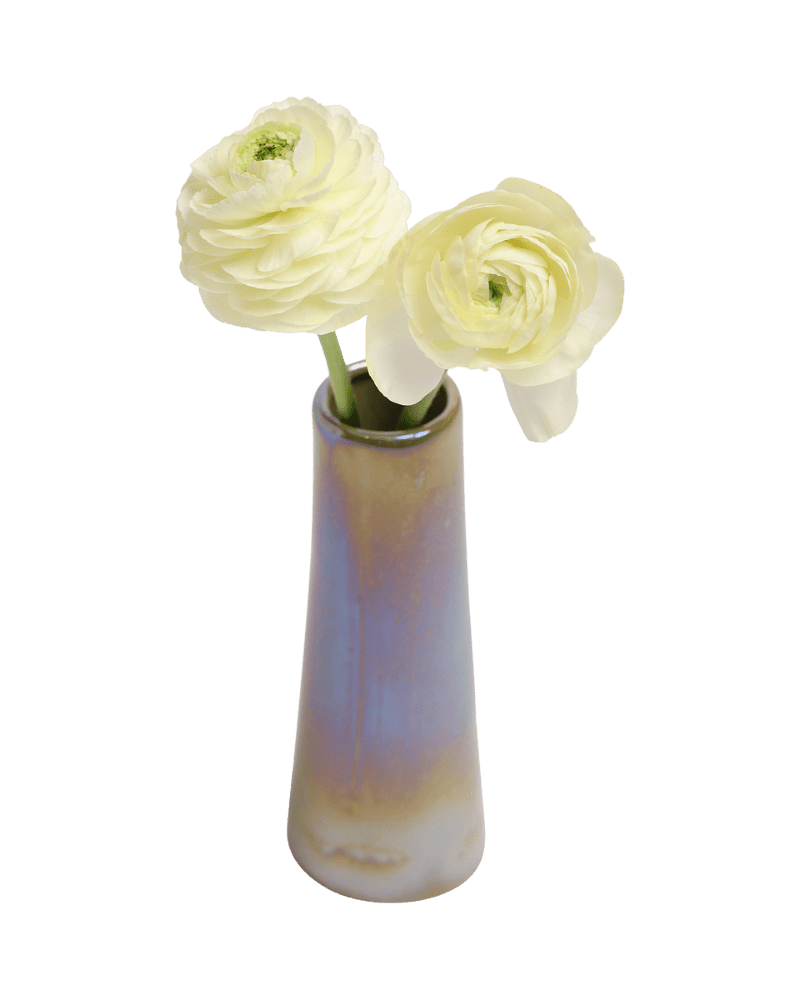
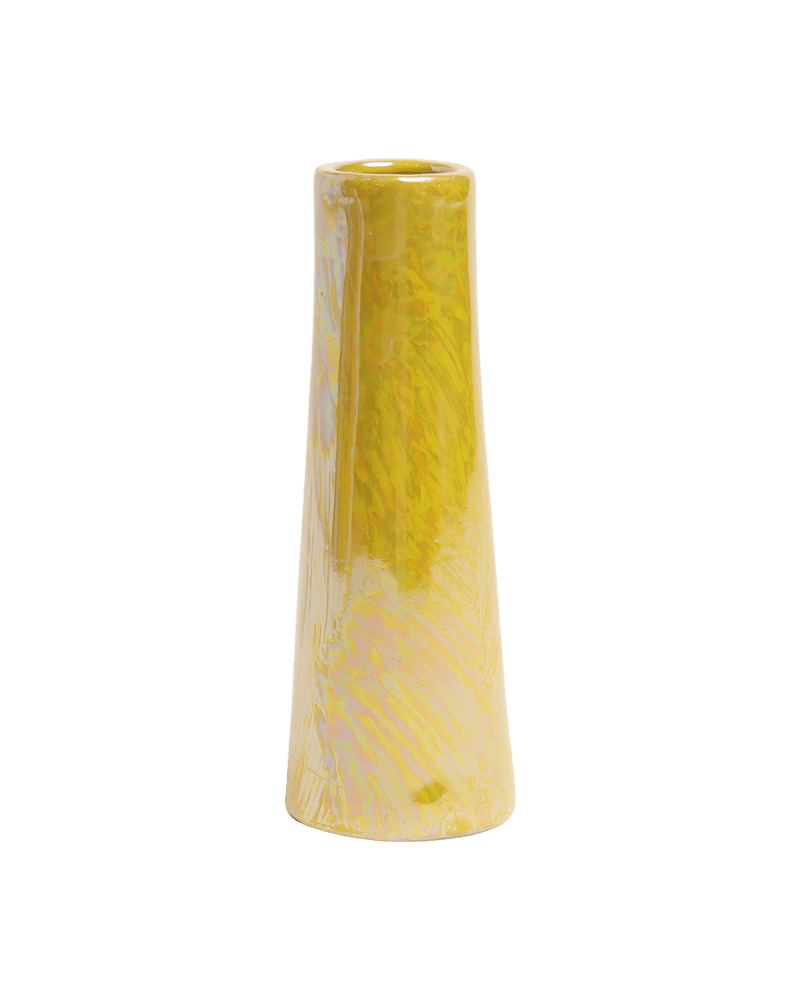
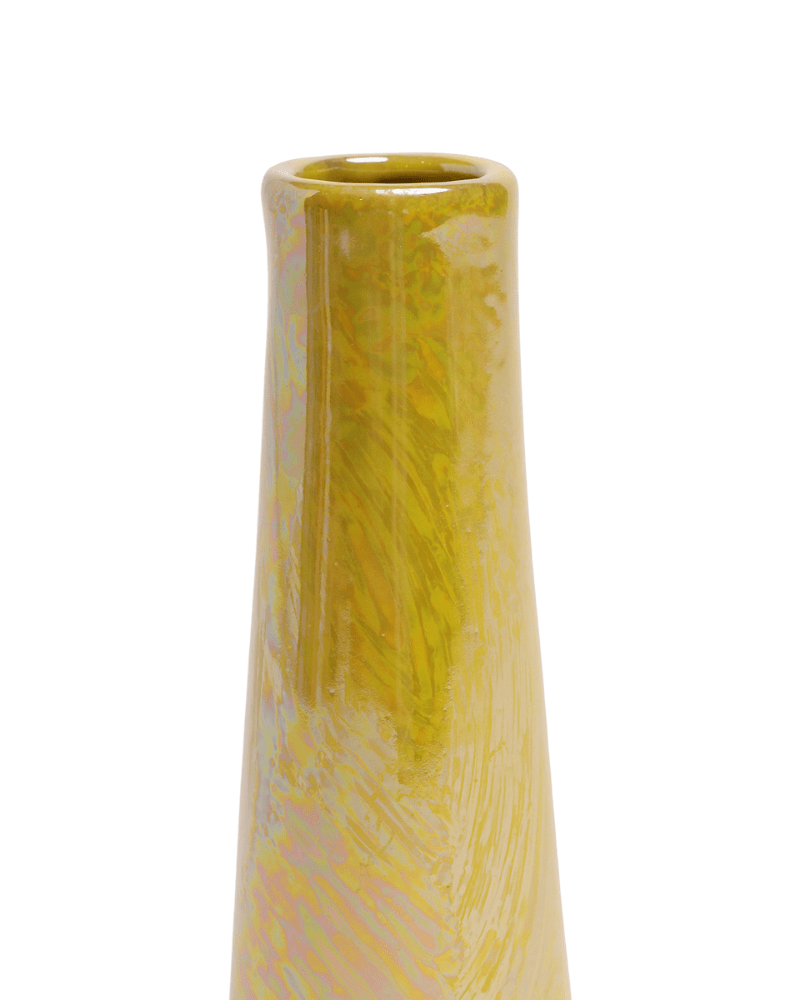
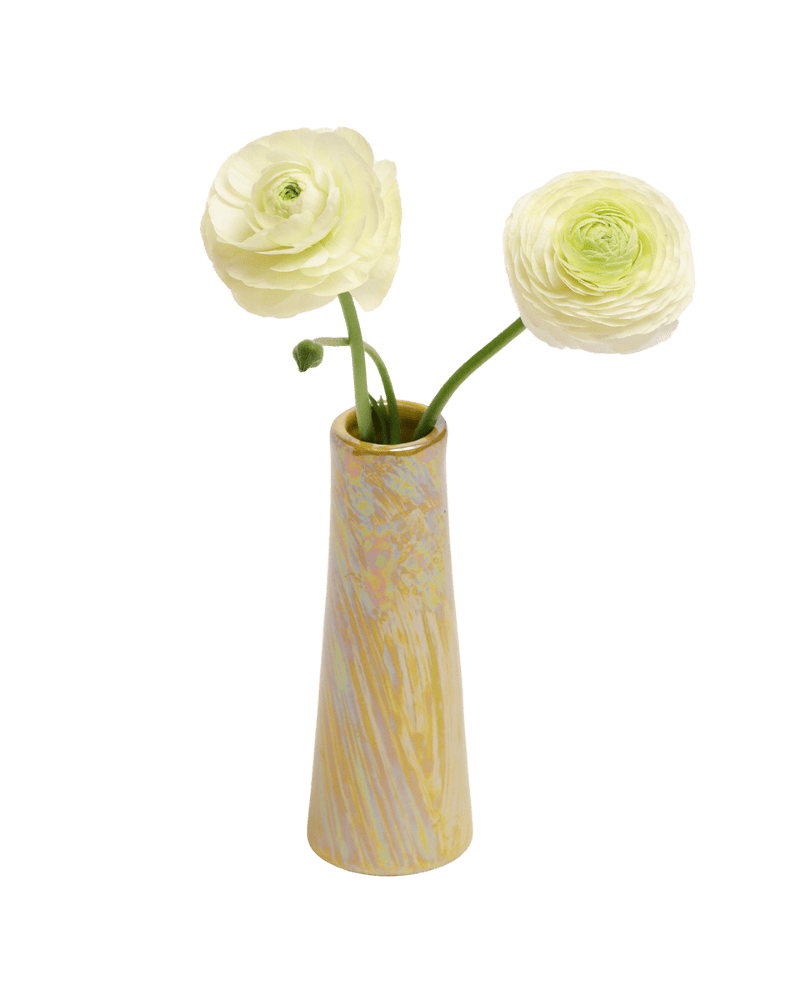
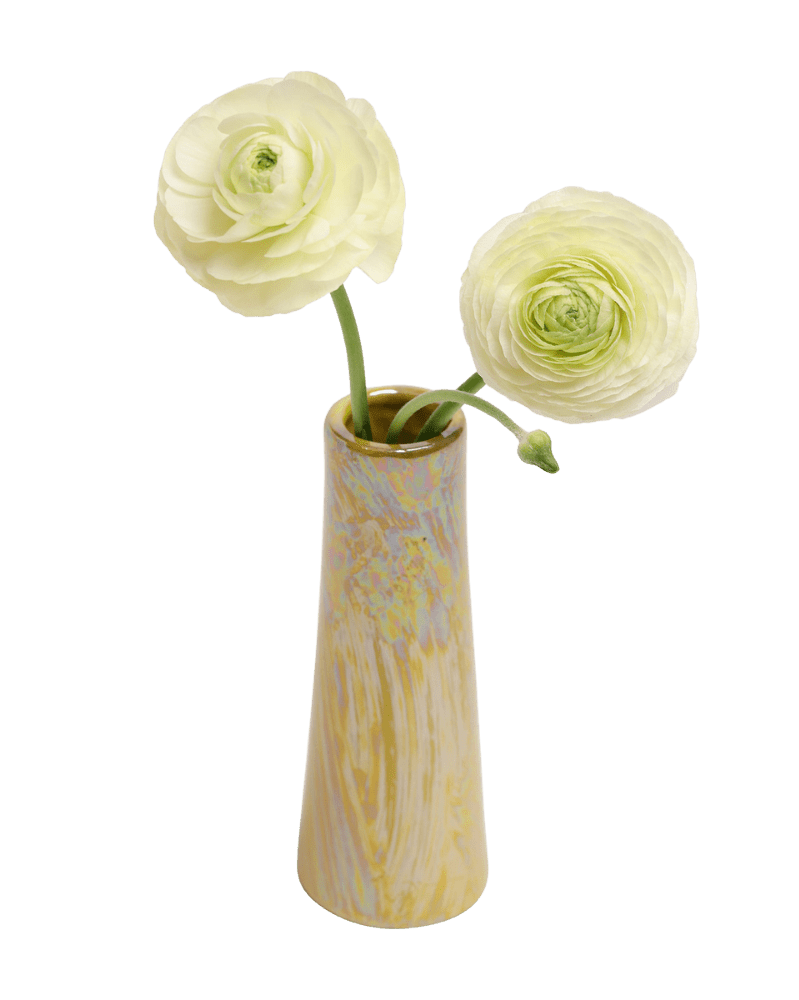
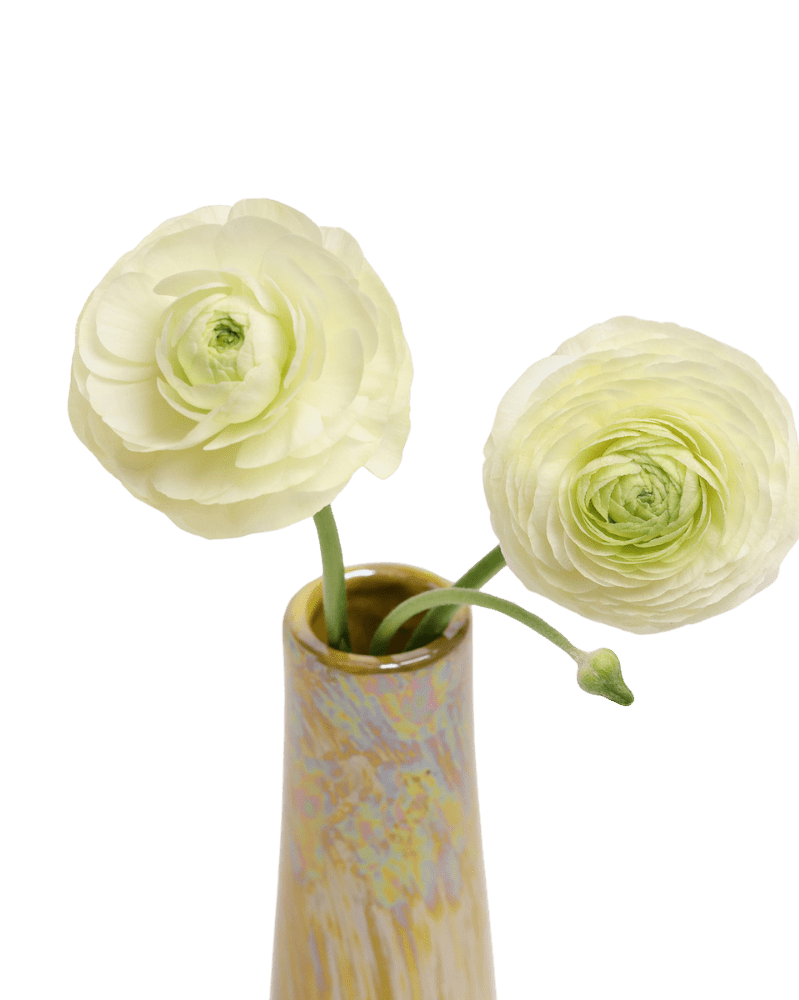
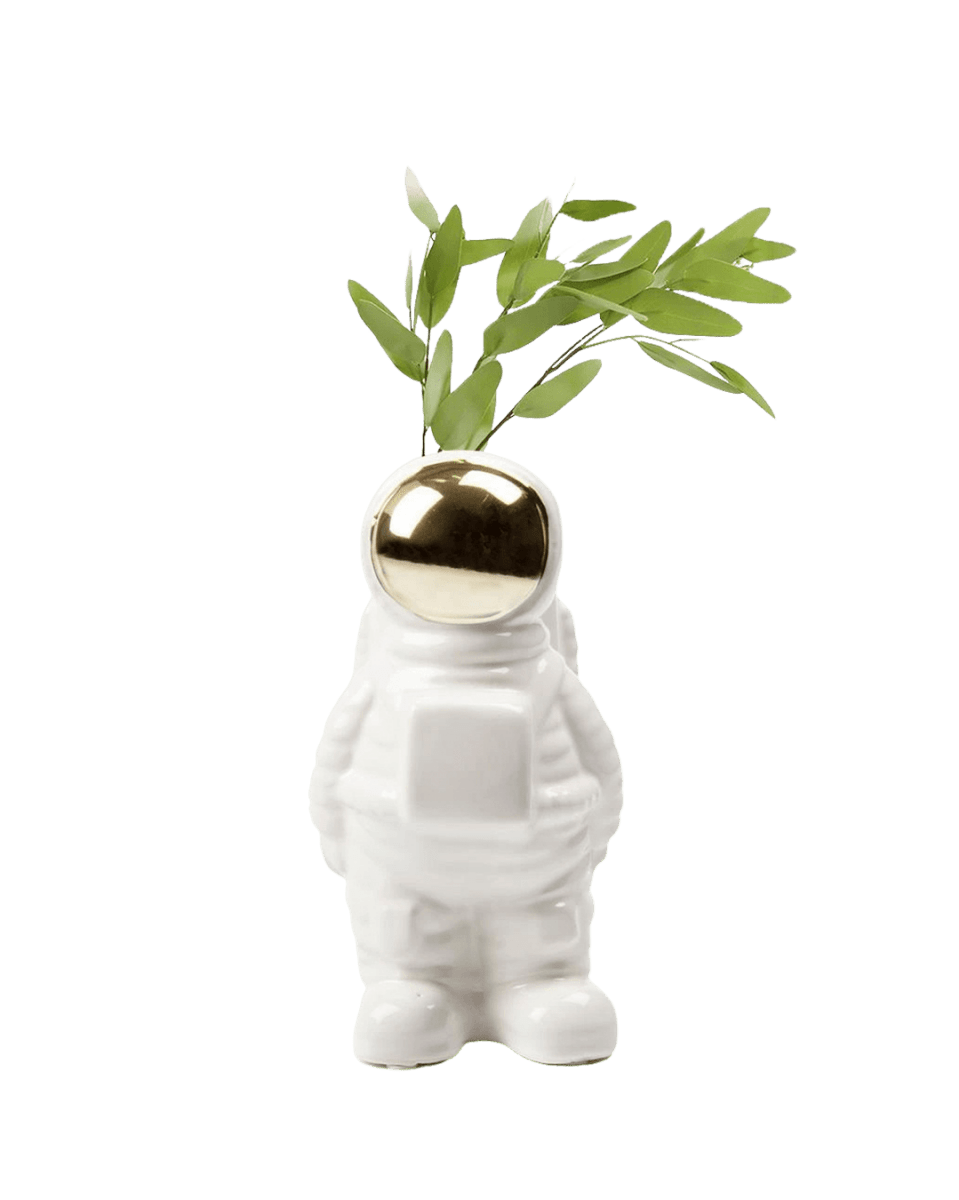
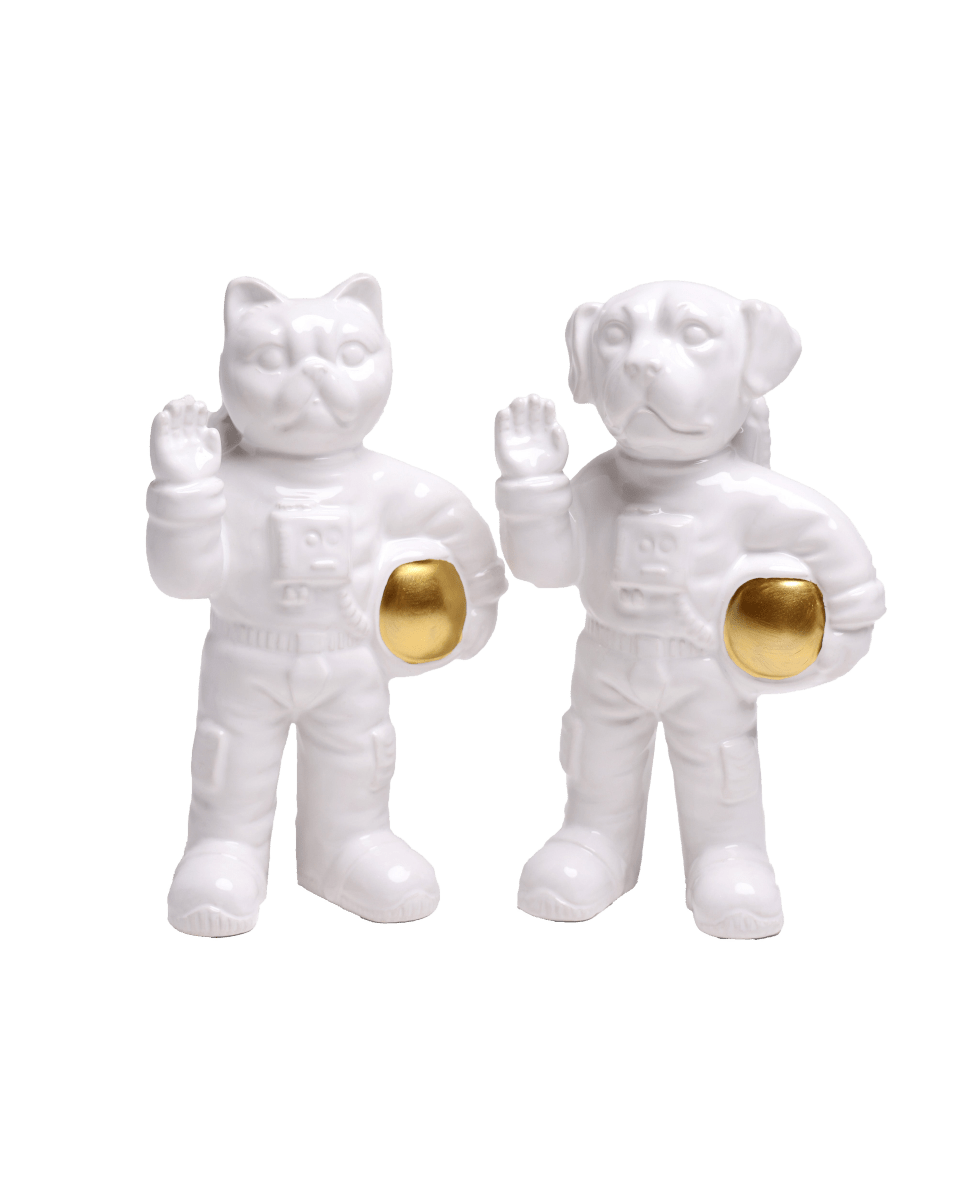
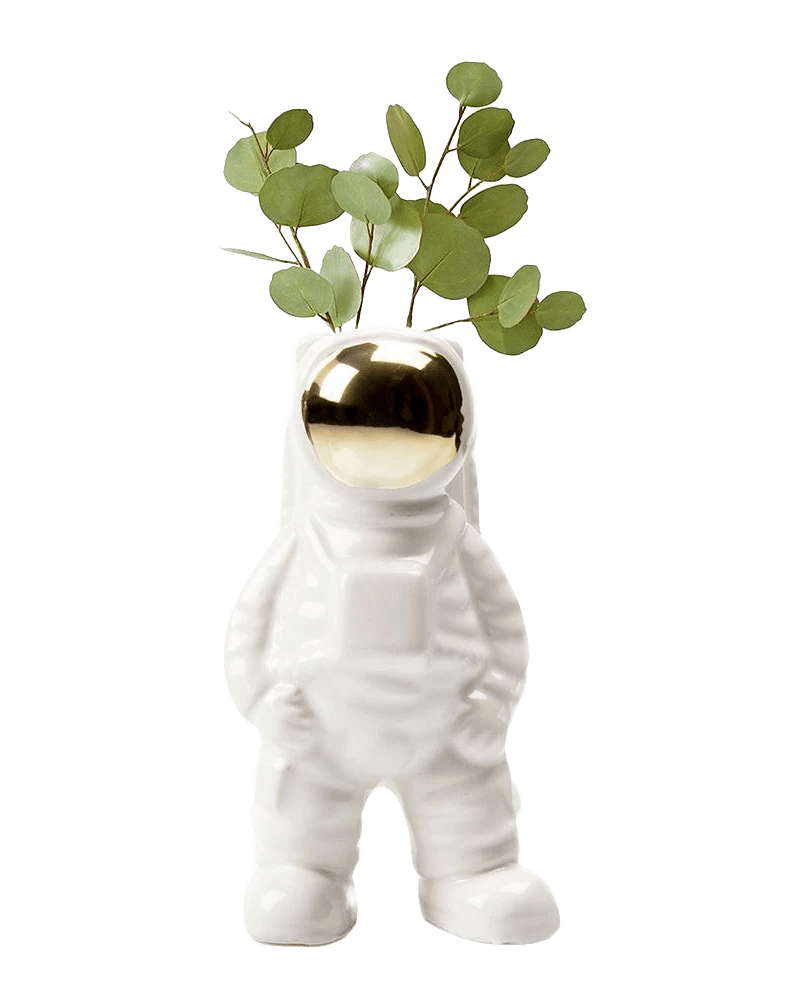
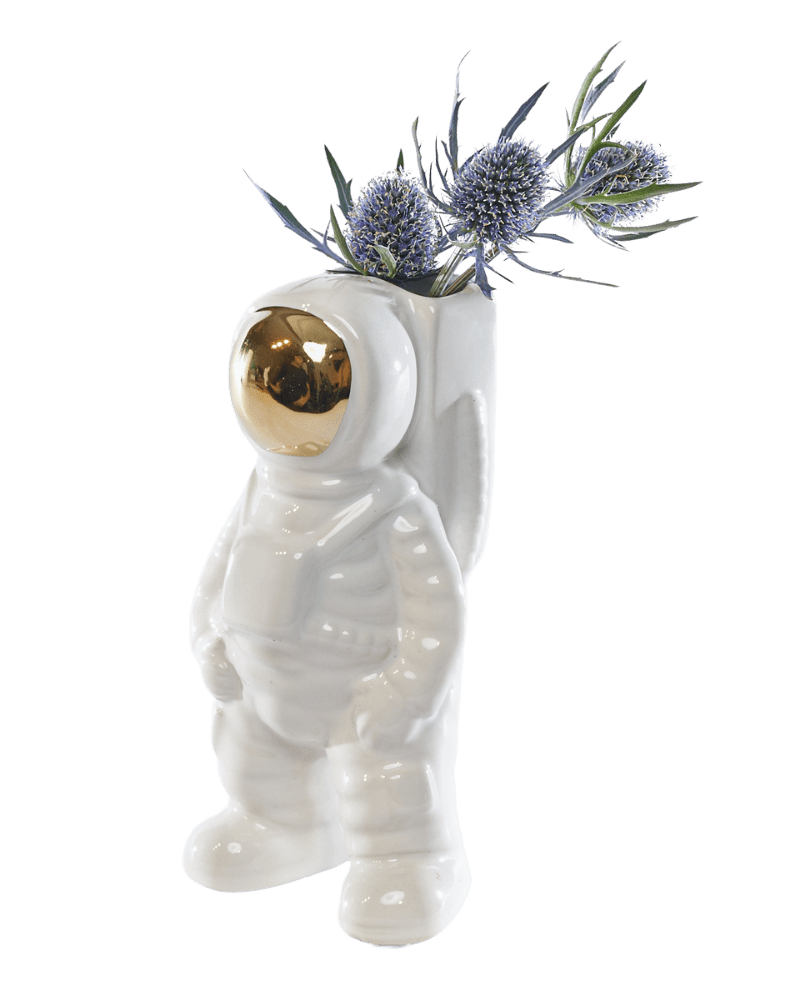
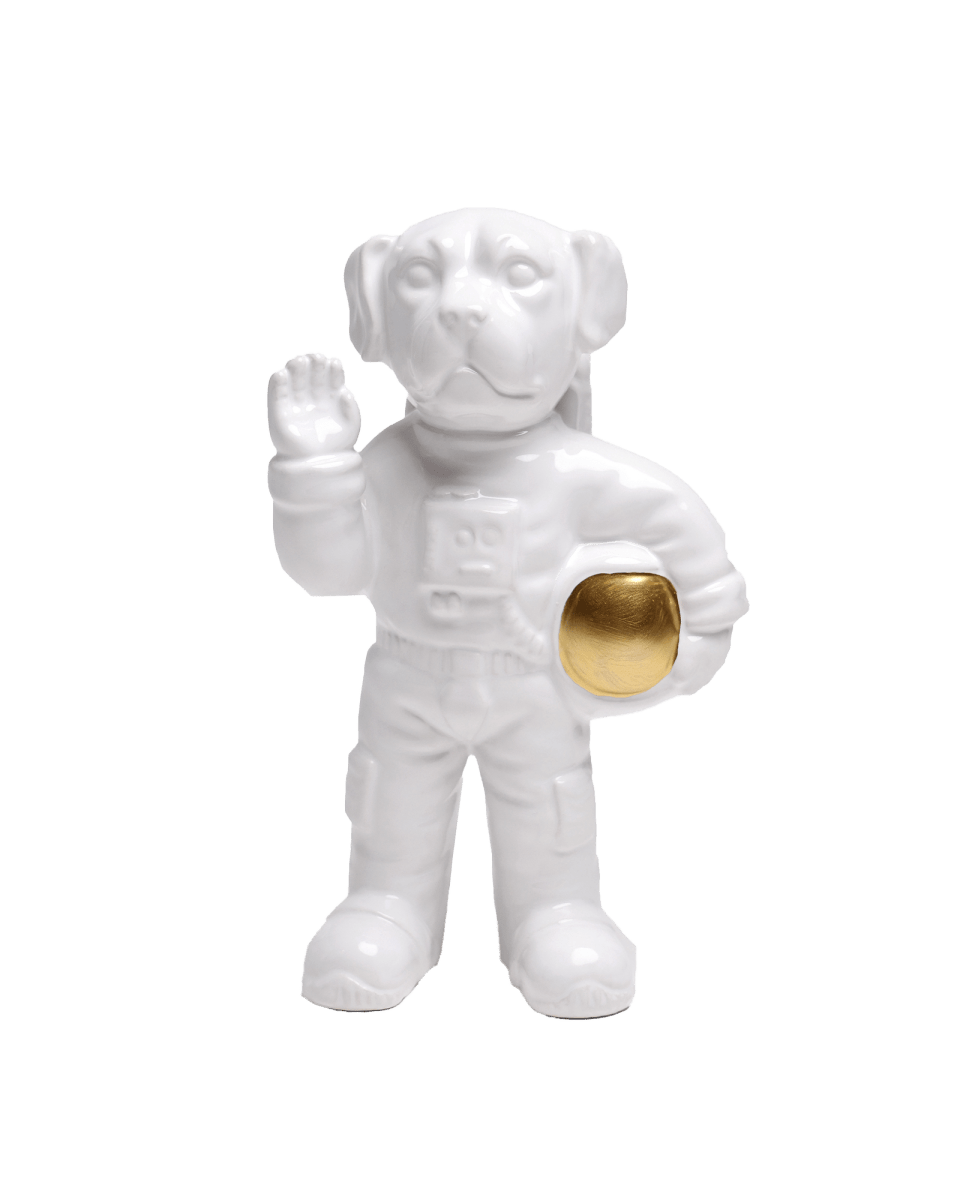
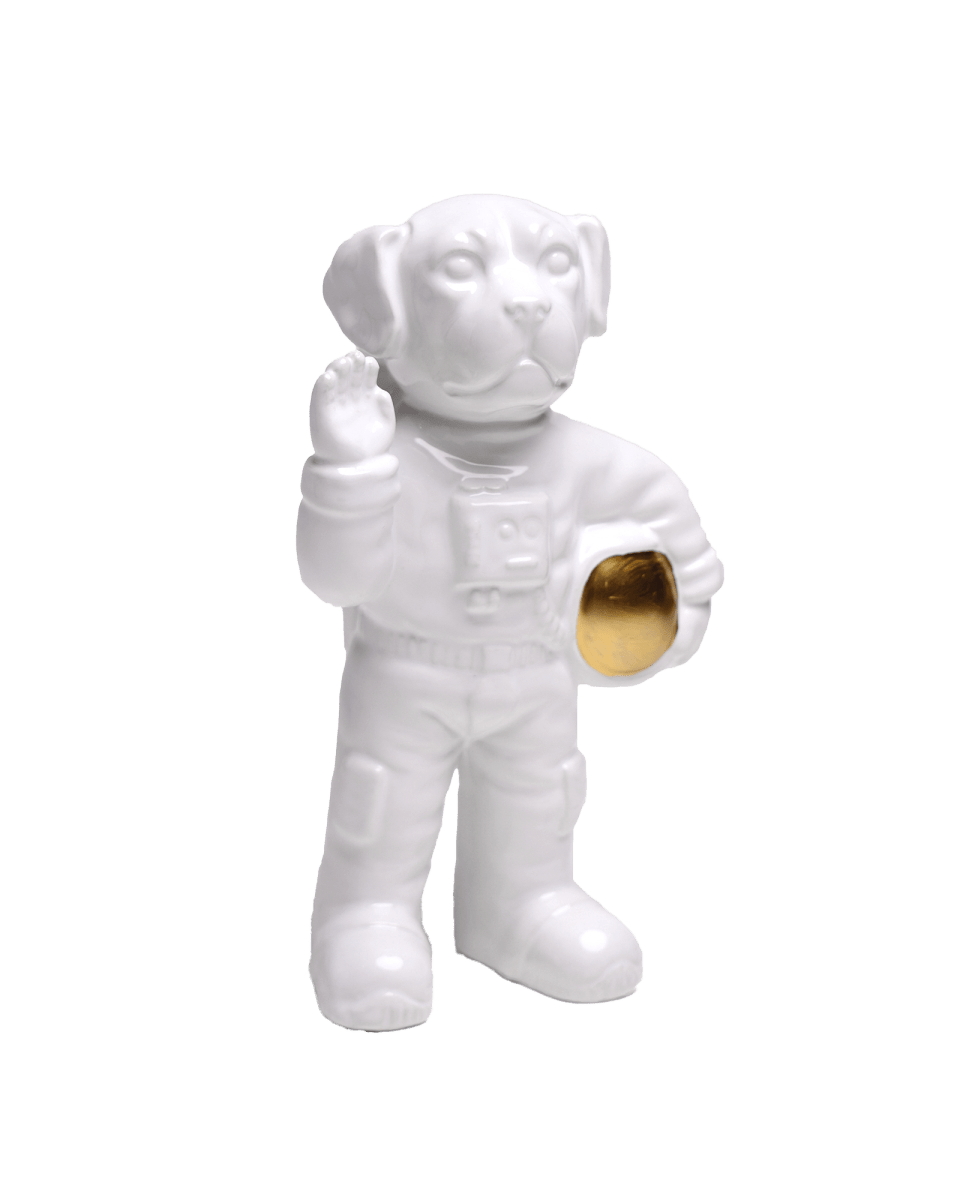
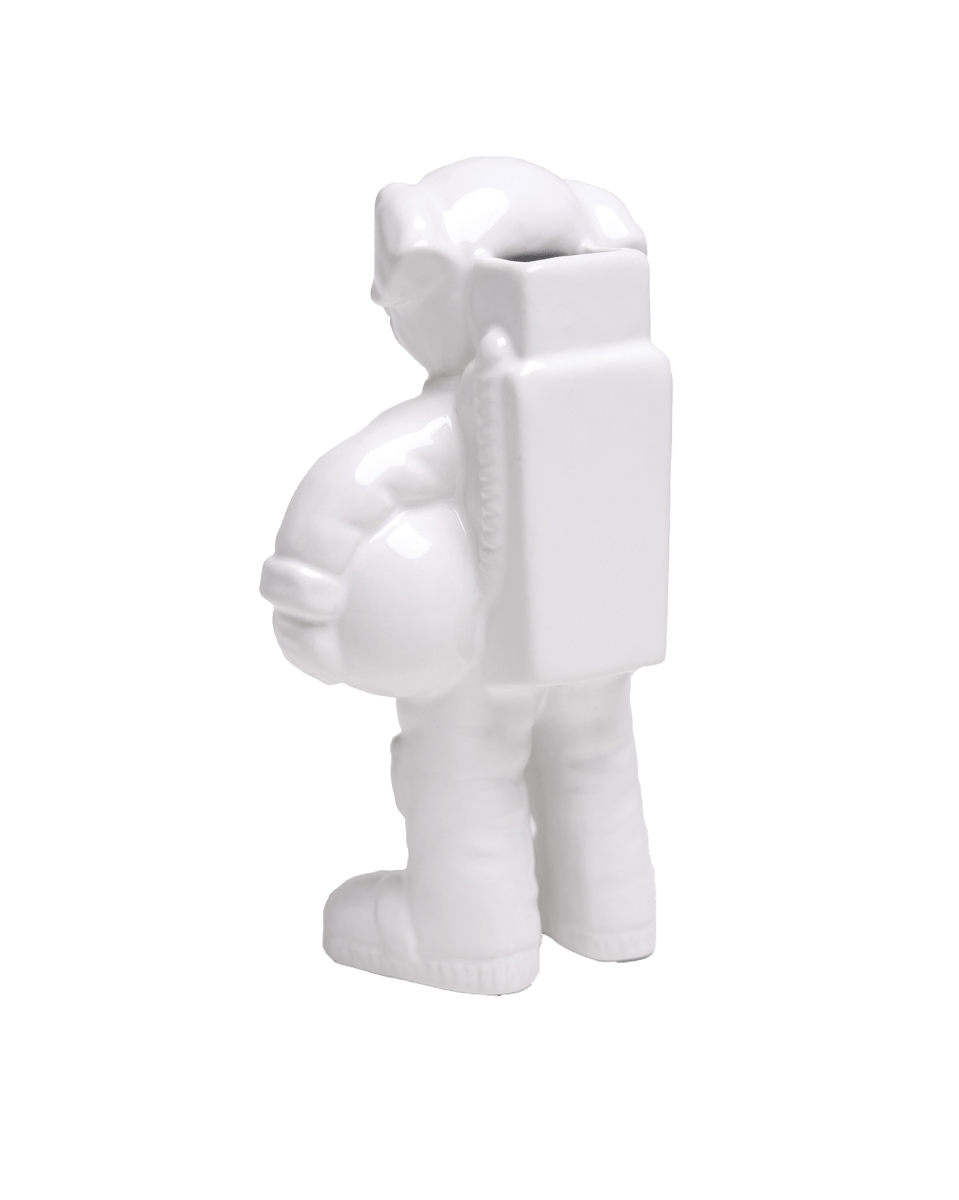
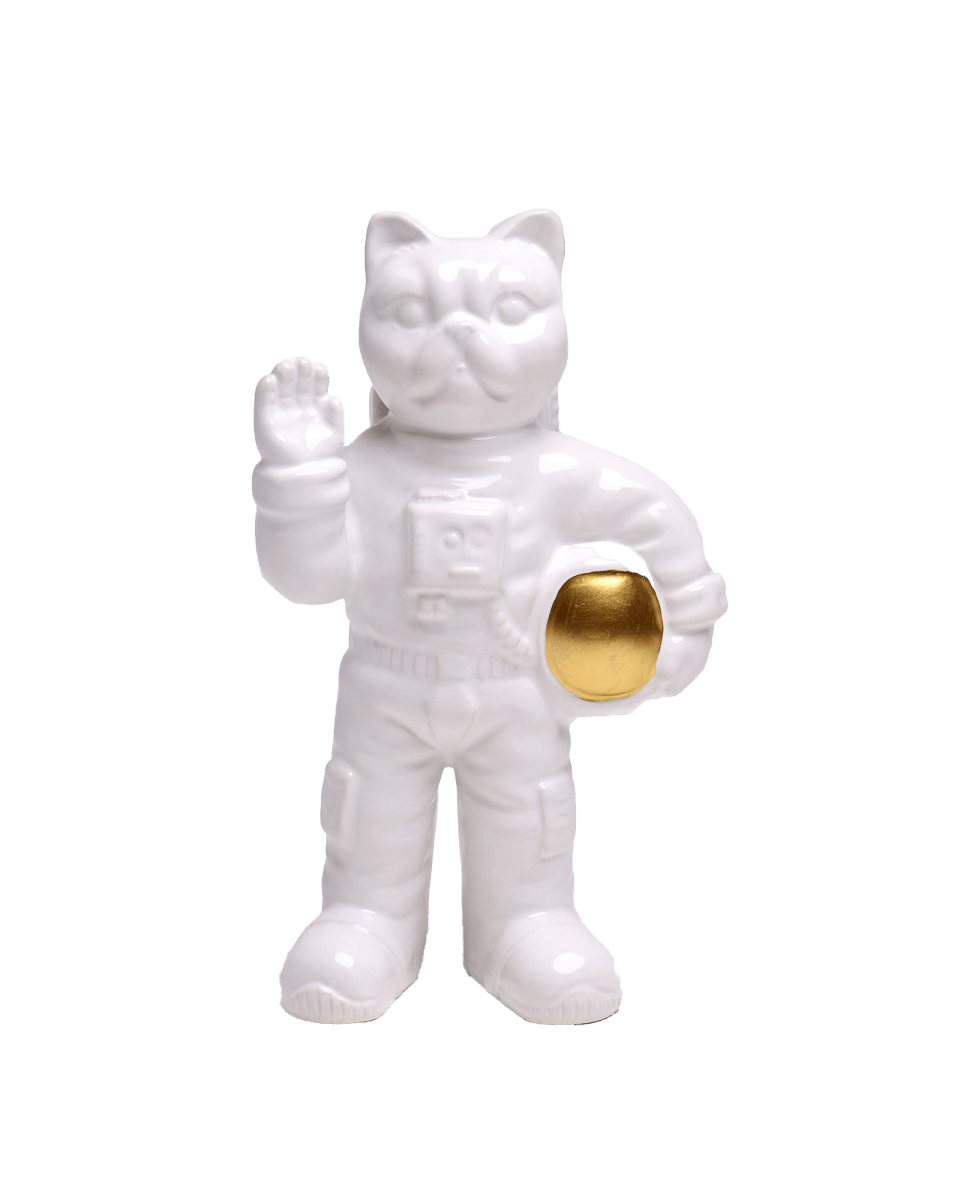
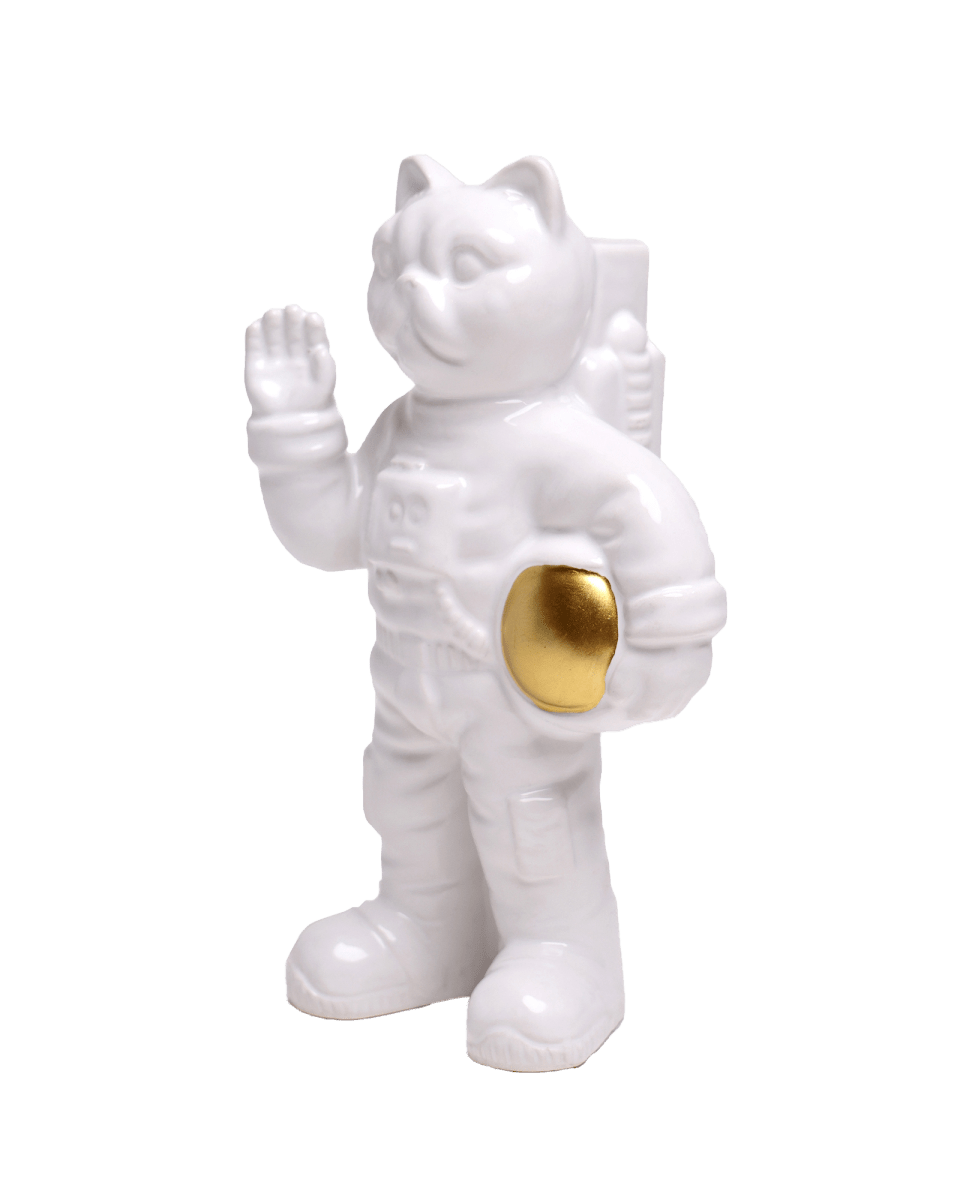
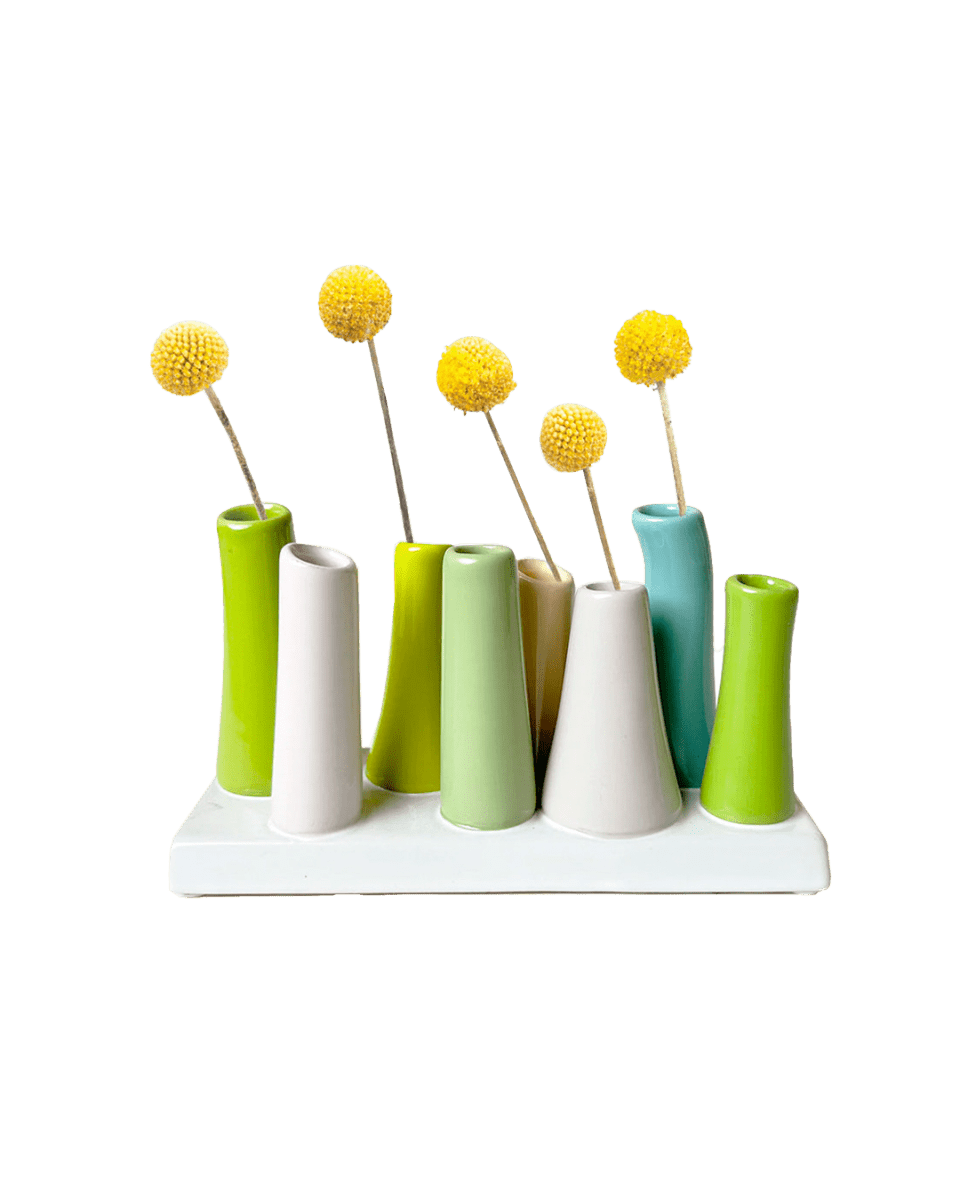
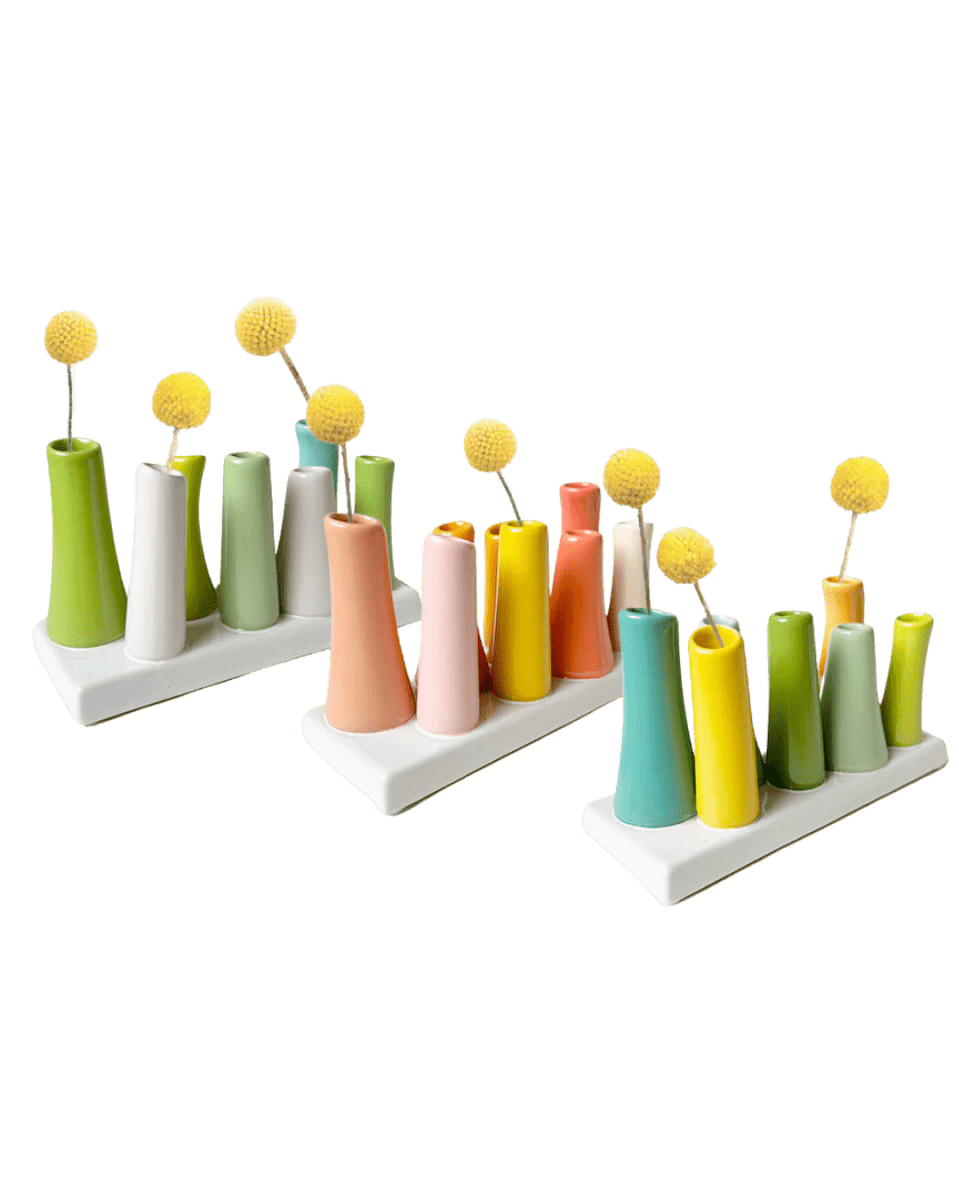
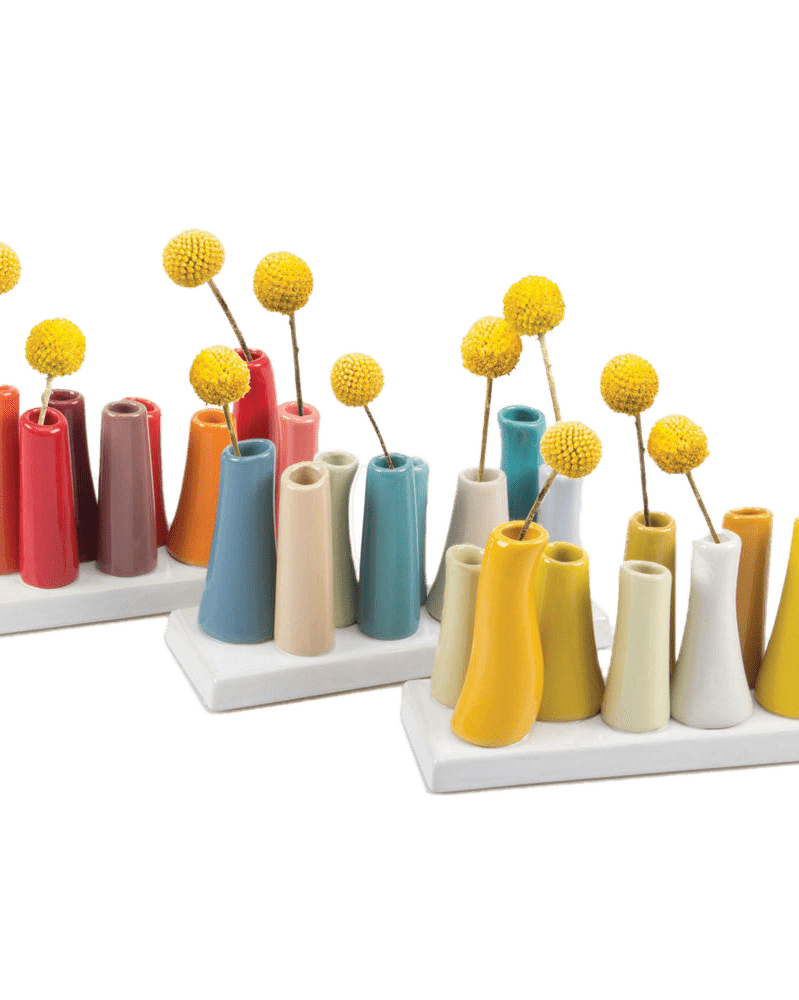
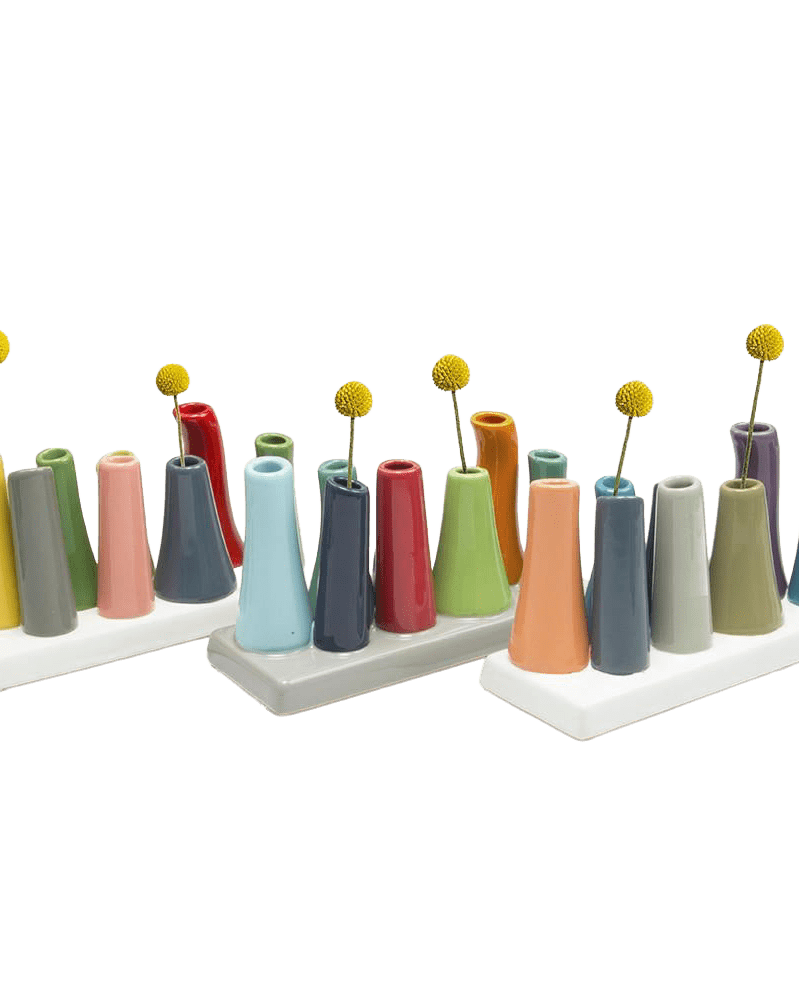
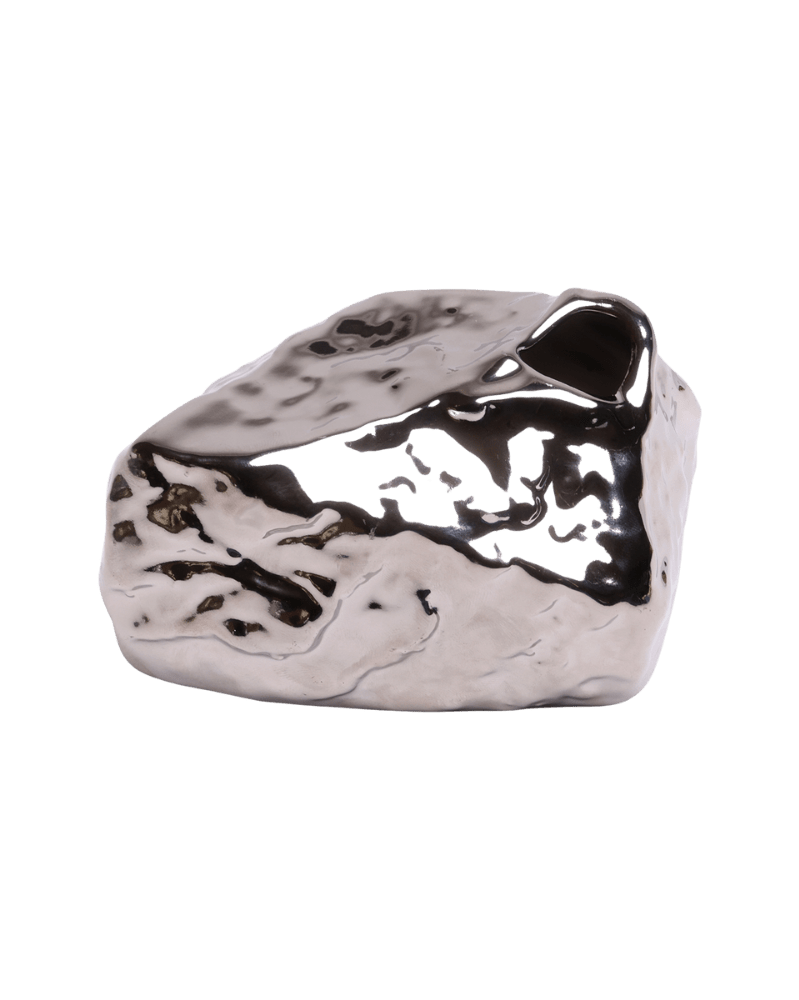
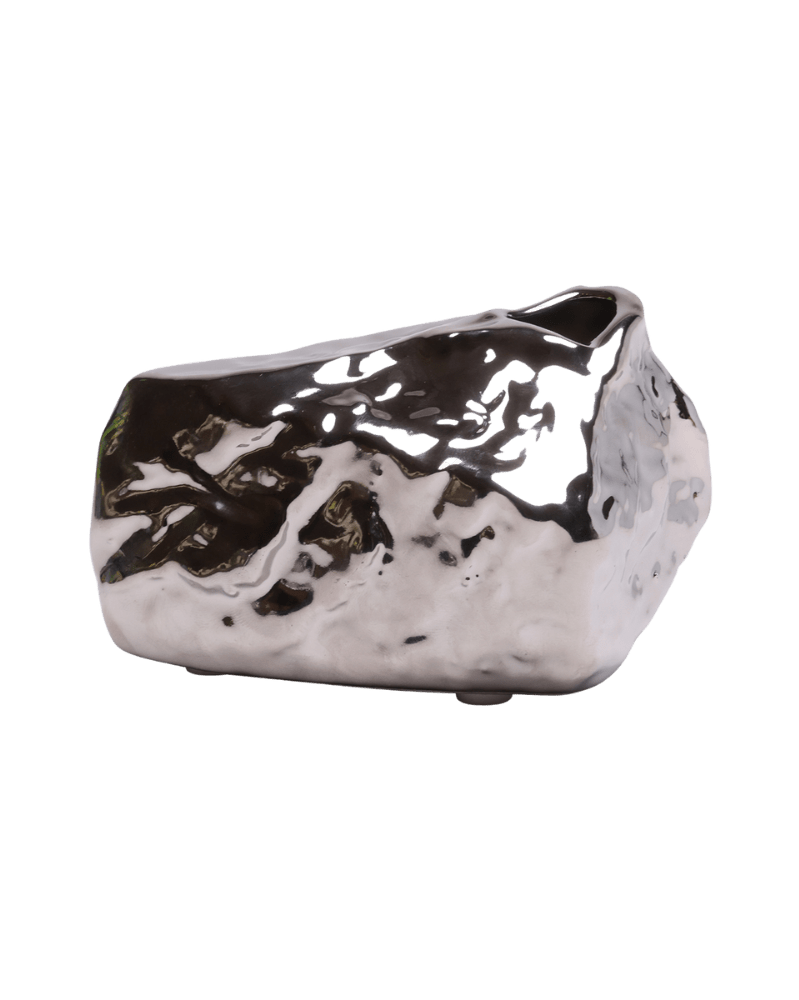
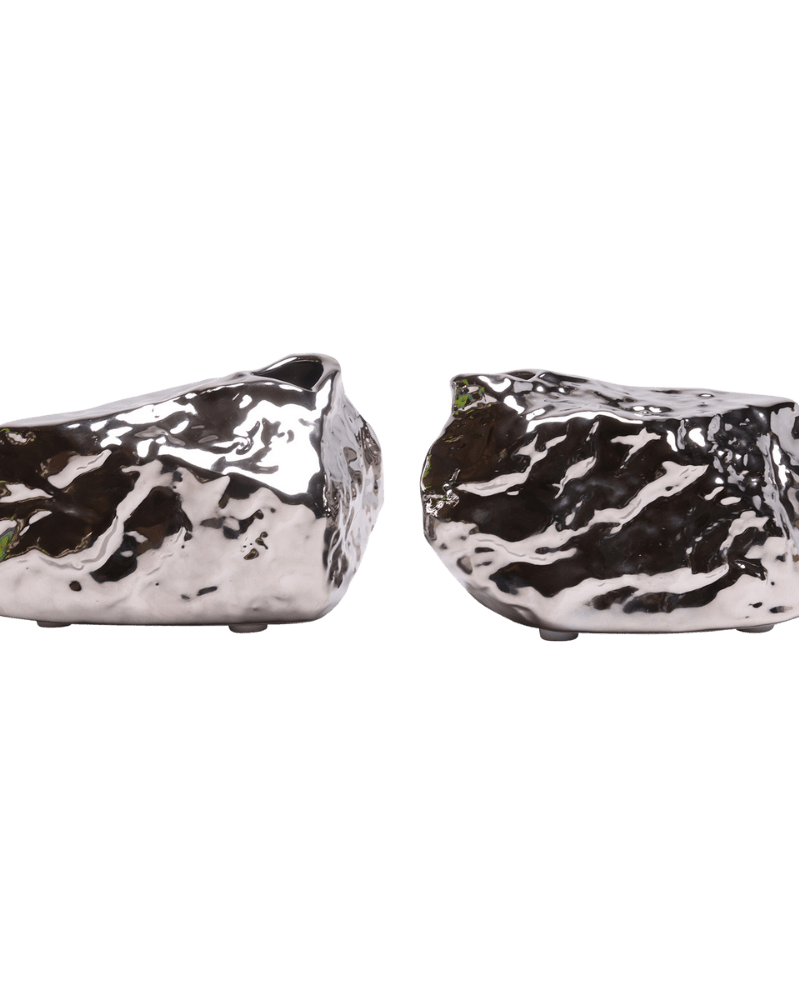
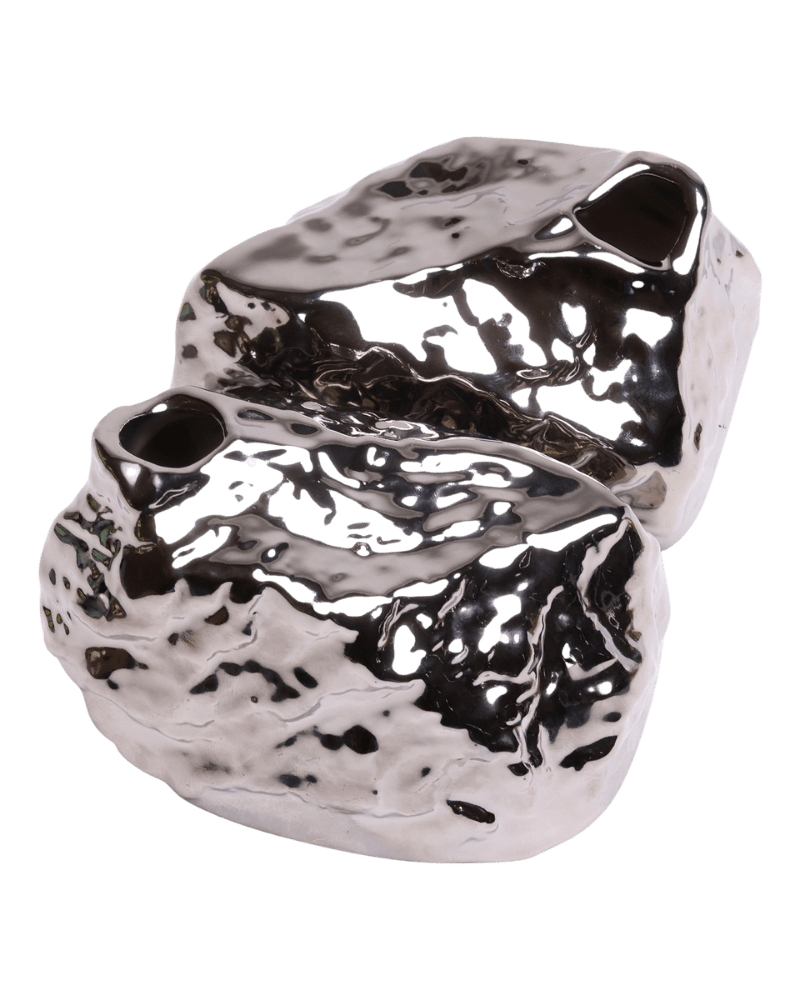
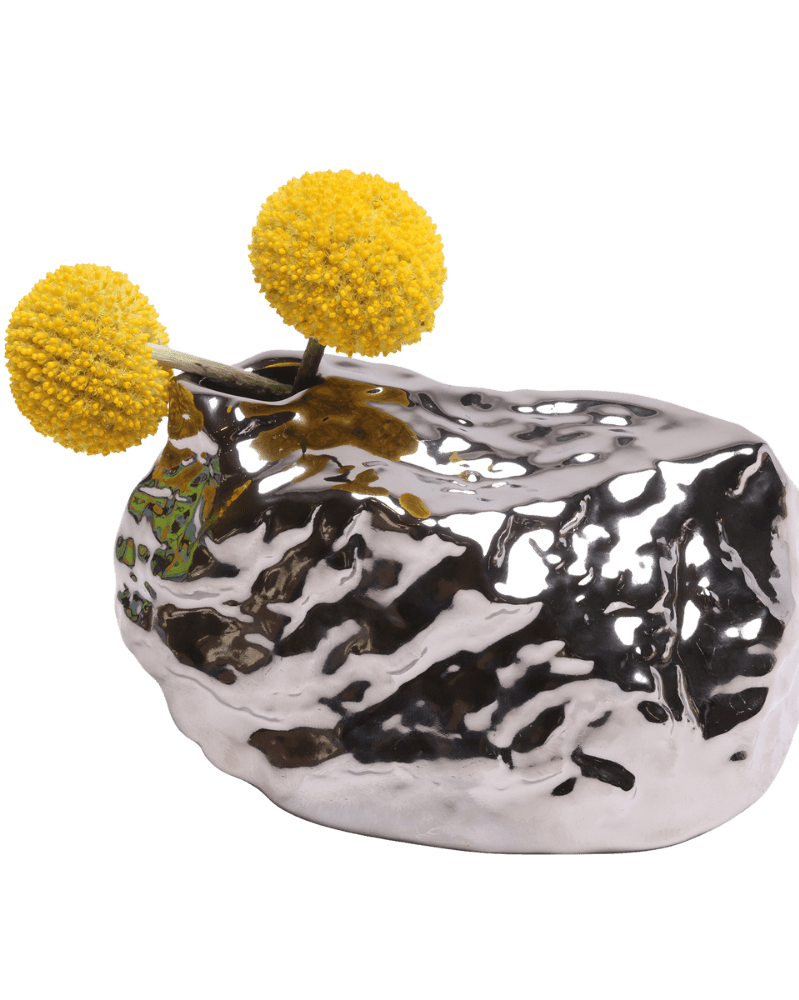
Ceramic earns its place in the vase conversation through physics before aesthetics. Mass at the base means a delphinium doesn't tip the vessel; opaque walls mean the water stays dark and the stems stay fresher. The collection runs from bud-scale pieces for a windowsill to sculptural forms that hold a mantel empty — porcelain birds, inkwells, geometric Juvels — each one shaped by hand, dried, glazed, and fired at temperatures that fuse the color permanently to the clay body.
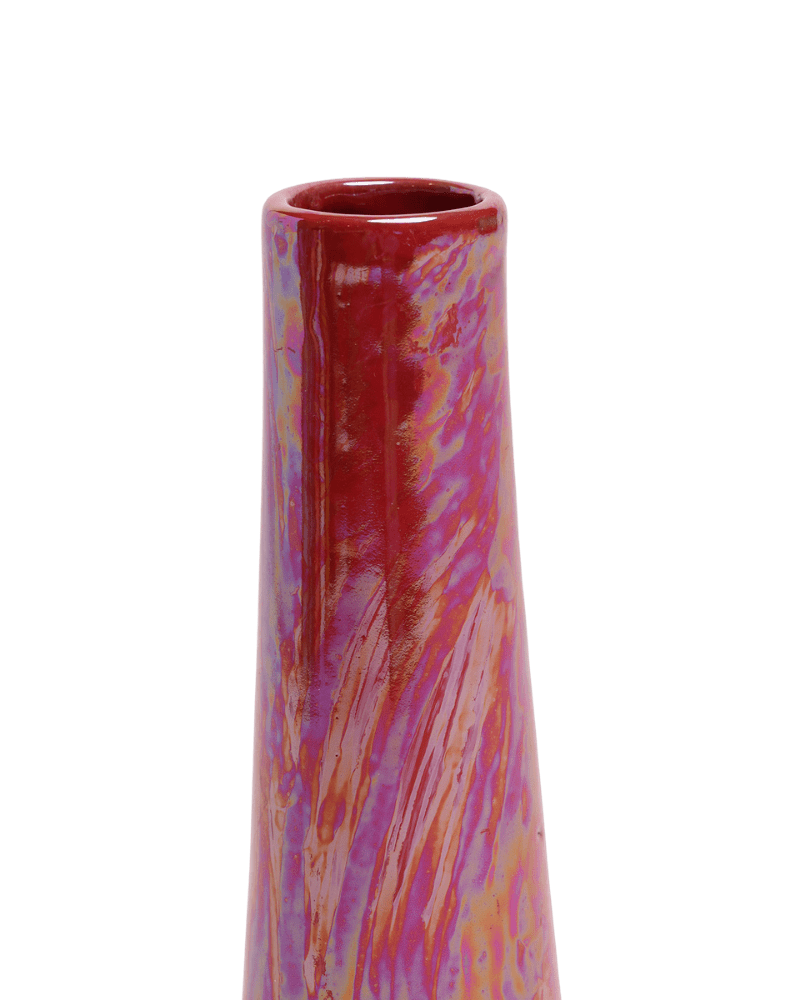
Small-batch making leaves fingerprints, figuratively and occasionally literally. Glaze depth shifts slightly between firings; rims carry the evidence of the hand that finished them. A factory vase is consistent; a studio vase is specific, and specificity is what ends up on the mantel. The ceramics have traveled with the studio to flower shows on both sides of the border, and the shows have been gracious about the luggage.